Enough Phone’s small body and replaceable battery are a promise still being built
The crowdfunding campaign targets a 5.3-inch Android phone and May 2027 shipping. Working samples, final battery capacity and durability remain milestones ahead.
The Enough Phone is asking a very specific group of smartphone buyers to fund an alternative: people who want a genuinely small Android device without giving up ordinary apps or accepting a permanently sealed battery. Its crowdfunding campaign proposes a 5.3-inch phone, a replaceable battery and a choice between stock Android and the more restrained OdysseyOS interface. It is still hardware in development, with shipping targeted for May 2027.
The campaign announcement gives pledge tiers of $399, $449 and $499, against a planned starting retail price of $599. The cheapest tiers should not be treated as indefinitely available retail offers. More fundamentally, backing the campaign funds the remaining development and manufacturing work rather than buying a finished phone already on a shelf.
Small in the pocket, less ambitious on the specification sheet
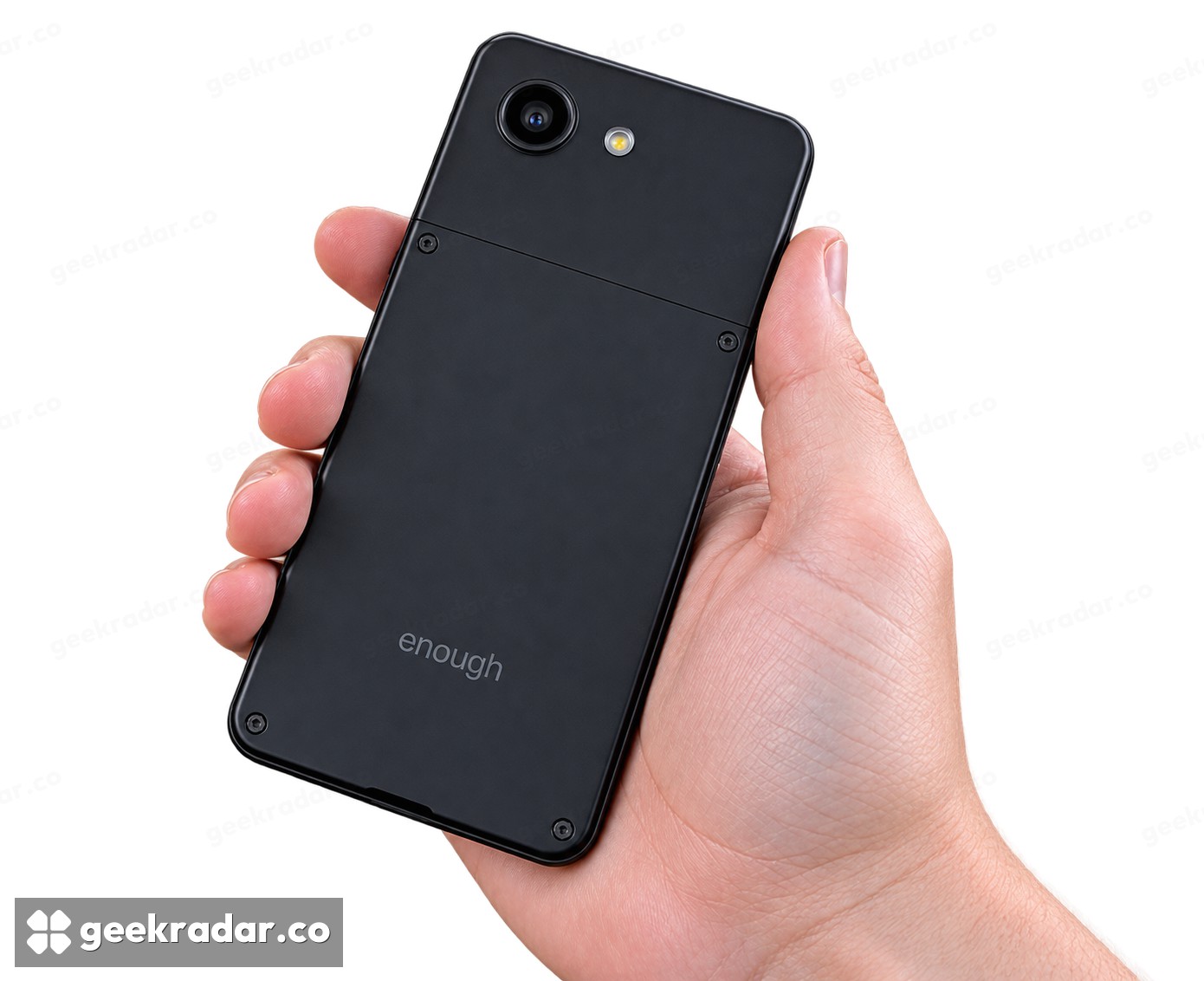
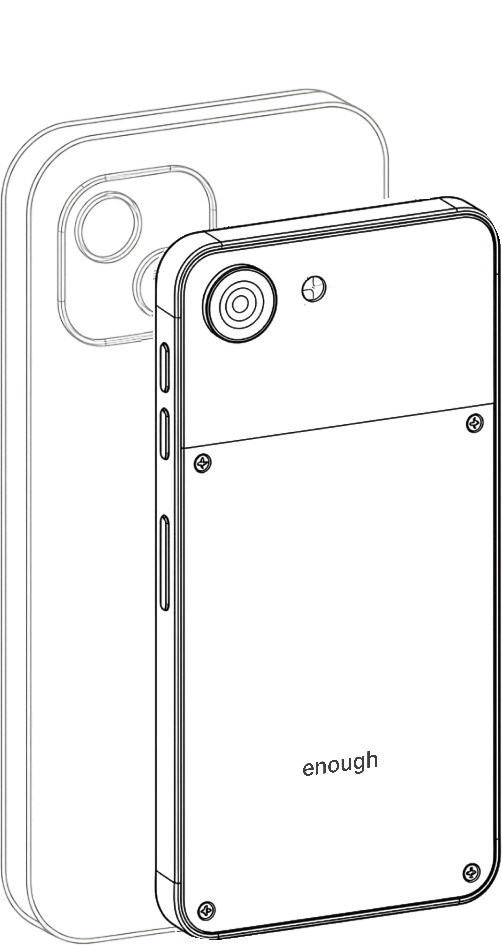
The proposed body measures 133 by 64 by 12mm, surrounding a 1520 × 720 LCD. Its MediaTek Dimensity 7500 is paired with 8GB of RAM and 128GB of storage. The announced rear camera uses Sony's 50-megapixel IMX766 sensor, with a design intended to keep the camera flush with the back.
Those choices make the device more interesting as a physical alternative than as a flagship specification contest. A narrow body can be easier to hold and pocket, while the modest display resolution reduces the number of pixels the system has to drive. Neither observation establishes battery life or performance: there is no substitute for testing the completed hardware.
The battery target is 3,500mAh, but the launch post explicitly leaves final capacity and optimisation open. Waterproofing and durability ratings also remain unfinished. The current project roadmap places working samples in December and validation between December and February, ahead of planned mass production in April. That is a substantial amount of work between today's promise and a shipping handset.
A simpler interface is different from a limited phone
The software choice separates two ideas often bundled together. Some people want fewer distractions; others simply want a smaller handset. Offering stock Android alongside OdysseyOS means the proposed product does not require both preferences to coincide.
The campaign describes OdysseyOS, from SLEKE., as a minimal, dumbphone-like experience. That describes an approach to using the hardware, not proof that every demanding application will become less distracting. A buyer who needs full Android functionality should assess the operating-system choice on its actual app and service requirements rather than assume a calmer home screen changes the apps themselves.
The promise of updates through 2032 also needs to be read as a date, not as five years starting whenever a unit happens to arrive. Hardware longevity depends on more than a removable rear panel. Replacement batteries must remain obtainable, software support must arrive and the small manufacturer's production plan must hold together.
The appealing part is also the risk
Enough's campaign is unusually candid about unfinished elements, including battery-life testing and durability. That openness is useful, but it does not eliminate manufacturing risk. A company still moving from a trial mainboard and physical dummy to working samples cannot offer the same certainty as a product with retail stock and established repair channels.
The reason to watch this project is the combination of dimensions and repairability, not an expectation that it will beat a flagship at everything. If Enough can deliver the proposed shape, usable software and a battery that owners can actually replace, it will answer a need that larger specification numbers often miss. Before delivery, those remain the milestones a pledge is helping it reach.