Hubble and Webb’s Cat’s Head images show why darkness is not empty
Visible and infrared observations reveal different structures in the same Carina Nebula pillar, including a possible embedded young star.
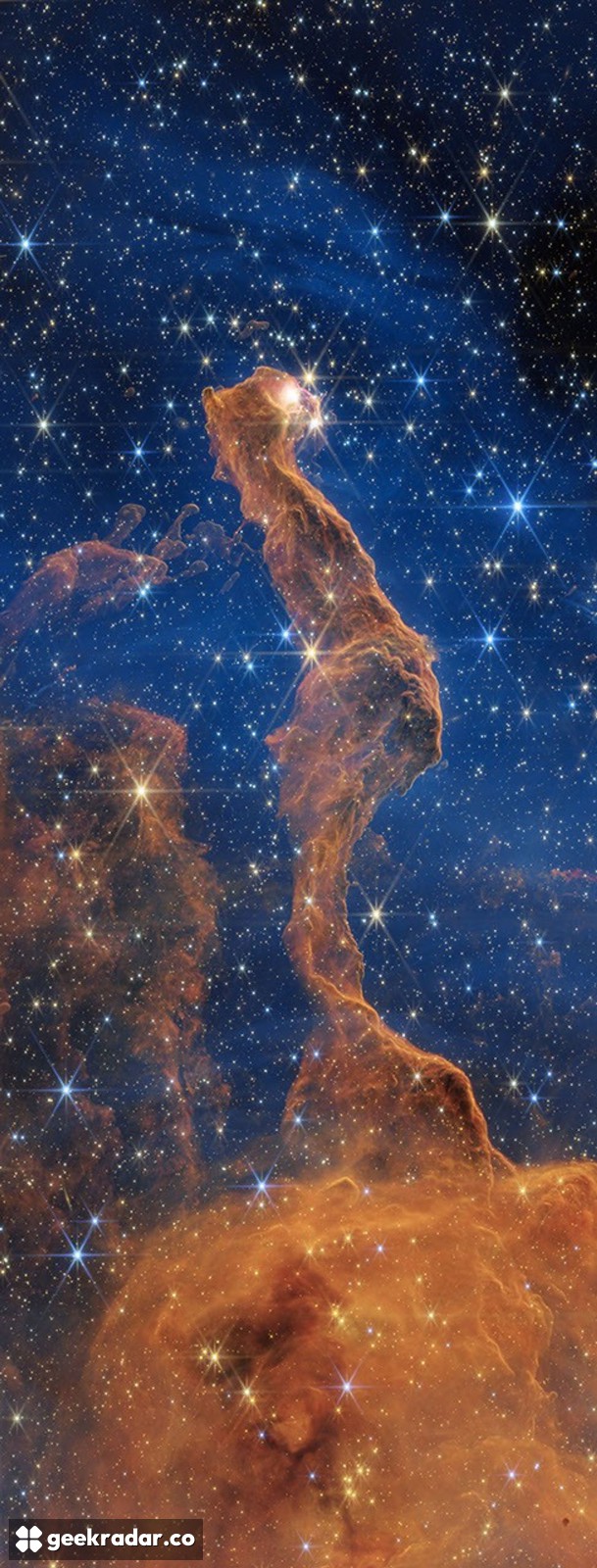
The Cat’s Head Nebula looks like a dark silhouette to Hubble and a more permeable structure to Webb. The difference is not the nebula changing between pictures: the telescopes are collecting different wavelengths, revealing different parts of the same star-forming environment.
NASA’s October 29 image release places the small region inside the Carina Nebula, about 7,500 light-years away. The feline nickname makes the shape easy to remember, but the useful comparison lies in what each view reveals about dust, gas and embedded stars.
The dark outline is information
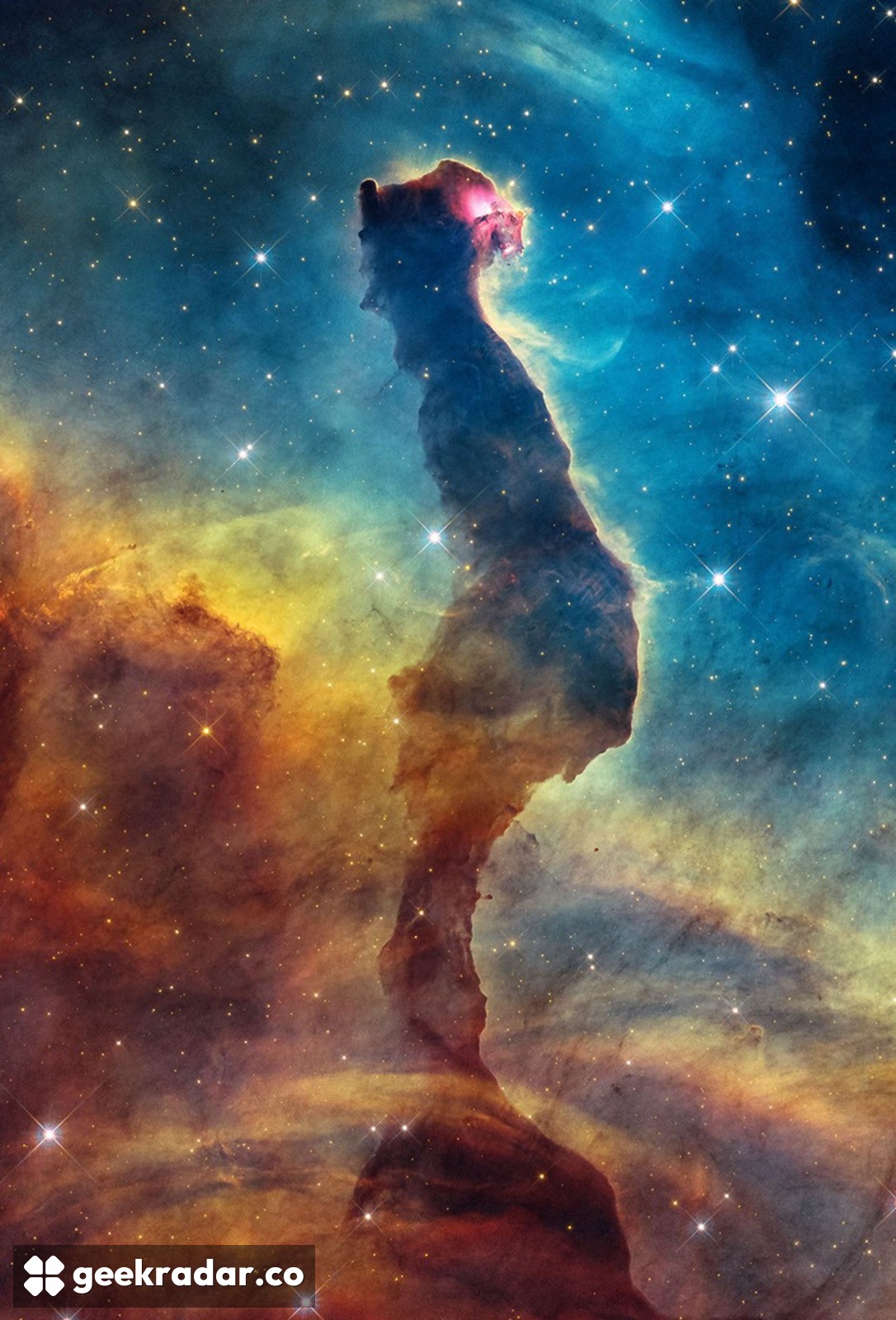
In Hubble’s visible-light image, the central pillar is largely opaque. A bright rim traces its edge, while the surrounding material changes color across the field. NASA explains that the filters capture emission associated with oxygen, hydrogen and sulfur, together with starlight scattered by dust.
The apparent emptiness inside a dark patch is therefore not evidence that nothing is there. Material can block the wavelengths being observed. The outline tells astronomers about the relationship between dense dust and radiation from nearby massive stars, which can erode the surrounding material.
The shape is temporary on astronomical timescales. Denser portions resist that erosion more effectively than their surroundings, producing structures that our pattern-seeking eyes turn into familiar objects. A cat is a useful visual shorthand; it is not a physical category of nebula.
Webb changes which structures stand out
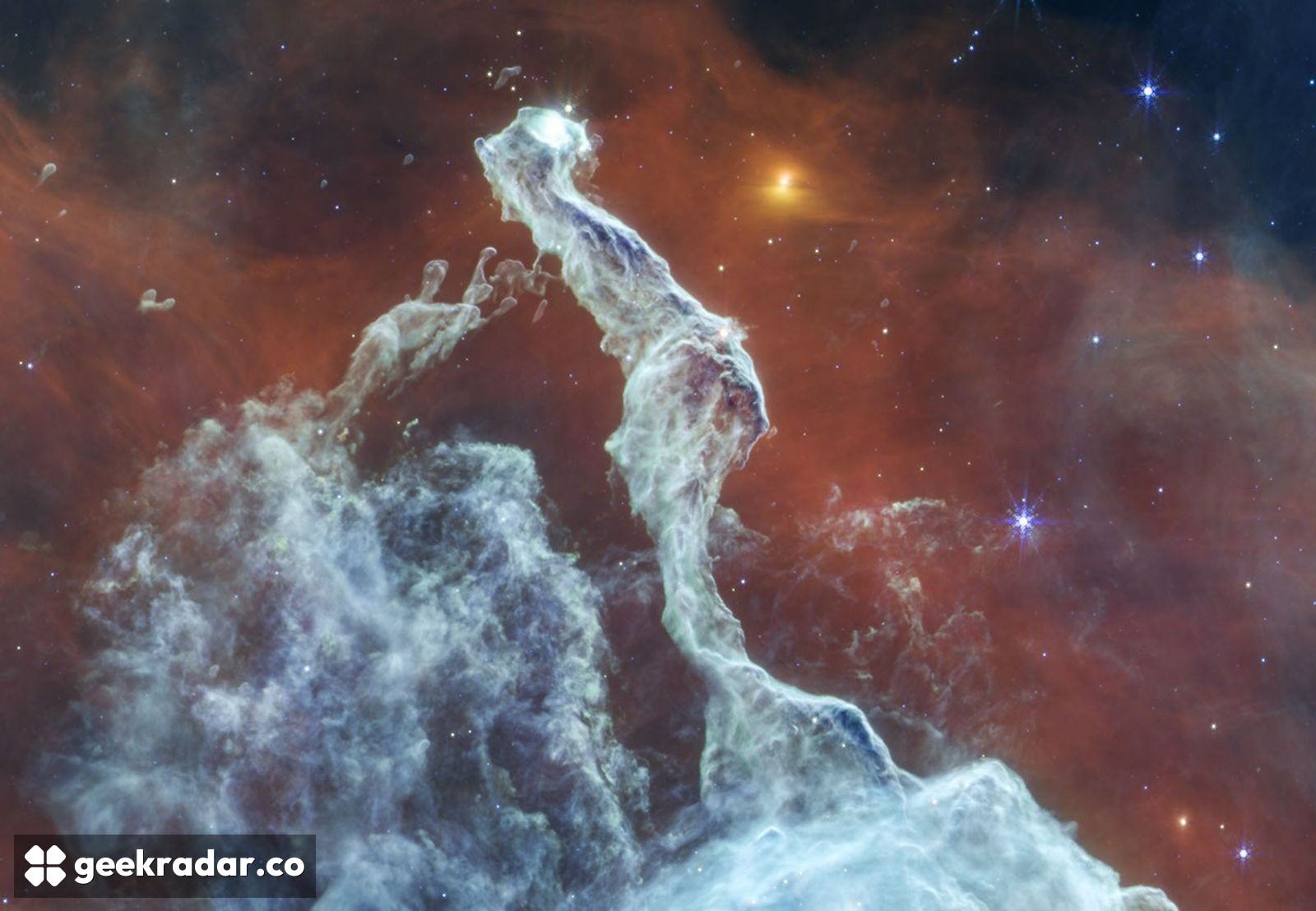
The near-infrared view makes the pillar more transparent and reveals a richer field of stars, with some distant galaxies also visible. It does not remove all obscuration: stars can remain embedded in dust to different degrees even in infrared observations.
In mid-infrared light, emission from warm dust and carbon-based molecules traces another set of structures. Wisps and small globules become especially conspicuous. Comparing these images is consequently more informative than choosing which one looks sharper or more colorful.
The displayed colors help communicate the measured light. They should not be treated as a promise of what a person looking through an ordinary telescope would see. Nor should different colors between the images be interpreted automatically as a change in the object itself.
The glowing eye is a candidate, not a solved identity
NASA says the conspicuous source at the apparent eye may be a young star still embedded in dust. The cautious wording is material. A bright point in an evocative picture does not establish all of its physical properties.
The release makes a similar distinction for a narrow filament that appears to cross a bright source in the mid-infrared image: the picture alone cannot prove that they are physically related. Objects at different depths can overlap in a two-dimensional view.
That is what makes the set valuable beyond its Halloween timing. Hubble supplies the obscuring silhouette; Webb supplies additional ways to examine what lies within and around it. The most interesting part of the cat is not the resemblance. It is the amount of structure that becomes visible when darkness stops being treated as an empty space.