Virgin Galactic names Apeiron while its commercial return remains in 2027
The transfer to Spaceport America starts another phase of preparation. A captive-carry flight does not demonstrate a powered spaceflight.
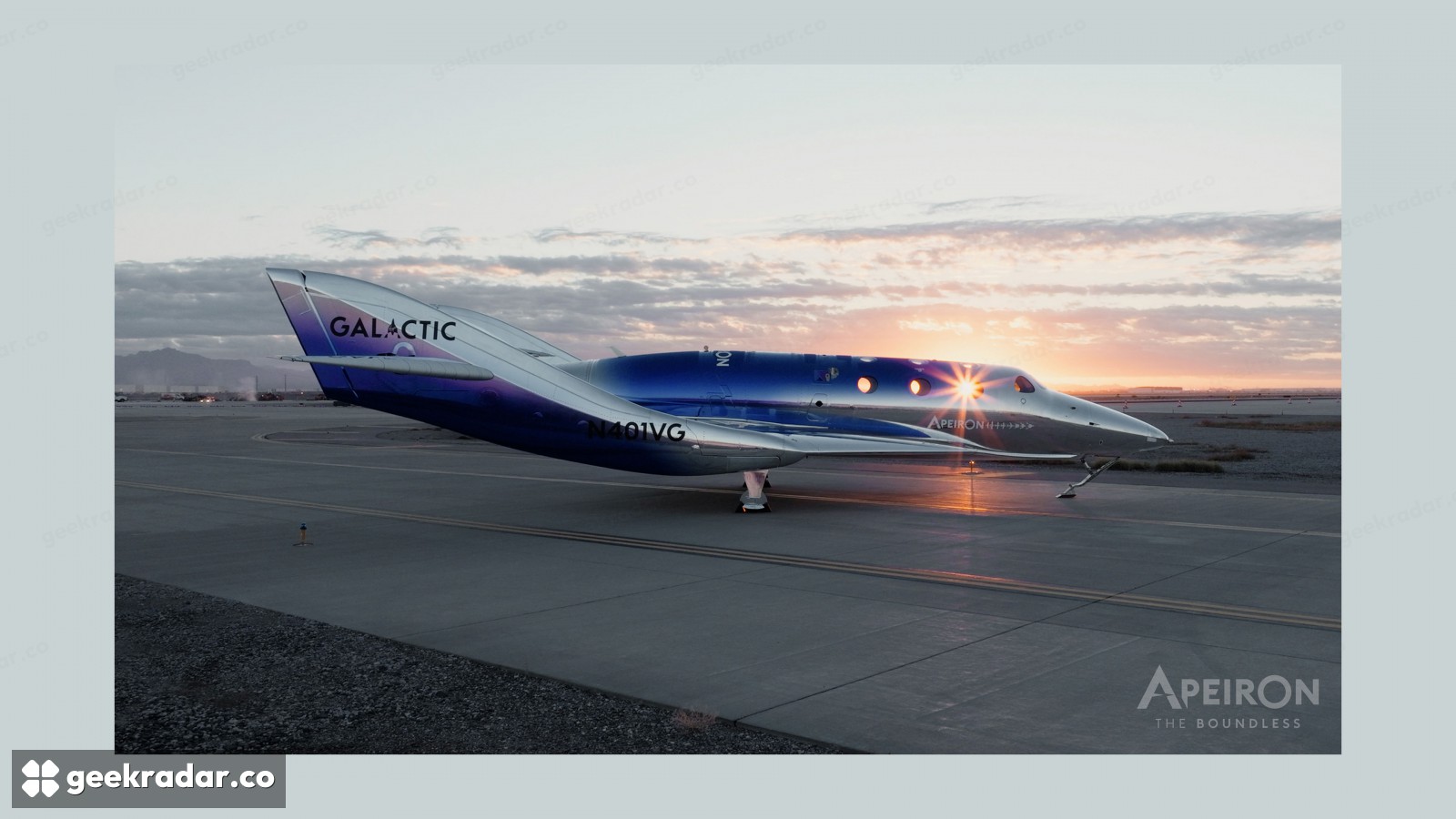
Virgin Galactic has named its first Delta-class spaceship Apeiron, giving the next vehicle a public identity while the programme still has a significant flight-test campaign ahead. The name reveal is easy to mistake for a return to passenger operations. The company’s own timetable places the first commercial spaceflight in early second-quarter 2027.
The October 26 programme update scheduled the vehicle’s transfer to Spaceport America for October 28, attached to the carrier aircraft Eve. This is a captive-carry flight: the spaceship travels with its launch aircraft rather than separating for a powered ascent to space.
Moving the vehicle is the beginning of another test phase
Getting the ship from its Arizona factory to the New Mexico operating base changes where the work happens. It does not remove the remaining work. Virgin Galactic says the revised timetable allows more time for avionics software integration and validation, which will conclude at Spaceport America as flight-test preparations proceed.
Software in this setting is part of the vehicle’s operating system in the broad engineering sense: the electronics and control functions have to work together under the conditions the aircraft will encounter. A finished exterior and a named vehicle cannot demonstrate that integration. Neither can a ferry flight establish the performance of a later release, powered ascent and return.
The Apeiron announcement says the name was chosen through a public vote involving participants from 83 countries. That shows the reach of the naming exercise, not the number of customers who have booked a flight. Virgin Galactic separately says more than 100 members of its astronaut community are moving into the first phase of readiness preparation.
A fleet needs more than one successful vehicle
The company is also completing the second spaceship and preparing a rocket-motor assembly line. Structural testing of the feather assembly has been completed, according to its update, while work continues on the wing-and-fuselage structural test assembly. These are different components and stages; one completed test should not be expanded into a claim that the entire vehicle has finished certification or testing.
Delta’s commercial promise depends on sustained operations, not just an inaugural flight. Two ships could provide more flexibility than one, but the announced dates remain management targets rather than guaranteed departures. The useful next evidence is the progression through actual testing and the demonstrated readiness of the supporting operation.
For the space industry, Apeiron is now a recognizable machine with a destination and a name. The gap between that public moment and a repeatable passenger service is precisely where the programme’s hardest remaining work sits.