Terrible Lizards launches with dinosaur horror built around predictable movement
WDR’s PS5 game uses fixed movement speed, momentum and midair control to turn a roadside attraction into a parkour escape route.
Terrible Lizards launches on PS5 on October 29 with an unusual bargain for a horror game: the creatures are meant to frighten you, but your movement is meant to be predictable. WDR Studios has built its first-person dinosaur escape game around a fixed maximum movement speed, momentum and midair correction, making the route through a room as important as the threat behind you.
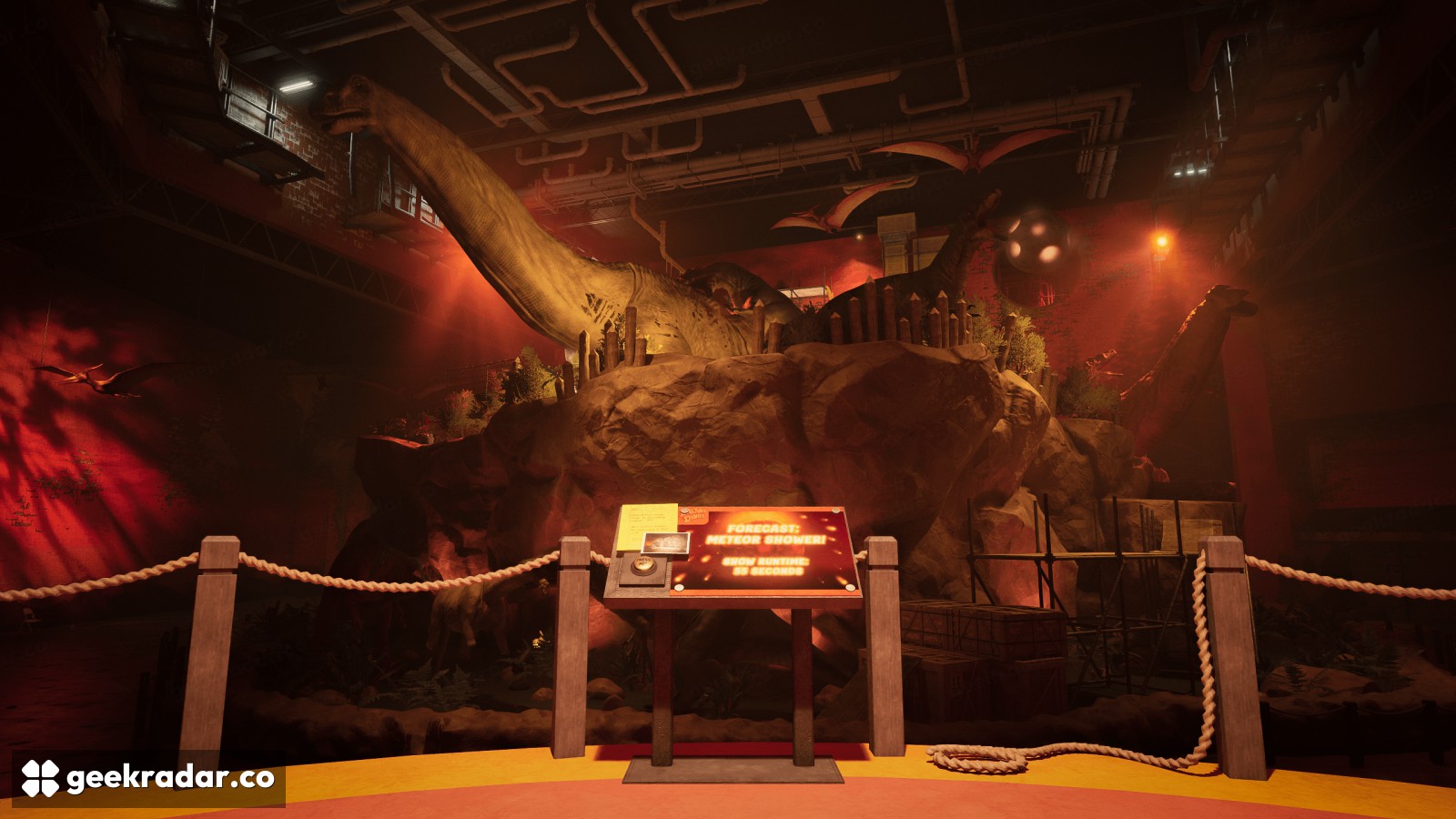
In the studio’s launch-week design account, director John W. Gelardi describes a college student stranded during an early-1990s road trip on Route 66. Looking for help leads to Dalton’s Dinos, a roadside attraction whose cheerful prehistoric imagery has acquired a much less welcoming purpose. That premise is enough to understand the setting without revealing what happens inside.
Predictable movement can make danger more legible
The developer describes running, jumping, sliding, wall running, bouncing and ledge grabs, alongside tools that affect the environment. The movement model draws on first-person action shooters rather than simply trying to reproduce the weight of a person scrambling through a building.
The consequential detail is the fixed speed whenever the player can move and jump. Momentum carries forward, and aerial control lets players adjust their route after leaving the ground. In design terms, this gives the player a relatively stable set of rules to learn. A failed jump can become a question of trajectory and timing rather than an unexplained change in acceleration.
That is an interpretation of the studio’s described system, not a verdict on how the finished controls feel. Precision also depends on the camera, collision behaviour, input response and how clearly a level communicates its safe surfaces. The announcement does not provide measurements of those elements or establish a particular PS5 frame rate.
A roadside attraction gives the platforming a setting
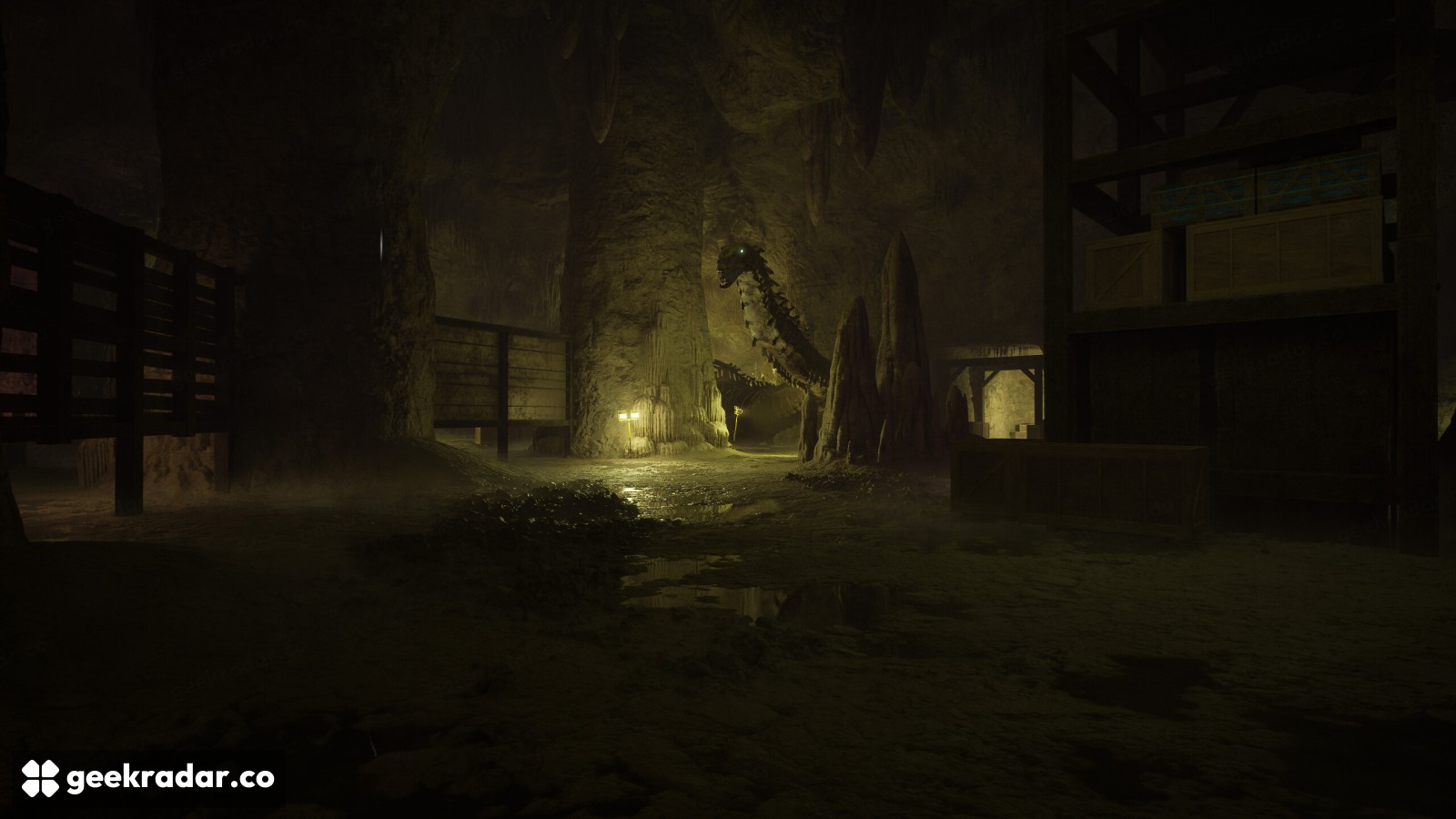
Dalton’s Dinos ties that movement system to a recognisable kind of American roadside spectacle: oversized statues, makeshift prehistoric displays and a gift-shop promise of harmless family entertainment. WDR cites both the dinosaur enthusiasm of the 1990s and the contemporary mascot-horror scene as influences.
That combination explains the visual contrast. The familiar shape of a dinosaur exhibit establishes what a visitor expects to see, while the horror treatment changes how safe that familiarity feels. Dinosaurs are also useful silhouettes for a chase game: a threatening body can be identifiable before the player has time to inspect every detail.
The presence of a nostalgic attraction should not be confused with a recommendation for children. This is explicitly presented as an action-horror game. Equally, its colourful premise does not tell us how difficult individual encounters become or how forgiving the checkpoints are; those questions need evidence from the released game.
For readers following games and digital culture, the interesting launch-day distinction is the relationship between fear and control. Terrible Lizards wants the surroundings to become unpredictable while the player’s movement remains learnable. Its strongest promise is that surviving a frightening corridor could depend on recognising a usable route through it, rather than merely enduring the next surprise.