Jumanji: Open World brings the game outside its usual boundary
Sony reunites the modern trilogy’s central cast for its final chapter. The premise and creative team explain the announcement without trailer reveals.
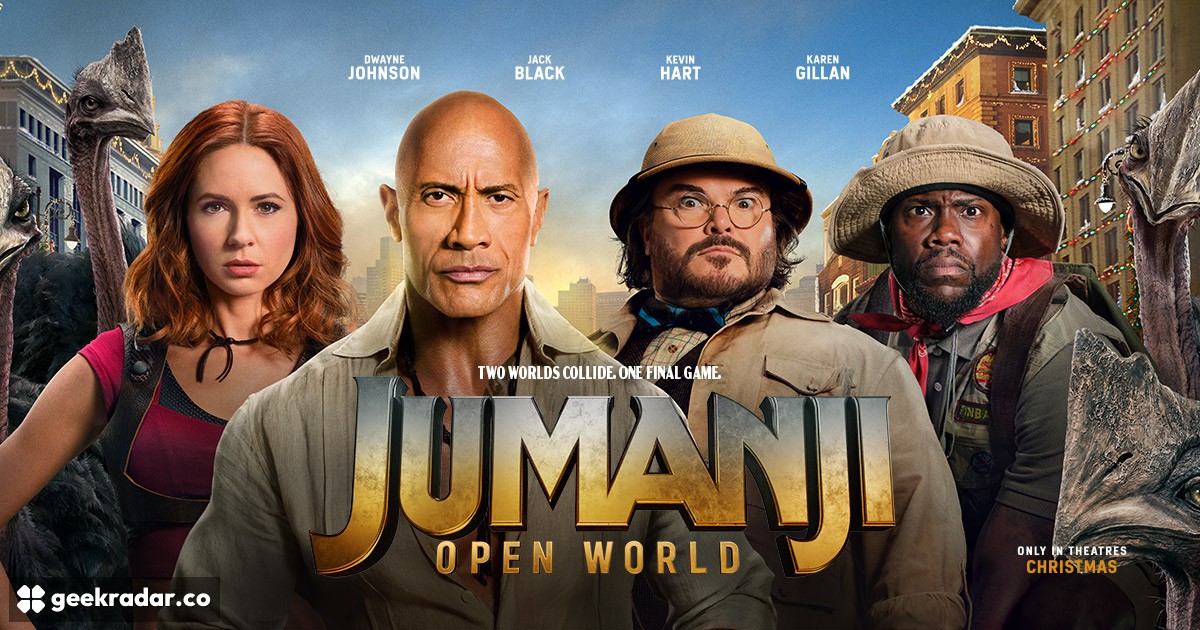
Jumanji: Open World changes the direction of the series’ central trick: the game’s chaos enters the outside world. Sony’s newly promoted film reunites Dwayne Johnson, Kevin Hart, Jack Black and Karen Gillan, and presents it as the final entry in their modern action-adventure trilogy. That is enough of the premise to understand the announcement without unpacking the trailer’s surprises.
The official Sony Pictures site names Jake Kasdan as director and credits the screenplay to Kasdan, Jeff Pinkner and Scott Rosenberg. Its Christmas positioning belongs to the film’s theatrical campaign. It does not establish a subscription-streaming premiere or a rental date.
“Final trilogy chapter” needs the right frame
The wording refers to the modern trilogy built around this ensemble. It should not be read as a claim that Open World is only the third Jumanji film ever made. The property has an earlier screen history and originates in Chris Van Allsburg’s book, which the official credits acknowledge.
The new title also invites a potentially misleading gaming comparison. “Open world” is part of the film’s title and premise; it is not an announcement of a playable game, a branching interactive film or audience-controlled scenes. Sony is promoting a conventional theatrical feature with a returning cast and a changed setting for the game’s disruption.
Those credits provide continuity without proving how well the new film works. A returning team can be a reason to pay attention, but trailer footage cannot establish the pacing, balance of the ensemble or success of the ending. This is a spoiler-free preview, not a verdict on a completed viewing.
The premise can be explained without the reveals
The promotional material offers more detail than a reader needs to decide whether the basic idea interests them. The useful distinction is between the starting situation and the discoveries the film intends to deliver during its running time. Here, the starting situation is the game escaping its usual boundary; specific consequences, unexpected encounters and later developments are best left unlisted.
The same restraint applies to images. A neutral ensemble poster communicates the returning cast without turning a preview into a gallery of scenes a viewer might prefer to encounter in the cinema. The film’s title and team already supply a clear identity.
Within film and television coverage, Open World’s question is straightforward: can moving the disruption outside the game create a satisfying final chapter for this particular ensemble? That is a question for the finished film. For now, the announcement gives the series a new boundary to cross while leaving the pleasure of discovering what crosses it to the audience.