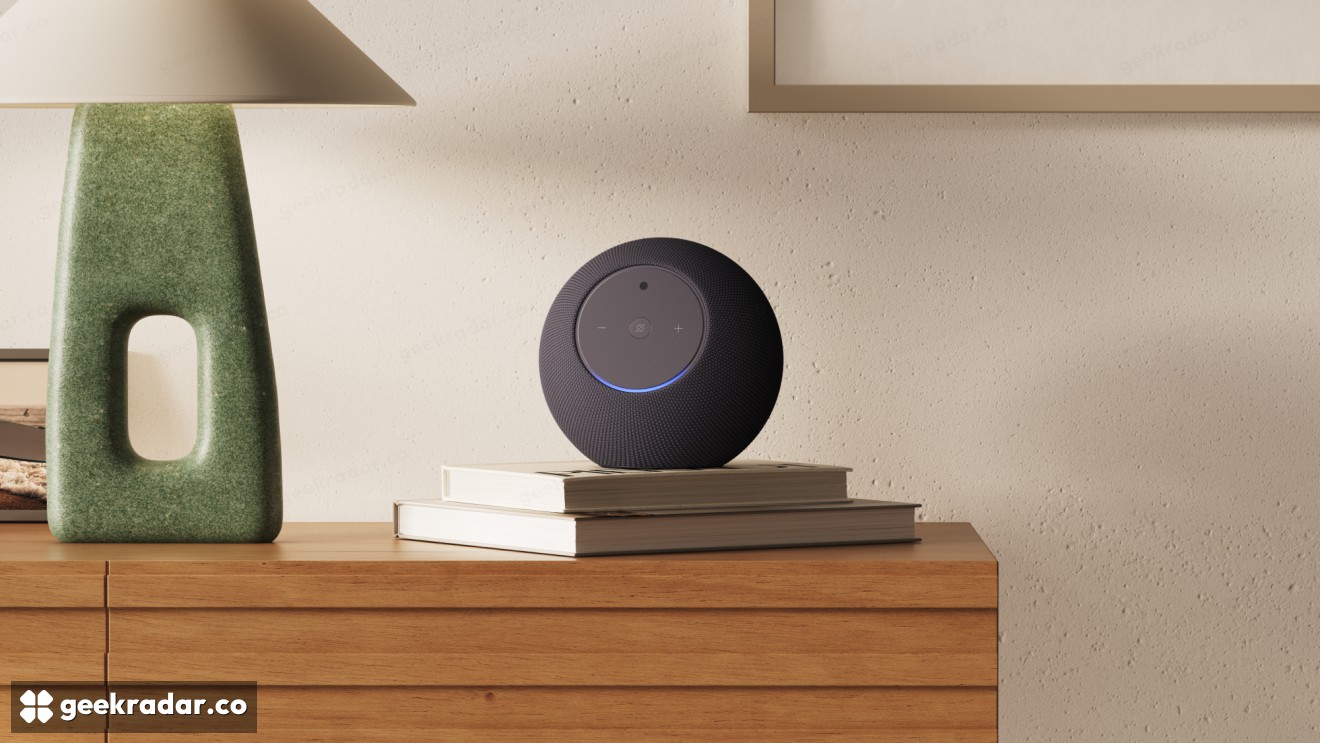
Amazon’s camera-equipped Echo changes what a speaker can observe
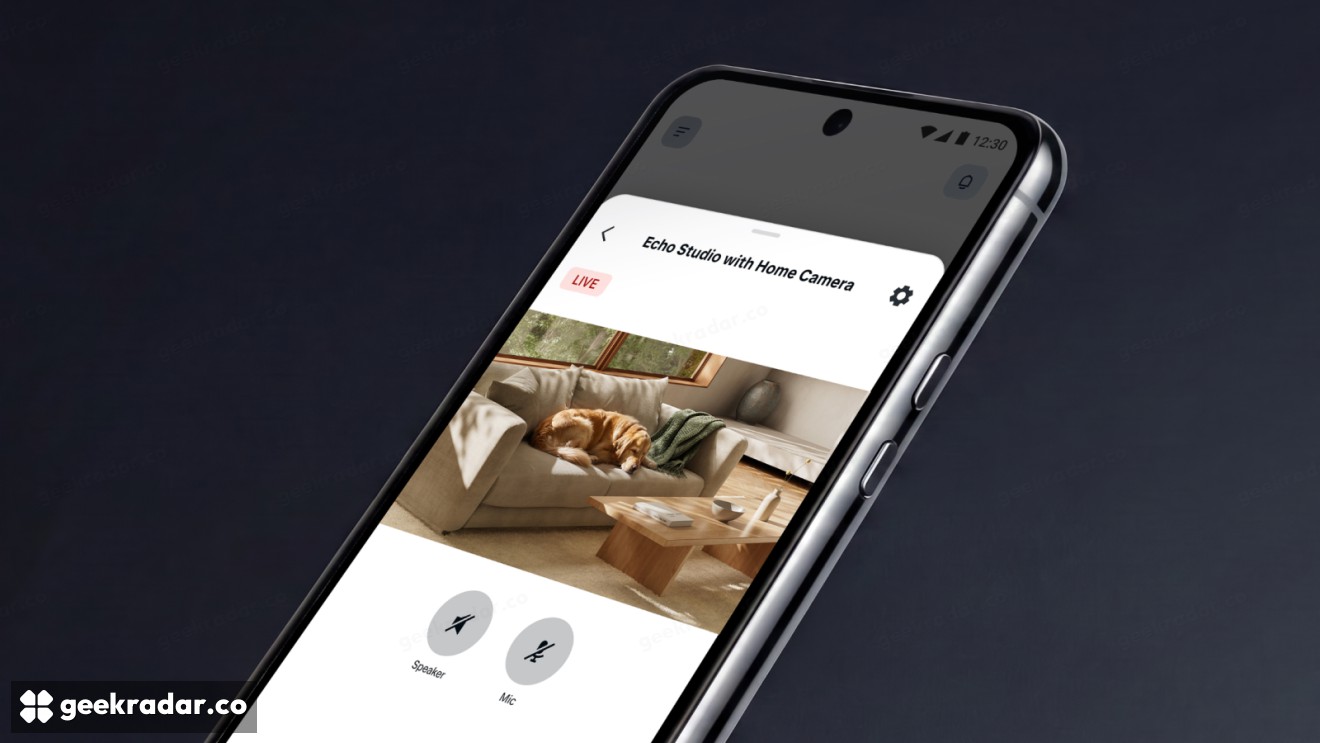
Live View and visual Alexa+ features add a second kind of input. Camera controls and promised video calling deserve separate treatment.
Amazon’s new Echo Studio with Home Camera costs $30 more than the camera-free model in the US. The extra money buys visual awareness rather than an entirely different speaker architecture. That makes the real decision unusually clear: whether the room needs a camera, not simply whether it needs better sound.
Amazon’s announcement prices the camera model at $249.99 and retains Echo Studio at $219.99. Both use a high-excursion woofer and three full-range drivers with Dolby Atmos support. The company also describes room adaptation that adjusts sound for the surrounding acoustics. These are manufacturer specifications, not evidence from a listening test.
A speaker that can look back
The camera adds Live View through the Alexa app and enables Alexa+ to interpret objects held in front of it. Amazon gives examples such as explaining a board game’s rules or recognizing a cereal box for a reorder. The useful change is that a spoken request can refer to an object without the user first identifying it precisely.
That convenience also changes placement. A speaker can work well on a shelf facing the room; a camera there captures the room too. The best acoustic position is not automatically the best location for a household’s comfort with remote viewing. This deserves consideration before the device becomes part of a shared space.
Ars Technica’s comparison identifies a 13 MP camera and notes the otherwise similar audio components. It also reports that the camera can be disabled in the app while voice interaction remains available.
Controls are part of the purchase
Amazon says a dedicated button disables microphones and included cameras, and an LED indicates when images or video are being streamed to the cloud. Certain capabilities require Alexa+, which the US announcement includes with Prime. Market and subscription conditions need checking separately from the hardware price.
An indicator tells people when a function is active; it does not decide whether they wanted a camera in that room. The continued availability of the camera-free Studio is therefore a meaningful option. Households that only want music do not have to buy visual features to remain within this speaker family. The modest price difference makes the upgrade easy to choose casually; the change in what the device can observe deserves the more deliberate decision.