ANYmal X starts deliveries with an important boundary around “explosion-protected”
The inspection robot’s ATEX scope covers defined gas environments. Its data workflow matters as much as its four-legged mobility.
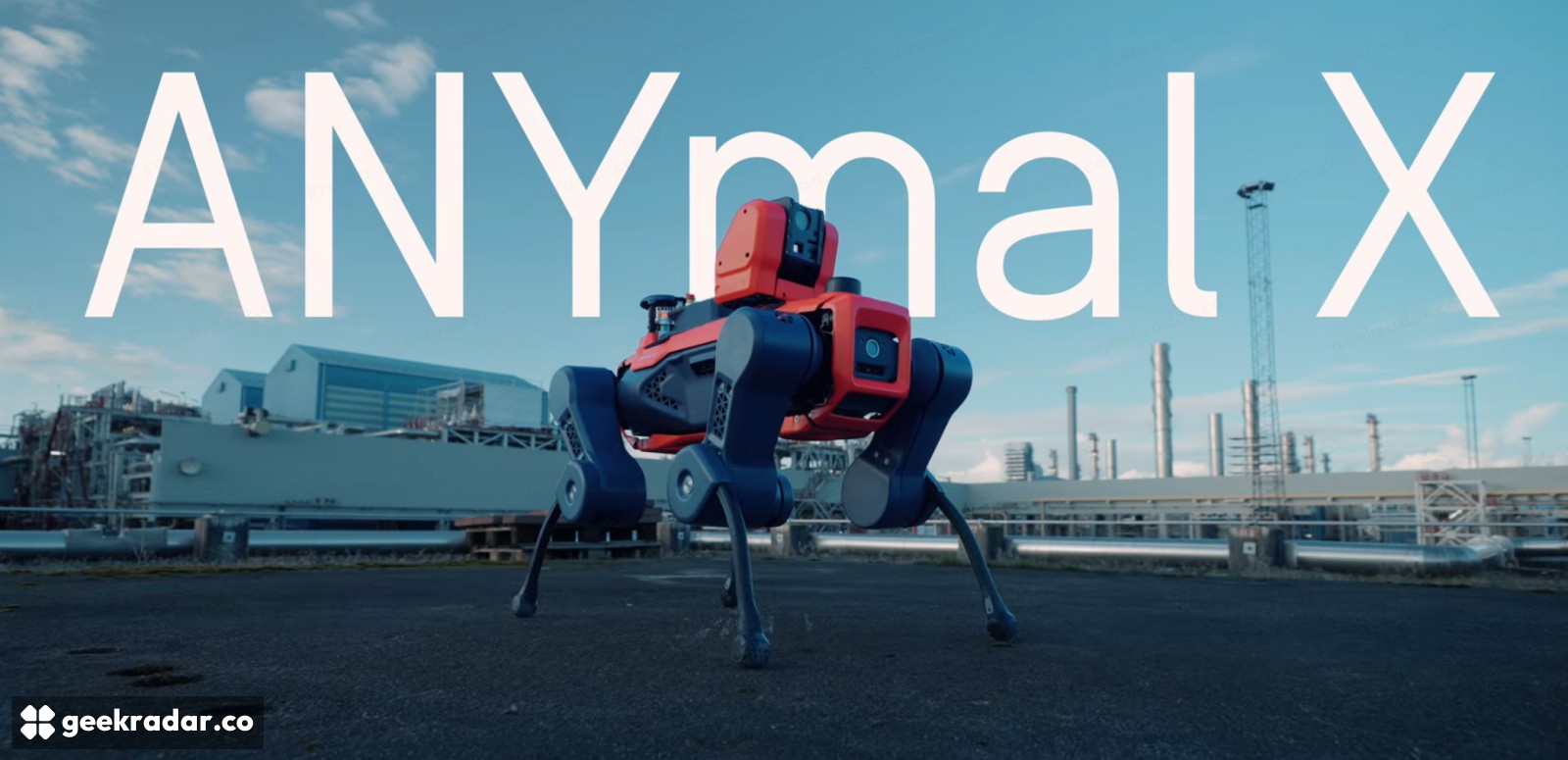
ANYbotics has begun customer deliveries of ANYmal X, a four-legged inspection robot intended for industrial areas where flammable gases can make ordinary electrical equipment unsuitable. The point of its protection is to avoid becoming an ignition source. It is not a claim that the robot can survive any explosion or enter every hazardous environment.
The October 27 launch announcement names Equinor and DSM-Firmenich among initial recipients. The robot is designed to travel inspection routes and collect readings from equipment, reducing the need for people to perform every routine round in those areas. Its value depends on the quality and repeatability of those readings as much as its ability to climb stairs.
Protection has a precise operating envelope
The product documentation identifies ATEX certification for Zones 1 and 2, gas group IIB and temperature class T4. It explicitly excludes Zone 0, explosive dust atmospheres and IIC gases such as hydrogen and acetylene. Charging and nitrogen refilling take place outside the hazardous area.
These distinctions prevent “explosion-protected” from becoming an unlimited safety promise. A site has to match its own classification and conditions to the approved equipment. The product page also describes IECEx certification as becoming available with first production, rather than presenting every certification process as already complete.
ANYbotics describes nitrogen-filled sealed chambers, flameproof protection around actuators and the battery, conductive feet and temperature monitoring. These measures address different possible ignition sources. A walking machine has motors, energy storage and exposed sensing equipment, so its protection has to be designed as a system rather than added as a single outer cover.
A useful inspection must remain attached to the right asset
The payload combines visual, thermal and acoustic sensing; gas sensing is an optional module in the product specifications. The robot can record a gauge, look for a hot area or capture abnormal equipment sounds. Those observations become more valuable when the system knows which asset was inspected and can compare it with earlier rounds.
The accompanying Shift platform connects inspection results with maintenance systems. That is the less theatrical part of the announcement, but it addresses an essential operational question: who receives a finding, and how does it become work that gets done? A photograph of a fault is less useful if its location and history are lost.
The company’s broader platform usage figures should not be confused with deliveries of this newly launched model. Nor is autonomous inspection the same as autonomous repair. For the robotics sector, ANYmal X’s meaningful advance is access to specified environments with a structured inspection workflow. The result to judge is a dependable record of equipment condition, not merely a robot walking somewhere that looks dangerous.