NEO Surveyor’s giant sunshade helps an asteroid telescope see heat without seeing its own
The six-metre structure combines thermal protection and power. NASA still lists launch no earlier than September 2027.
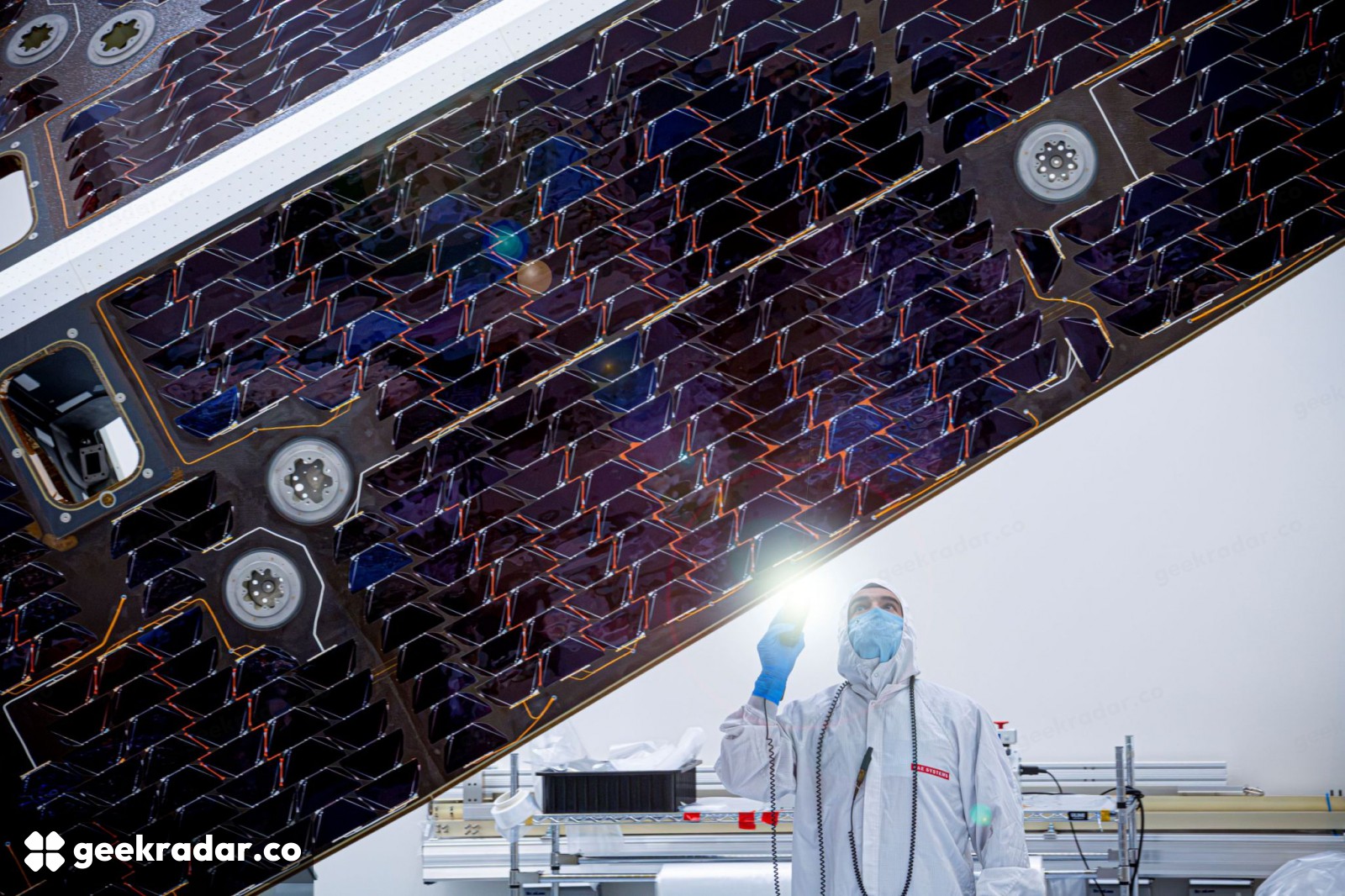
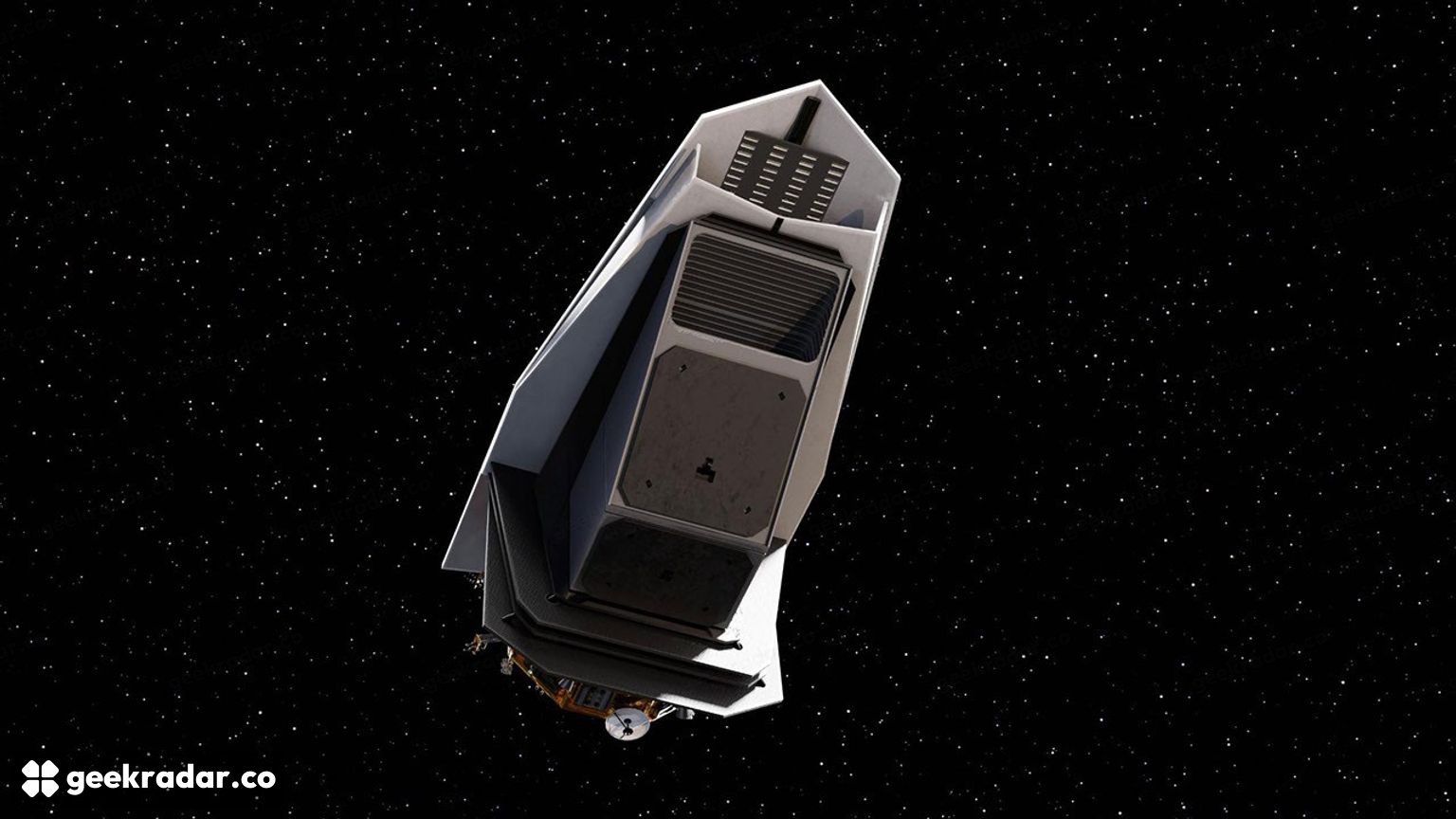
The most conspicuous part of NASA's new asteroid-hunting telescope is not its mirror. A recently released photograph shows a technician inspecting NEO Surveyor's six-metre-tall sunshade, a structure that must help keep the infrared instrument cool while also supporting the spacecraft's power supply.
That combination explains why the image released this week is more than a construction milestone. The telescope is designed to find objects whose visible-light signatures can be weak or difficult to separate from the Sun's glare. Its own thermal environment is part of the measurement problem.
Dark objects still emit heat
An asteroid can reflect little visible light without being invisible at every wavelength. Sunlight warms its surface, and that heat produces infrared radiation. NEO Surveyor's detectors will look for that emission, providing a way to find some objects that are difficult for optical surveys.
NASA's mission description also highlights objects approaching from the Sun's direction, plus those leading or trailing Earth's orbit. These geometries complicate observations from the ground. The mission is intended to fill gaps in existing searches, rather than make every other telescope unnecessary.
An infrared telescope must distinguish the target's signal from its surroundings. Keeping the instrument cool reduces unwanted thermal contributions from the observatory itself. The sunshade therefore helps create the conditions in which the detectors can do their job; it is not simply protection against physical damage.
One side faces a different problem
The structure stands about six metres tall and measures roughly 2.4 metres across its base. Its design combines shielding with power generation, allowing the spacecraft to use sunlight while limiting its effect on the telescope's thermal environment.
This is a recurring spacecraft tradeoff: the energy needed to operate an instrument can also interfere with what it measures. The engineering solution has to manage orientation, heat and electrical supply together. A large deployed surface can be central to scientific performance even when it never forms an image itself.
Discovery is the beginning of risk assessment
Finding an object is different from determining whether it threatens Earth. Repeated observations help establish its motion and refine its orbit. NASA's planetary-defence work combines discovery with tracking and assessment; an object being near Earth does not itself make an impact likely.
The mission's future tense matters. This photograph demonstrates hardware work, not a completed sky survey or a newly discovered hazard. Launch and commissioning must still precede routine observations.
NEO Surveyor's distinctive promise is to make some currently awkward targets easier to see. The sunshade is a reminder that this begins well before an asteroid appears in the data: first, engineers have to stop the telescope's own environment from drowning out the signal it was built to find.