Austin Wintory’s Mass Effect music is a proposal, not the next game’s soundtrack
The composer has shared early ideas from 2025. Analogue synthesis and orchestral writing reveal an approach without confirming a job or a game story.
Austin Wintory has shared the music he made while discussing a possible role on the next Mass Effect with BioWare and EA. The release offers a rare view of a composer's proposal before it becomes a game's soundtrack. It should be heard as that proposal, not as recovered music from a finished or approved version of the cancelled project.
In his October 26 announcement, Wintory says he wrote close to twenty minutes of material to explore a direction for the franchise. His YouTube presentation brings those ideas together with written context. The music was prepared in 2025, during discussions, before he knew the game's narrative details.
A pitch demonstrates a vocabulary
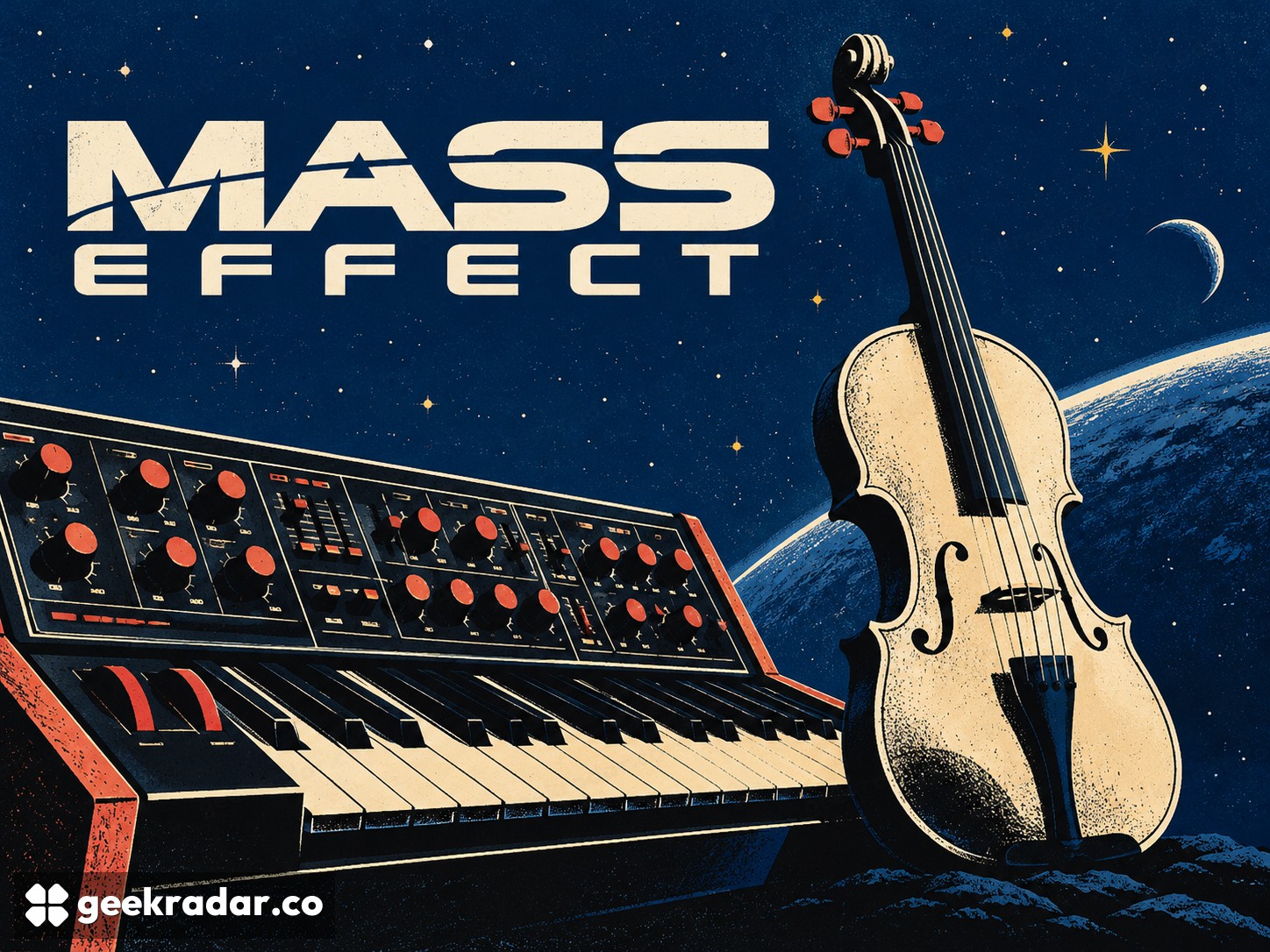
According to Wintory's explanation, reported by Game Informer, the starting point was Jack Wall and Sam Hulick's score for the original Mass Effect. He wanted to explore a greater role for physical analogue synthesisers and a more closely integrated orchestra.
That is a proposal about musical language: which sounds can identify a world, how electronic and acoustic elements relate, and how a new score might connect to a familiar series without simply replaying its existing themes. It is not a set of confirmed cues for known scenes.
The distinction is especially important when track titles evoke characters or familiar concepts. A composer's exploratory title cannot establish that a character, location or plot event was planned for the game. Wintory explicitly describes working without those story details.
Music for an imagined game is not yet music inside a game
A presentation can demonstrate tone and compositional ideas. A shipped game also needs music to respond to its actual structure: the length of an encounter, the movement between locations, the timing of dialogue and the point at which a player chooses to act.
Those implementation decisions can alter a score substantially. A passage that works as a continuous piece may need to loop, divide into layers or transition at several possible moments when integrated into play. Hearing a polished proposal therefore does not show how the final interactive soundtrack would have behaved.
A surviving creative possibility
The release follows BioWare's closure announcement and the end of development on the next Mass Effect. That context makes the recordings poignant, but does not justify calling them evidence of a game ready to ship. They document one possible contribution to a project whose development ended.
For listeners, the value is in encountering a creative direction with its uncertainty intact. The original upload lets the composer explain what he was trying to propose, rather than leaving the music to circulate as an incorrectly labelled leak.
A cancelled project often survives as disconnected fragments. This one arrives with an unusually useful boundary drawn around it: a composer imagined how Mass Effect might sound next, and made that idea audible. It is enough to appreciate the work without pretending the imagined game already existed.