The Lycurgus Cup’s colour trick has a modern recipe, without solving every Roman mystery
A Sheffield technician has reproduced the red-green effect in workable glass. The sculpture shows why the direction of light matters.
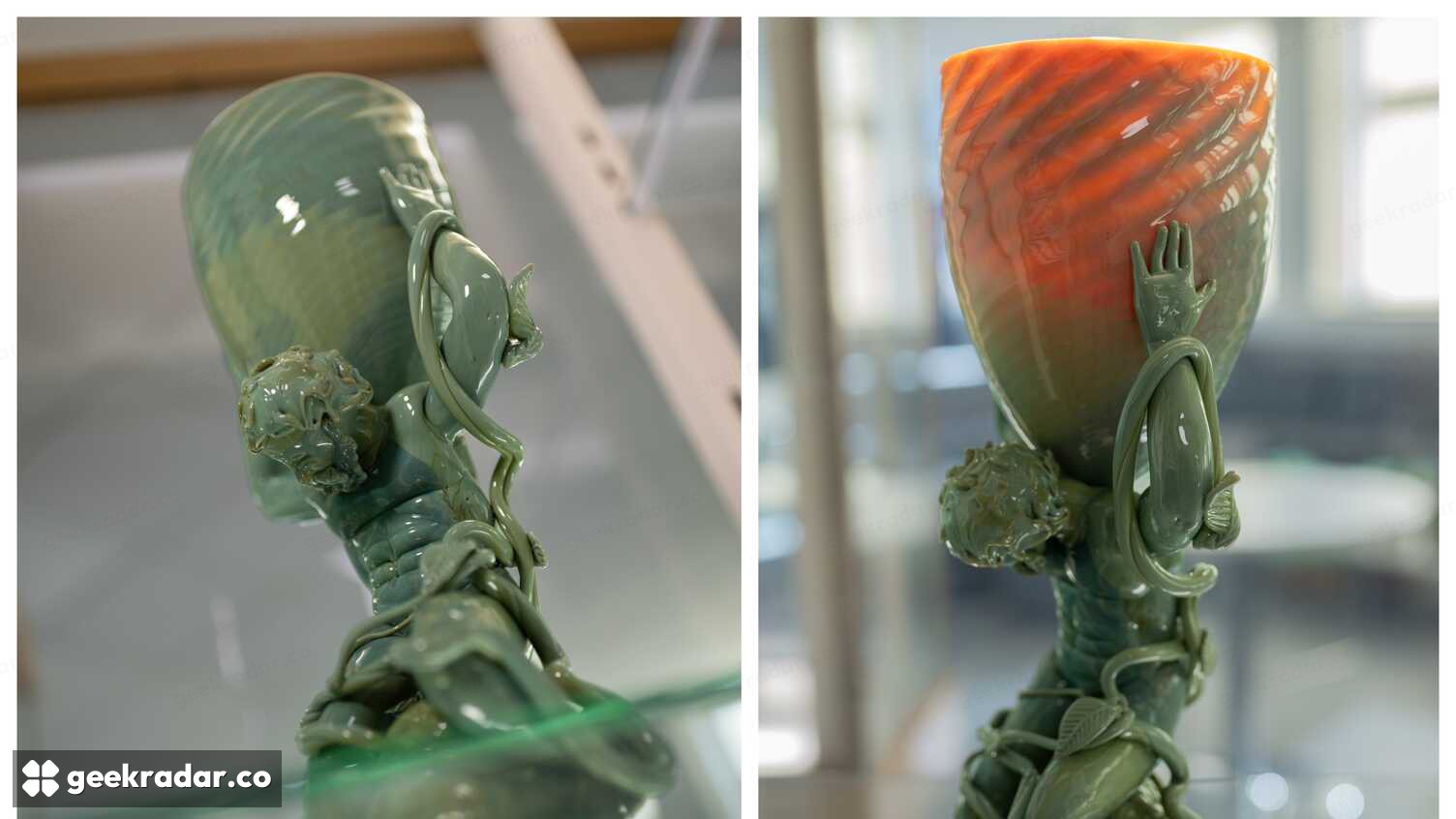
A glass that looks green in reflected light and red when light passes through it has been reproduced at the University of Sheffield, turning a famous Roman optical effect into material that a contemporary artist can work with. The achievement is a repeatable modern recipe, not proof that researchers have recovered the exact procedure used by ancient glassmakers.
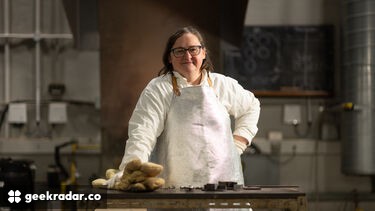
The university's October 26 announcement credits technician Lisa Hollands with developing the glass, working with Roman-glass specialist Caroline Jackson. Artist Elliot Walker has used it in a sculpture due to be shown at Sheffield's Festival of the Mind from November 6 to 15, before permanent display at the Turner Museum of Glass.
The lighting changes the colour you see
The reference is the fourth-century Lycurgus Cup, held by the British Museum. Its colour depends on the path light takes: illumination viewed by reflection produces a different appearance from light transmitted through the glass. Changing the light source's position can therefore reveal two strikingly different colours in the same object.
Tiny quantities of gold and silver are central to the effect. Their behaviour in the glass depends on the form and distribution of particles much smaller than the wavelengths of visible light. Simply adding precious metals is not enough; the preparation has to produce the right optical response.
That makes this a materials problem as well as an artistic one. Composition, processing conditions and microscopic structure interact. A visually successful sample is useful, but a recipe that repeatedly gives a glassworker enough usable material is a different achievement.
Reproduction does not settle every historical question
Hollands experimented with furnace conditions, starting materials and oxygen levels to obtain the desired result. The university describes modern materials chosen to approximate the ancient glass, informed by existing knowledge of the original object.
The distinction leaves the achievement intact. Experimental reconstruction can show what is possible and which conditions matter, even when it cannot identify one unique historical route. Ancient craftsmen's practical knowledge and modern explanations operate at different levels; neither should be reduced to a story of accidental magic.
A sculpture gives the physics a readable form
Walker's piece combines a classical sculptural reference with a blown-glass element designed to make the colour change visible. The lighting of its eventual display is therefore part of how visitors understand the work. A photograph taken under only one condition can conceal the very property that makes the material unusual.
The university connects the broader research to photonic materials and the study of how glass forms and behaves. That does not make this particular decorative glass a ready-made solar cell or nuclear-waste solution. It shows how expertise developed around a concrete optical challenge can sit within a wider materials-science programme.
The most revealing demonstration needs no futuristic screen. Move the light, and the same glass offers another colour. The novelty is that a contemporary workshop can now make that ancient-looking surprise happen deliberately and repeatedly.