Civilization VII’s hardest revision was giving players their history back
A new developer interview explains the decision behind May’s Test of Time update. Continuity and mechanical variety need not be the same choice.
Civilization VII's decision to let players keep one civilization across an entire campaign was more than an extra checkbox. In Polygon's new oral history of the series, creative director Ed Beach describes restoring that continuity as a difficult departure from the game's original vision. The account helps explain why the Test of Time update changed a central relationship between the player and the empire on screen.
The chronology matters: Test of Time was released on May 20. The news this weekend is the developers' reflection on that decision, not the arrival of another patch. The original interview is unusually useful because it discusses the design argument rather than treating a change in direction as a simple victory or defeat.
An empire is also a story the player tells
Civilization VII's original approach made changing civilizations between Ages part of the campaign's structure. That creates room to combine different historical identities and mechanics over time. It can also interrupt the story a player believes they are playing: a particular people surviving, developing and changing through centuries.
These are different pleasures, and neither is captured adequately by counting how many choices a menu offers. One player may value a fresh mechanical combination at each transition. Another may see continuity itself as the point, even when keeping an identity creates an uneven or more demanding route.
Beach's explanation is that the latter fantasy needed a place in the game. It is a useful reminder that a strategy game's abstraction is not experienced only as a rules system. Names, symbols and persistent choices help players attach meaning to the consequences of those rules.
Continuity does not have to freeze the mechanics
The May update's answer was not simply to stop everything evolving. Its Time-Tested approach introduced ways to draw on another civilization's distinctive capabilities or reinforce one's own identity. The important design possibility is separating the identity a player keeps from the systems that can develop around it.
Consider the difference between changing the name on an empire and changing what that empire can do. A strategy game needs new decisions as its scale grows. It does not follow that every form of novelty must arrive through a replacement identity. Conversely, retaining a familiar identity should not mean repeating the same opening decisions for an entire campaign.
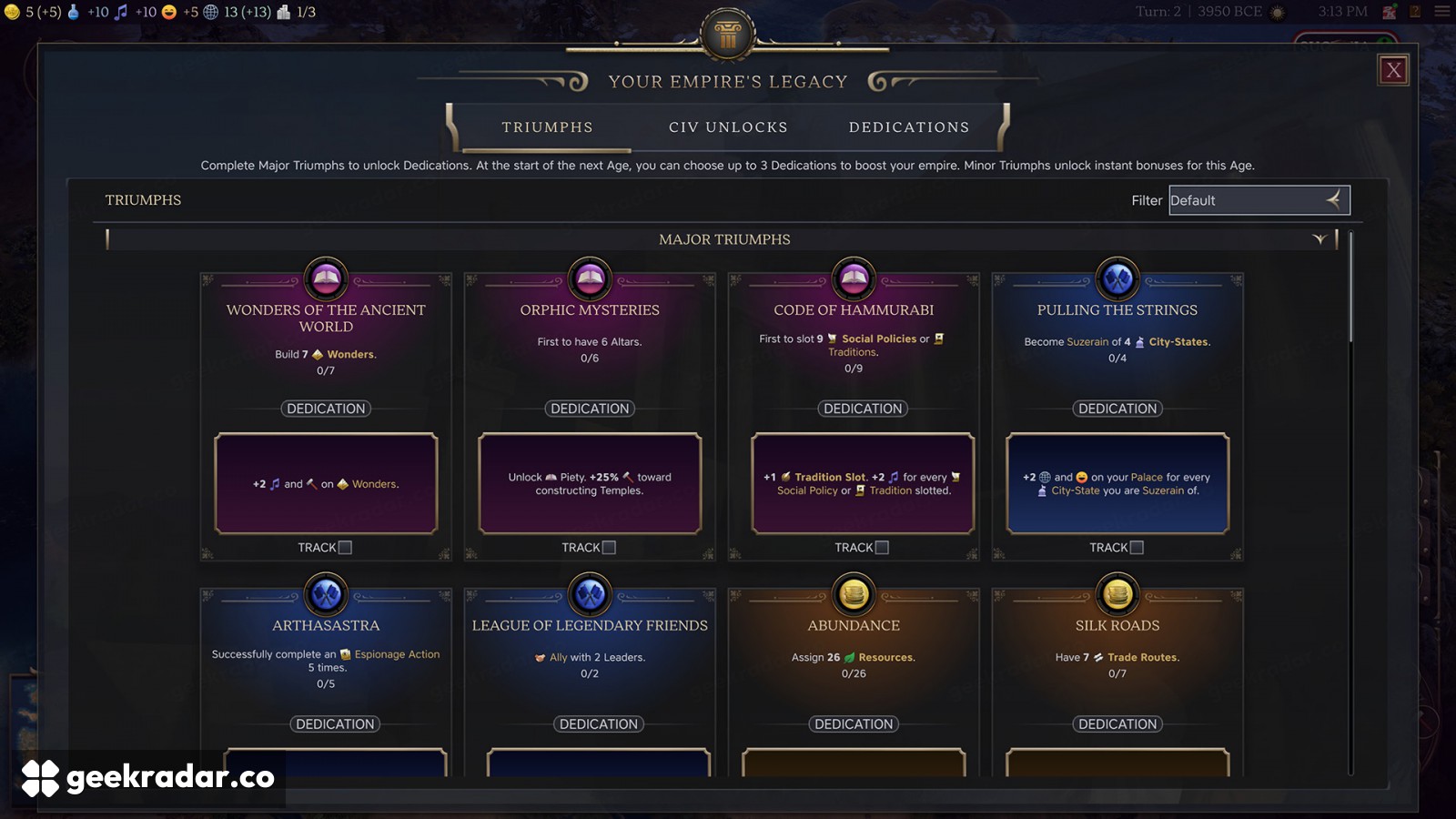
The update also replaced Legacy Paths with the more flexible Triumphs framework and revised victories to account for the campaign more broadly. Together, those changes show why this was a systemic revision: the reason to carry an empire forward depends on what the game remembers and rewards along the way.
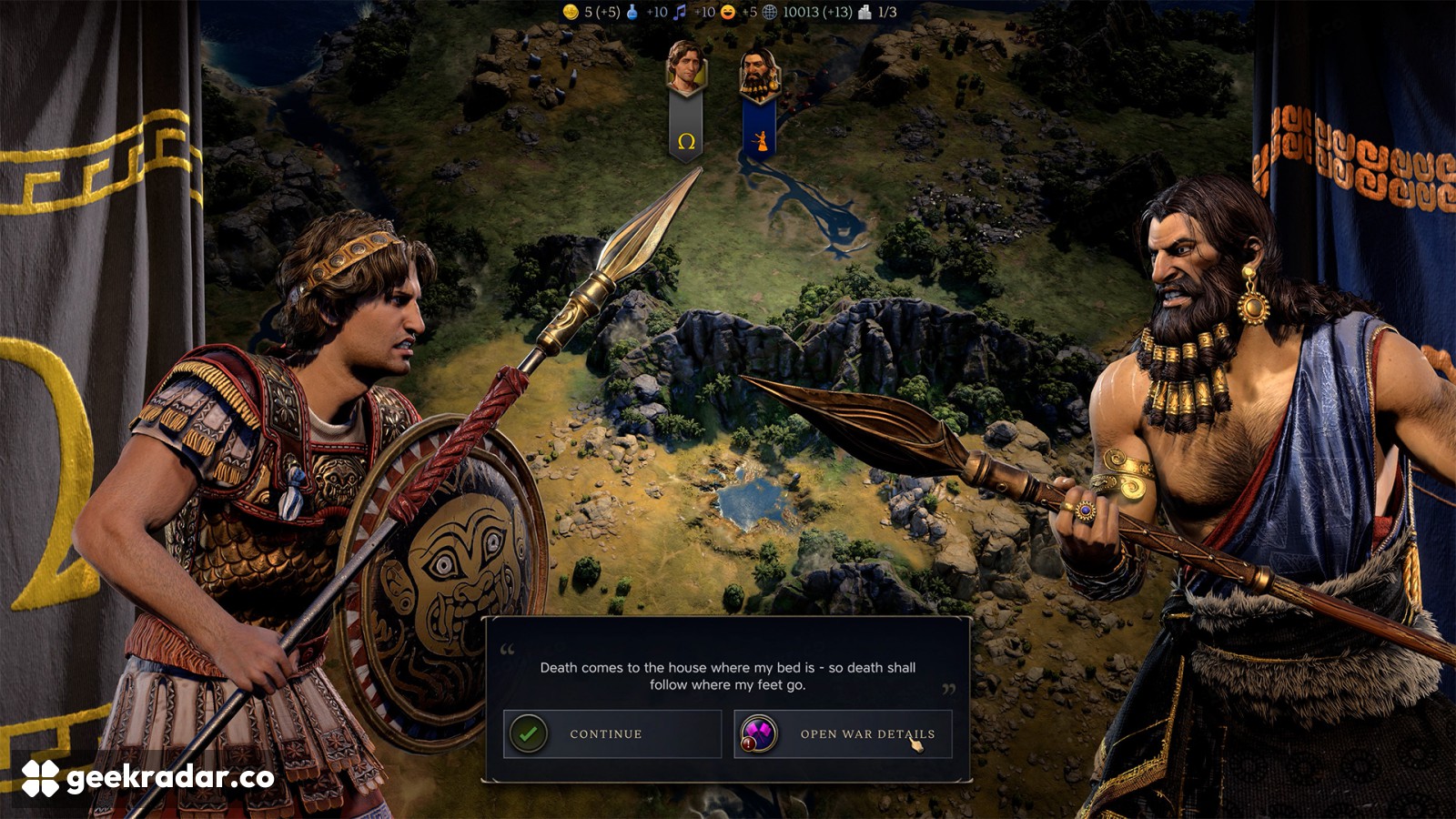
The supplied screenshots make that distinction visible. The Triumphs interface presents multiple objectives and rewards, while the leader view belongs to the game's persistent political cast. Neither image can establish that every campaign is well balanced, but they show the different layers through which the player experiences continuity.
Listening still requires a design decision
The developers describe using public testing to refine the revision. That process supplied evidence about how proposed mechanics felt in use, rather than merely counting requests for a feature name. The result still required choices about which expectations to accommodate and how to connect them to the rest of the game.
There is a parallel with our coverage of Factorio's revised cargo loading: an apparently narrow inconvenience can expose a mismatch between a system's rules and the intention a player brings to it. The solutions differ, but the useful feedback describes the mismatch precisely.
Firaxis has separately announced Arc of Tomorrow and Earthrise for 2027. Those future plans should not be folded into what the current game already offers. They do, however, make the question of continuity more consequential as the campaign's horizon expands.
For the series, the lesson is not that innovation should stop whenever it meets resistance. It is that a new rule can remove something players considered fundamental without the designers intending to remove it. Test of Time's most important restoration was the ability to recognize whose history you were still writing.