Factorio 2.1 makes a rocket load look more like your actual shopping list
The stable update combines small cargo requests and expands platform logistics. Space Age remains a separate expansion.
Factorio 2.1 is now on the stable branch, bringing a change that anyone building a small space platform can appreciate: a rocket can carry a mixture of requested items instead of sending a separate load for each type. Wube marked the update stable on October 23, after a summer of public testing. This is a refinement of the factory you already know, with much of its most consequential work happening between destinations.
The distinction matters for returning players. Version 2.1 is a free update; Space Age remains the expansion that supplies the interplanetary setting. The new version does not add another collection of planets or a fresh research tree. Its appeal is that familiar plans can require less awkward handling.
A rocket should carry the order you actually placed
Wube’s explanation of mixed cargo starts with a recognisable problem: a compact platform needs a few belts, machines and furnaces, but automated delivery previously tended to send full stacks separately. The excess was useful if the platform grew. It was less attractive when the design was already settled and the immediate job was small.
Mixed loads change that relationship. The request becomes closer to a shopping list, and the launch system can combine different goods. The developer says it processes smaller requests first, favouring construction supplies before bulk cargo. It deliberately seeks a workable packing solution rather than the mathematically optimal one.
That last detail is unusually revealing. An automation game has to simulate its automation too. A system that saves players launches but spends excessive computing time deciding the perfect contents of each rocket would move the inefficiency elsewhere. The design accepts some imperfect packing to make routine logistics less cumbersome.
For an existing factory, this suggests a useful first experiment: inspect a construction request that used to generate several small shipments. The improvement should be judged at that bottleneck, rather than by assuming every interplanetary route suddenly needs fewer rockets.
The platform becomes part of a wider network
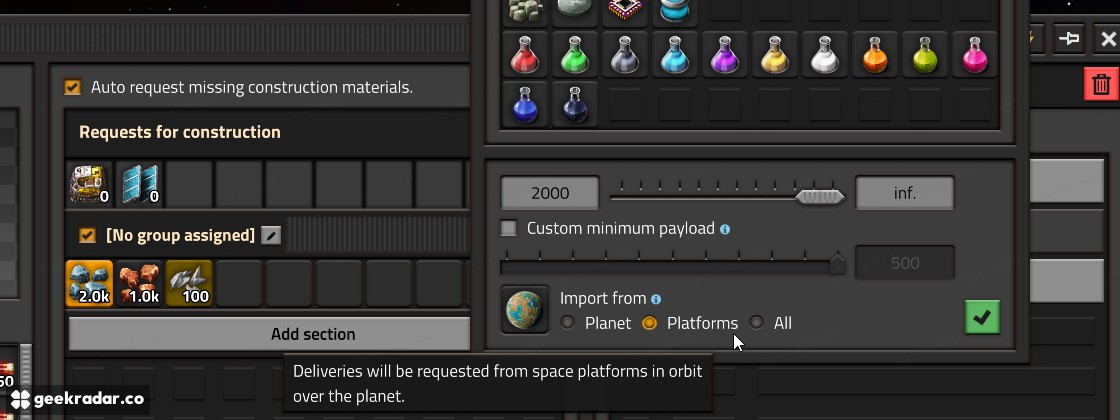
The stable release also includes transfers between platforms in orbit and an option to import from any available location. Those capabilities make a fleet less dependent on each vessel having a rigid relationship with one planet. They also make it more important to understand which destination is asking for a resource and which location can supply it.
There is a practical difference between reducing manual work and removing design decisions. A flexible network can be easier to expand, yet a shortage still has a cause. If several platforms request the same supplies, the factory must still produce enough of them. Better delivery tools make that dependency more visible; they cannot abolish it.
Wube’s 2.1 development plan frames this release as the final major update before a greater emphasis on long-term support. That is a statement about the development programme, not a claim that maintenance has ended. For players who stayed on stable 2.0, the meaningful milestone is simpler: these tools have now left the experimental branch. The next platform can start with what it needs, instead of an inventory full of what happened to fit the old delivery rules.