Switch Sports Resort is out today. The solo sessions matter too
Twelve activities, offline cosmetic progression and a solo challenge route give the Switch 2 exclusive a role between party nights.
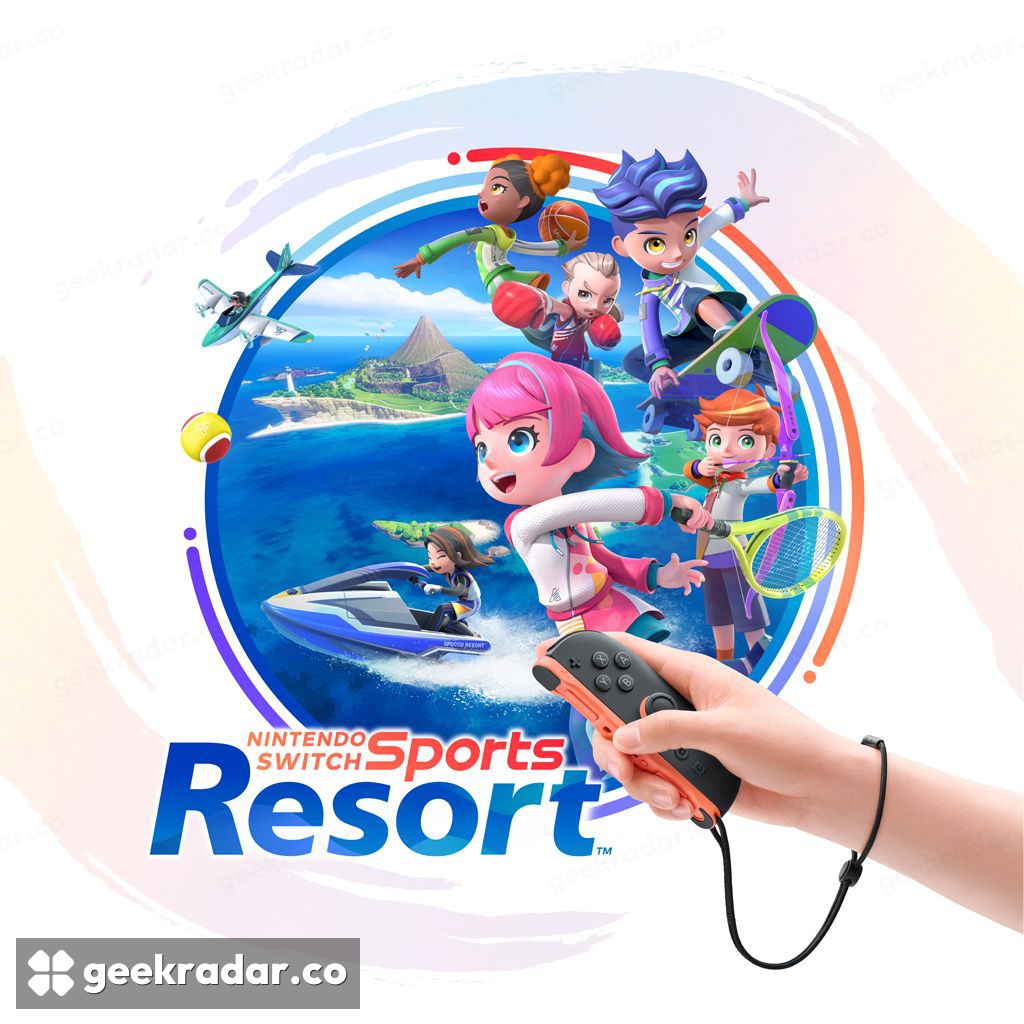
Nintendo Switch Sports Resort launches today, October 22, on Switch 2, including in Italy. Its twelve activities make an inviting party-game menu, but the more consequential question is what remains when the guests go home. Nintendo is giving this outing a solo progression route and allowing cosmetic rewards to be earned offline, so a living-room sports game has more room to be someone's regular game too.
The official product page confirms Switch 2 exclusivity. The familiar name should not be mistaken for an update to the original Nintendo Switch Sports. Check which console the recipient owns before buying it as a family present.
A party game with a quieter second life
Nintendo calls its single-player-focused mode Island Crown. It provides a competitive progression route across nine sports. That structure matters because a collection of approachable activities can otherwise depend heavily on the occasion: excellent material for an evening together, then difficult to fit into an ordinary solo session.
A progression route supplies a reason to return without arranging another group. It does not establish how varied or demanding the finished challenges are; this is a launch guide, not a verdict based on playing through them. But it answers a practical question that the number of sports alone cannot: whether the package explicitly accommodates somebody playing by themselves.
Cosmetic progression also has a useful distinction. Nintendo’s Italian page says Spocco Points can be earned online or offline, alone or with friends. For a household that mainly plays on one television, local sessions therefore contribute to that reward system. An online subscription is not the prerequisite for every kind of progress.
Choose the activity before counting controllers
The twelve activities mix familiar competitions with ways to explore Wuhu Island. Nintendo’s overview describes swinging, aiming and tilting Joy-Con 2 controllers, with mouse controls used for skateboarding. That variety is a reason to inspect the controls for the sport you expect to play most, rather than treating “motion controls” as one interchangeable action.
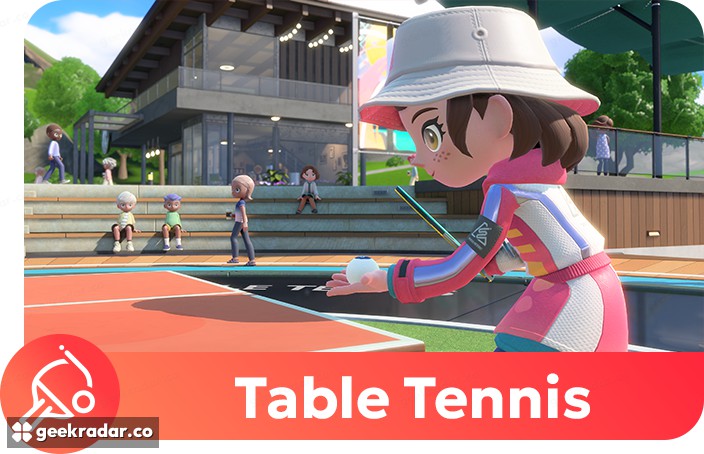
The player count varies too. Italy’s listing gives table tennis up to four participants offline but two online, while bowling allows up to sixteen online. Boxing is a two-player activity. The package-wide maximum cannot be applied to every event, and a large online match does not mean sixteen people can play on one console.
There is also a choice of competitive intensity. The advertised online Pro League tracks ranked competition, while casual online play avoids recording wins and losses. Those modes serve different evenings. A friend trying bowling for the first time does not necessarily want the same structure as somebody returning to improve a rank.
Exploration changes the pace
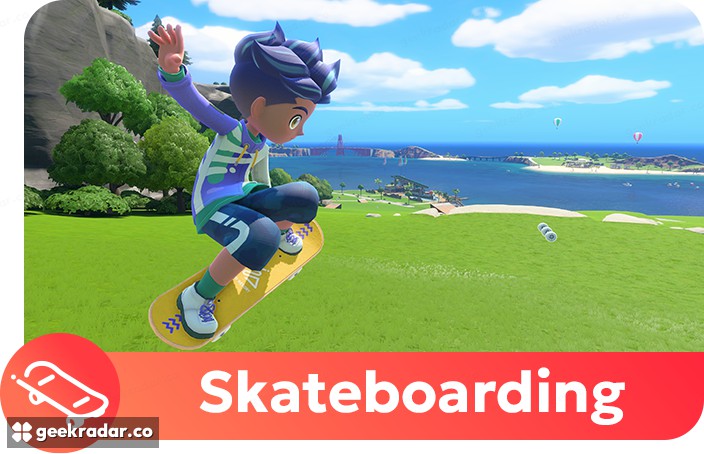
Skateboarding, power cruising and flying provide a different rhythm from a sequence of short matches. They give the island a role beyond scenery between scoreboards. The official images show that contrast: a clearly bounded table-tennis court and a skateboarder moving through a much larger outdoor setting.
That is the useful promise to weigh against the purchase, alongside the sports your group actually likes. Twelve activities have little value if the one everyone wants is missing, while a smaller personal selection can justify repeated sessions if it fits the people sharing the screen. For more on the hardware boundary, our Switch 2 and Steam Deck comparison explains why the library is part of choosing the system.
Resort’s strongest proposition on paper is the space between gatherings: you can practise, progress and explore before the next person picks up a controller. A party game becomes a better household purchase when it has a place in the week as well as the weekend.