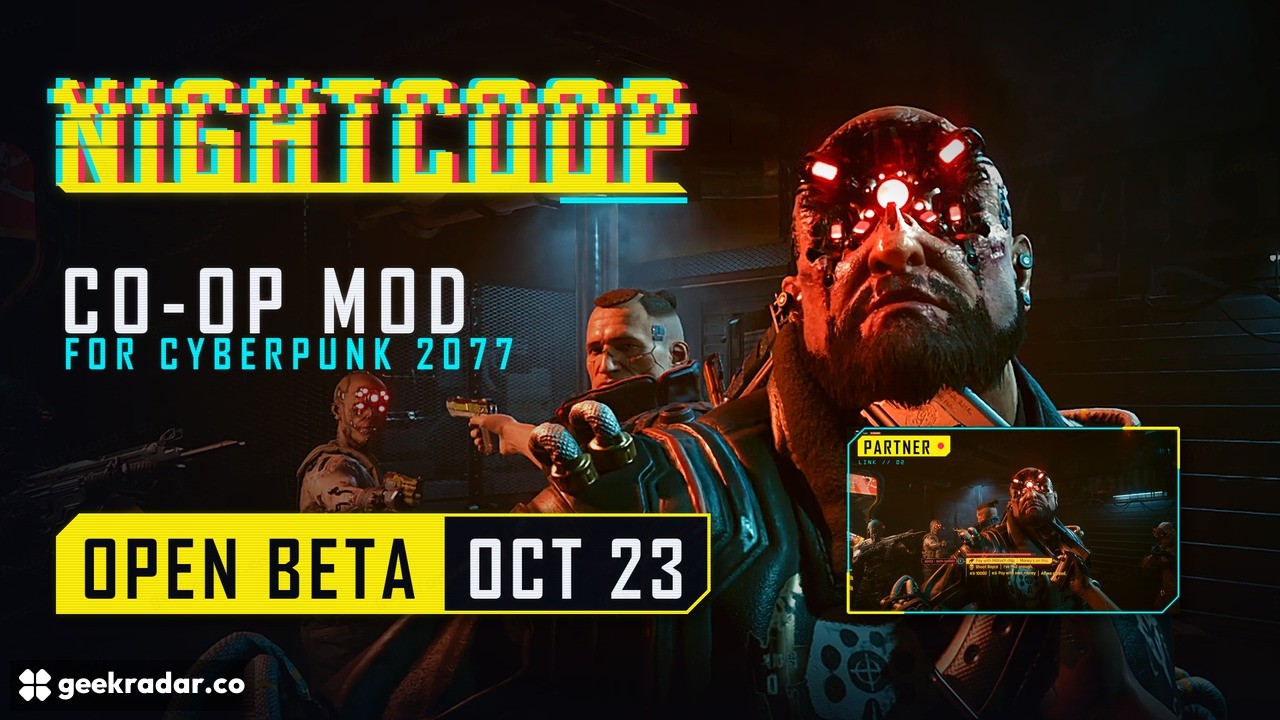
NightCoop’s Cyberpunk co-op beta has a date—and a game-version caveat
The fan project targets October 23 for an eight-player beta. Its listed 2.31 requirement needs checking against the imminent official 2.5 update.
NightCoop is counting down to an October 23 beta for its unofficial Cyberpunk 2077 co-op mod. The promise is unusually ambitious: bring up to eight players into the campaign, with a shared world and a way to decide dialogue together. The immediate practical question is less glamorous. Its website still lists game patch 2.31, just as CD PROJEKT RED prepares to release 2.5.
The project's live page gives the beta time as 15:00 UTC on October 23, or 17:00 CEST. At publication, the download is not yet available. The same page still describes closed testing and says a full release date has not been set. The countdown establishes an announced beta window; it does not establish a finished, fully supported multiplayer edition of the game.
Images: NightCoop; Cyberpunk 2077 © CD PROJEKT RED.
One campaign needs one authoritative world
NightCoop's design assigns the world's quest progress and state to the host's save. Guests bring their own characters into that world. Dialogue decisions require more than half the players to vote for an option, with scenes synchronized across the session, according to the developer.
Those rules address the difficult part of turning a single-player role-playing game into a group activity. It is not enough for several people to see the same street. They also need to agree about which quest is active, which conversation has advanced and what the city should do next.
Consider four friends arriving at a dialogue choice with different preferences. A majority rule gives the session one outcome, but it also changes the experience of authorship: the person hosting is no longer the only participant influencing the moment. Conversely, attaching world progress to one host provides continuity at the cost of making that save the group's point of reference.
This is a different collaboration problem from a game designed around shared puzzles from the start, such as We Were Here Tomorrow. NightCoop is adapting an existing campaign's assumptions. Its success depends on the quiet synchronization between players as much as on the spectacle of a shared firefight.
The build number is the immediate catch
The mod's published requirements specify Windows, a licensed copy of Cyberpunk 2077 on patch 2.31 and RED4ext. RED4ext's own project page identifies it as a script extender for the game's REDengine 4. It is an additional software layer used by mods, rather than an official multiplayer service.
Meanwhile, CD PROJEKT RED has announced update 2.5 for October 22 on PC, PS5 and Xbox Series X|S, with the Switch 2 version following later. That official update's arrival does not certify a third-party mod's compatibility.
This matters particularly for a group. If one player's game updates automatically while another retains an older installation, a shared appointment to play can turn into a version-matching exercise. Keep save backups and follow the project's eventual beta instructions rather than treating an early demonstration as an installation guide.
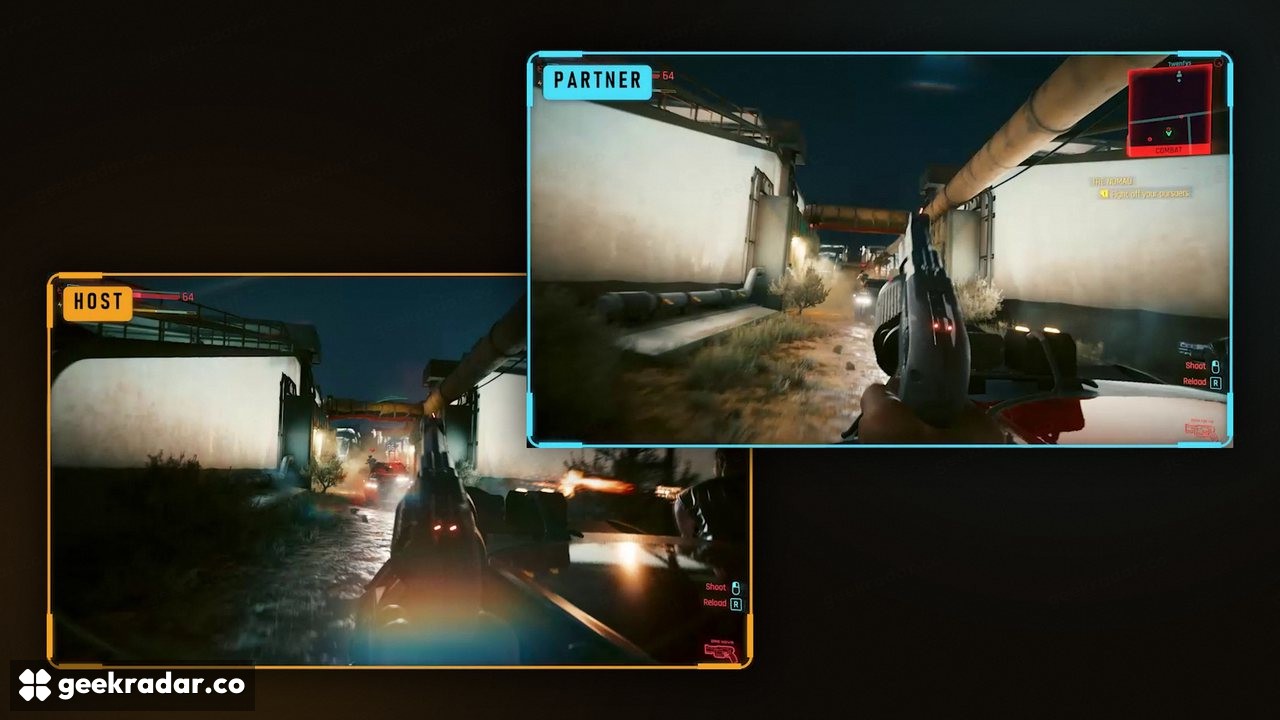
A preview of the mechanism, not a completed verdict
The developer's gameplay preview presents host and partner views together, making the synchronization goal visible. The supplied image above shows that presentation; it is evidence of the demonstration's format, not independent confirmation that every quest or eight-player combination works reliably.
NightCoop also describes optional host-controlled player-versus-player combat and free public builds. It remains a fan project unaffiliated with CD PROJEKT RED. Console owners should not infer availability from the game's own console support: the mod currently names Windows.
For readers following Cyberpunk coverage, Friday's useful milestone is whether the announced beta arrives with clear compatibility and scope. Sharing Night City sounds immediately appealing. Sharing the same supported build is what will let a group find out how well that promise survives contact with a real campaign.