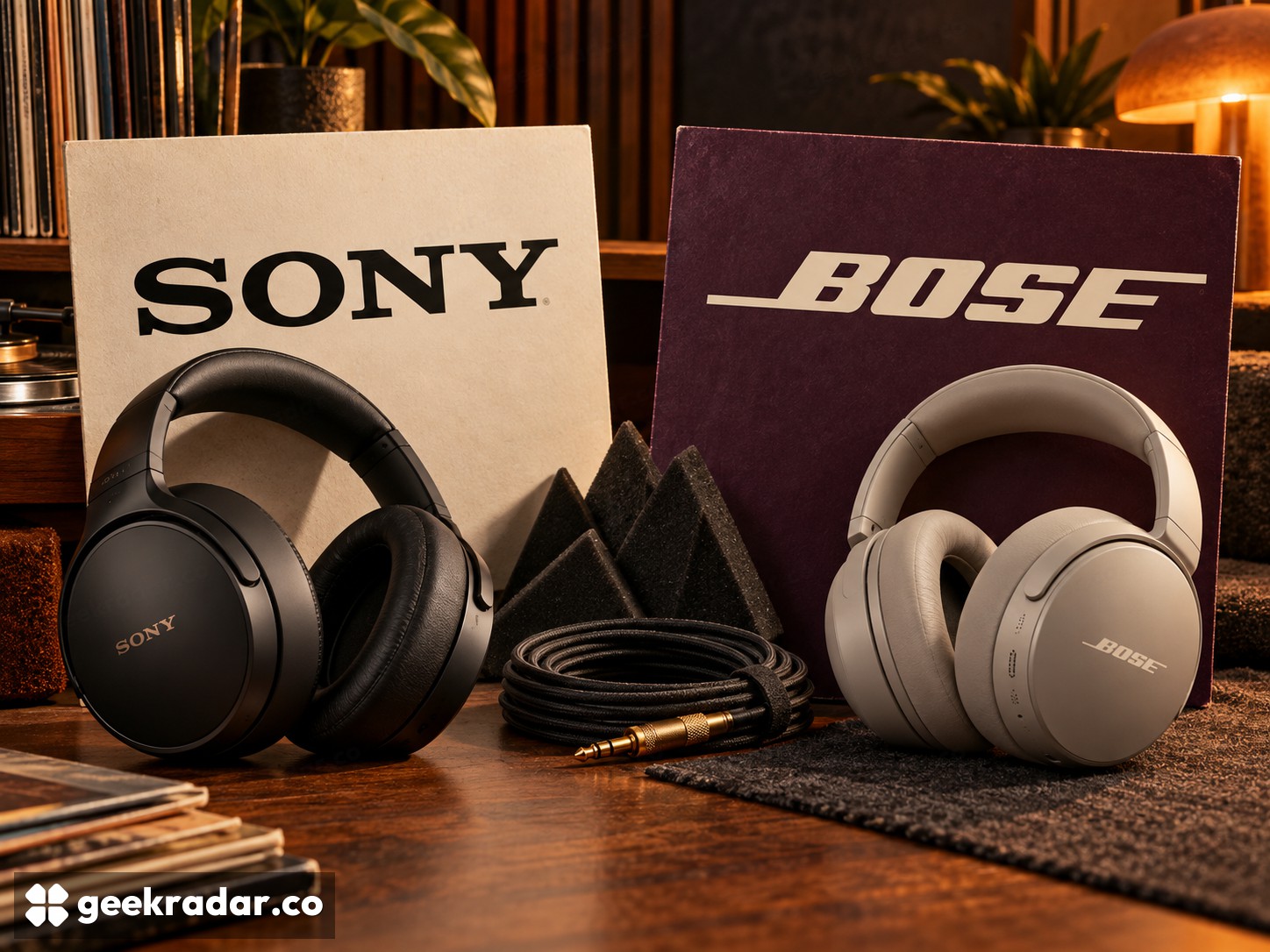
Sony vs Bose headphones: compare the experience, not just noise cancellation
Controls, fit, apps and source-device compatibility make different demands on a headphone purchase. A premium feature should never be assumed across a whole brand.
Sony and Bose both sell headphones that can make a commute quieter and a working day less distracting. Their broader appeal differs in the way they organise the listening experience. Sony gives buyers a large set of product families and sound-adjustment options. Bose's QuietComfort identity puts noise control and everyday listening modes near the centre of the purchase. A logo alone cannot tell you which pair will fit your head or handle your calls better.
The sensible comparison starts with the kind of headphone: an over-ear travel model, sealed earbuds and open-ear headphones solve different problems. Comparing their prices without matching that purpose produces a winner that may be useless for the intended job.
Sony: room to adjust the experience
Sony's Sound Connect documentation describes equalisation, ambient-sound controls and other settings, explicitly noting that available functions depend on the connected model. Selected settings carry over when the headphones connect to a computer, although Sony does not provide a corresponding PC app on that page.
This is attractive if you want to tune the balance of bass and voices, or decide how much of the room remains audible. The advantage is control; the possible cost is time spent configuring it. Automatic behaviour is useful only if it matches your routine. A setting that changes sound when you move can be welcome on a commute and unwelcome during a meeting.
Sony's range also makes it possible to shop below its flagship tier. The caution is that the family resemblance can conceal substantial differences. Check whether the chosen pair actually has active noise cancellation, multipoint connections and the wired mode you need. The existence of those features elsewhere in the catalogue is not evidence for your candidate.
Bose: modes and a useful home-audio connection
Bose offers a familiar QuietComfort family alongside other designs. Its app compatibility list spans headphones, earbuds, speakers and soundbars, but compatibility with the app does not mean every product shares every control. QuietComfort's listening modes offer a straightforward way to think about the purchase: reducing the outside world or letting more of it back in.
A more distinctive advantage appears for owners of compatible Bose home audio. SimpleSync can connect supported headphones to supported speakers or soundbars. Bose distinguishes products optimised for audio from those suited to synchronised video listening, so the exact pairing matters. This can be a concrete reason to stay within Bose when watching television privately; it is not a universal Bluetooth lip-sync guarantee.
The compromise is that an ecosystem benefit has little value if you do not own, or want, the other equipment. Buying a soundbar just to justify your headphone choice reverses the decision.
The Sony Walkman discussion shows why the source device still belongs in an audio buying decision. A headphone feature only helps when the rest of the listening chain supports it.
What neither brand can promise for every listener
Comfort is a physical relationship, not a brand property. Glasses, ear shape, heat and headband pressure can change the experience over two hours. A brief shop demonstration can reveal a poor fit, but it cannot establish all-day comfort. A clear return policy is therefore part of the value calculation.
Sound quality also needs a fair comparison. Use similar listening levels and familiar recordings. More bass can seem immediately impressive without improving vocal clarity. Noise cancellation, microphone performance and wind handling are separate questions: a pair that makes a train quieter may still be disappointing on outdoor calls. Look for independent tests of the actual model rather than transferring a flagship's reputation to the entire range.
Connection details are another dividing line. USB-C can mean charging, digital audio or both; Bluetooth codec support requires compatible equipment at both ends. Neither is guaranteed by a Sony or Bose name. Italian buyers should compare local bundles, replacement cushions and service terms as carefully as the headline discount.
For someone who enjoys adjusting a product, Sony's controls can be part of the pleasure. For someone whose existing Bose setup already supplies a useful connection, QuietComfort can be the more coherent purchase. Once those differences are settled, give fit the final vote. The headphones you remove after half an hour have already lost their most important comparison.