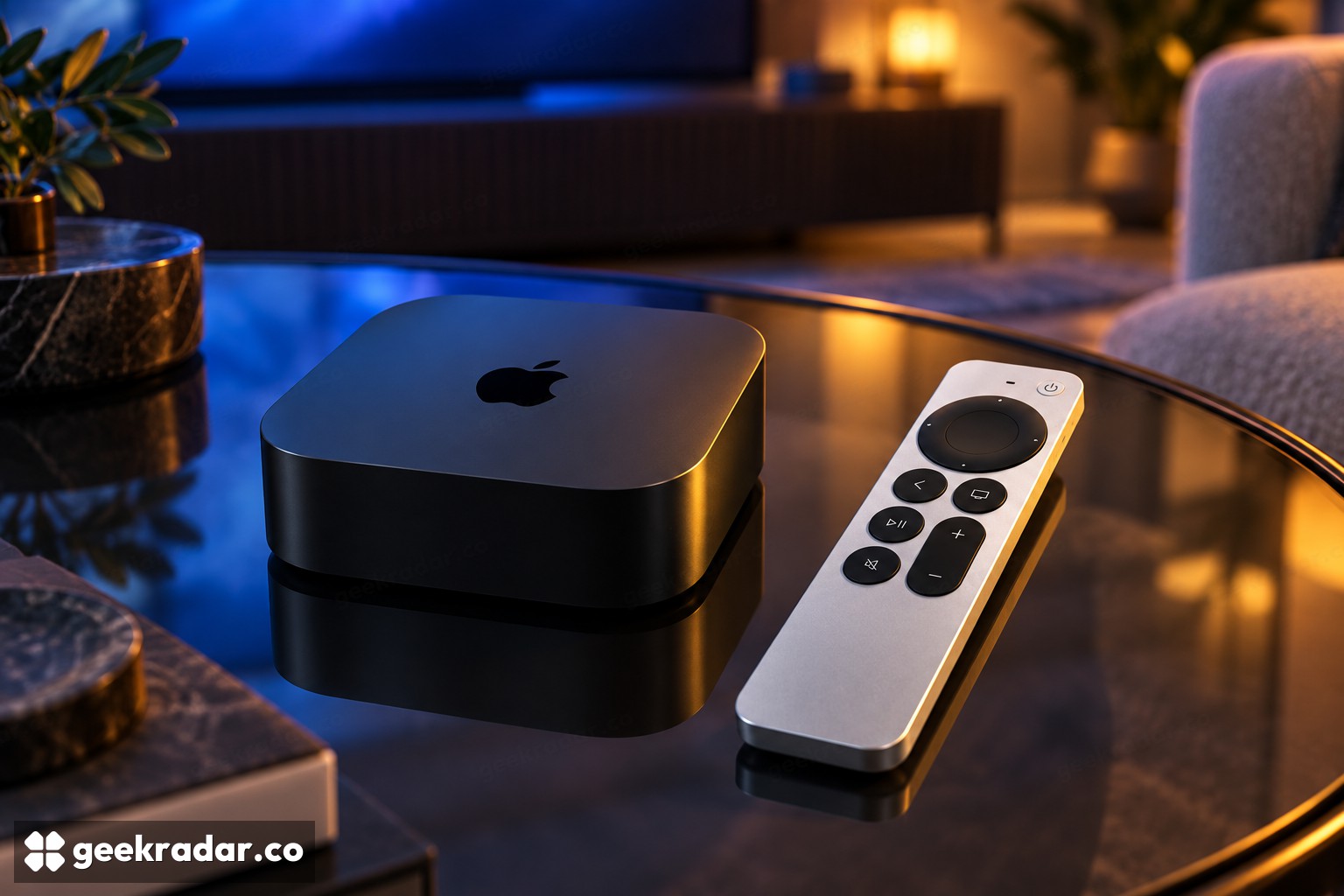
Apple TV 4K's surround upgrade and Siri AI have different requirements
Four-HomePod surround needs the new box. Siri AI supports some older models, while its initial regional rollout leaves Italy outside the launch list.
Apple's fourth-generation Apple TV 4K has two different upgrade stories. Its new four-HomePod surround setup requires the new box. Siri AI, the centerpiece of the US announcement, is also coming to some older Apple TV 4K models and launches with regional restrictions. Treating those features as one bundle risks buying hardware for a software benefit that either does not require it or is not available where you live.
The device was announced on October 13, with availability scheduled for November 13. Apple's Italian announcement lists €349; the US price is $299. The box is in preorder, so this is an assessment of the announced configuration rather than a verdict on its performance in a living room.
Four speakers make the hardware difference concrete
Apple's home-theater arrangement uses four HomePod mini 2 or second-generation HomePod speakers, organized into matching front and rear pairs. The front pair and rear pair can differ from each other. The requirement is a fourth-generation Apple TV 4K running the relevant current software.
That gives the upgrade a more specific purpose than faster menus. Someone already planning a compatible four-speaker setup has a hardware requirement to price into the project. Someone with a television and a soundbar has a different decision: a feature requiring four other devices does not automatically improve the equipment already in the room.
The total setup also needs to fit the space. Rear speakers require sensible placement and power, and a household may not want four powered speakers around the seating area. Automatic calibration can help a supported system adapt to a room; it does not remove the physical question of where the speakers will go.
Siri AI has its own eligibility list
The US announcement's availability notes put Siri AI in beta on second-generation Apple TV 4K and later. At launch, the English-language rollout covers the US, Australia, Canada, India, New Zealand, Singapore, South Africa and the UK. Italy is outside that list.
Setup also depends on the home owner's compatible Apple Intelligence-enabled iPhone or iPad, current software and supported Siri settings. The new television box's processor does not erase those requirements. An existing compatible Apple TV owner in an eligible region should distinguish the software rollout from reasons to replace the hardware.
Read the video specifications literally
The new box uses an A19 chip, while Apple's technical specifications list 128GB storage, Gigabit Ethernet, Wi-Fi 7 and AV1 video support. The listed standard video rates reach 2160p at 60 frames per second. An HDMI 2.1 label should therefore not be expanded into an unsupported claim of 4K output at 120fps.
Codec support matters because the player must decode the format a service delivers. It does not guarantee that every app will use the same codec, increase its bitrate or offer a better version of every title. Content availability and service behavior remain part of the playback chain, alongside the display and network.
The remote is another comparatively contained upgrade. Find My features include more precise location support on eligible iPhones and a sound-finding option on the newest remote. Checking the phone requirement is more useful than assuming every Find My-capable device provides the same locating experience.
Apple is extending the shared-screen ambitions explored in its HomeView announcement, but this television upgrade should be priced around the job it will actually do. For a four-HomePod room, the new box is part of the required system. For an existing owner interested mainly in Siri AI, hardware compatibility and the local rollout should be checked before a replacement enters the shopping cart.