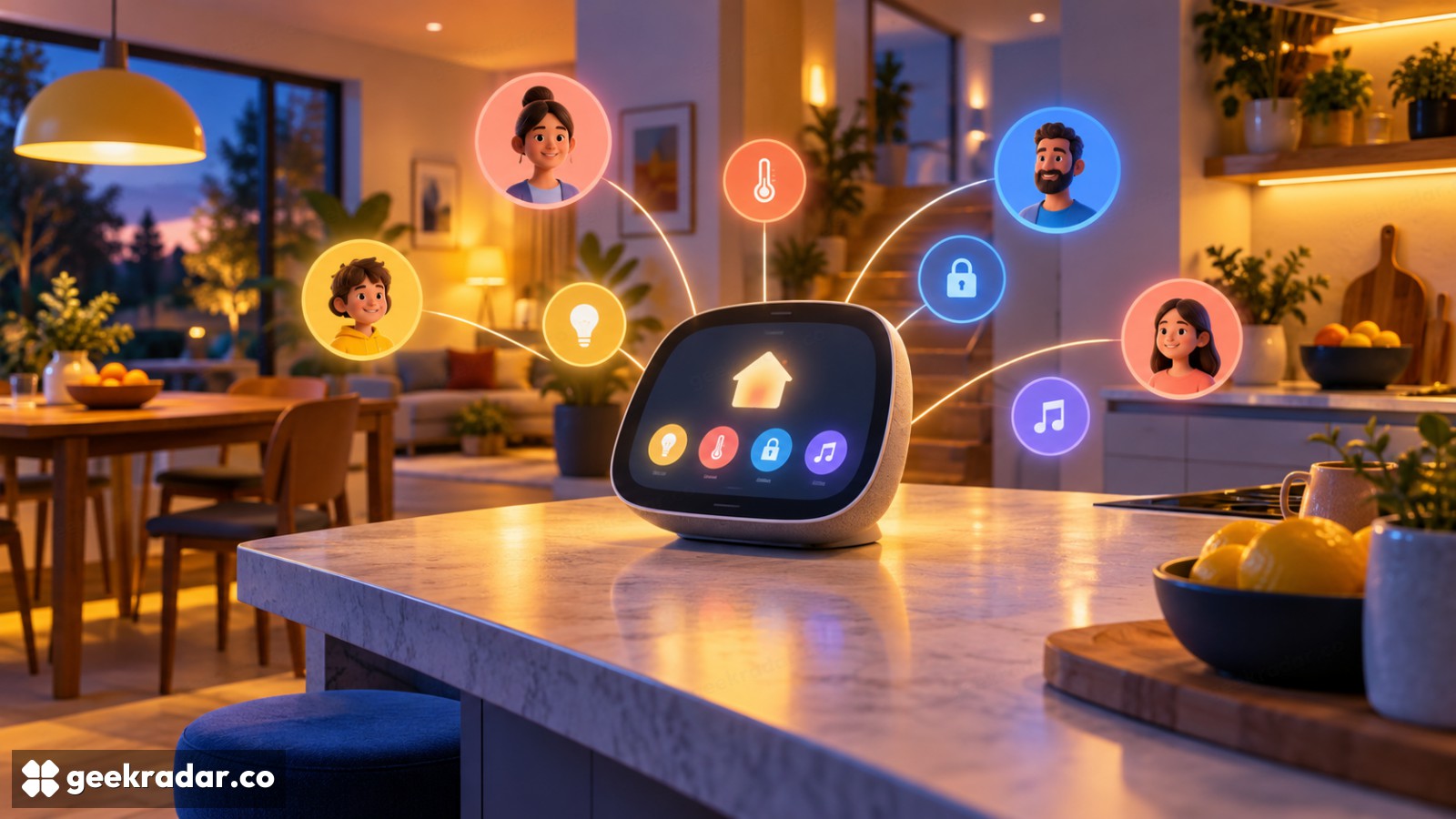
Apple HomeView brings Siri AI to a shared screen—with a major EU catch
Apple’s new home display makes household identity central to the smart home, but its launch markets and paired-device requirements deserve close attention.
Apple’s next smart-home pitch is a screen that knows who is standing in front of it. Announced on October 13, HomeView combines a seven-inch display, entertainment and home controls with Siri AI. Apple lists a US starting price of $299 and November 13 availability in its initial markets. The European Union is excluded because Siri AI is currently unavailable there on iOS. Apple’s announcement.
The household becomes the interface
Apple says HomeView can recognize up to six people. Personal context features require a paired, compatible Apple Intelligence device; personal Messages and Calendar content also depends on that device being present and recently unlocked. Siri AI is described as a beta in HomeView software 27.2. These conditions belong beside the headline features, particularly for households sharing devices.
What we would test
Our editorial view is that the interesting challenge is the handoff between shared and personal information. A kitchen screen should make a timer easy to see while making someone else’s messages hard to expose. A successful demonstration of face recognition would answer only part of that question.
A useful review would put the device into ordinary situations: two people cooking, a visitor asking for music, an enrolled user walking past, and a phone left in another room. We would also look at whether people understand why a request works for one person and fails for another. Those are evaluation questions, not results from hands-on testing.
Compatibility has a history
Our earlier analysis of Matter 1.2 explains why a common accessory language matters. HomeView adds another layer: deciding who can see and control what through that interface. Readers following that evolution can browse our smart-home coverage and Gear section.
For an EU reader, availability is the first unresolved issue. For readers in launch markets, the more useful question is whether the complete household setup—not just the display—supports the experience they want.