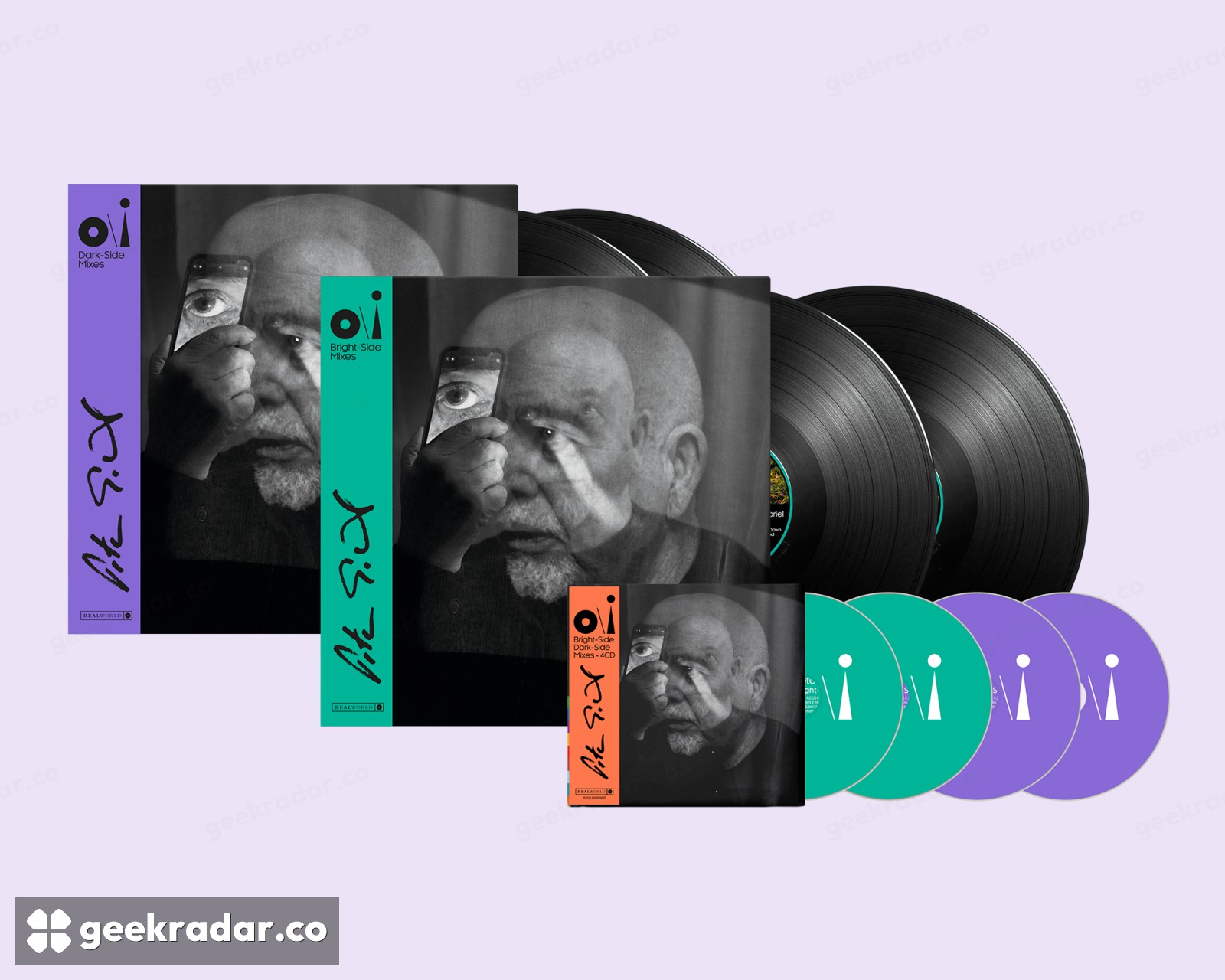
Peter Gabriel’s o\i puts a choice on the turntable. Which mix did you buy?
The November 27 album pairs 13 songs with two stereo mixes. The four-CD book contains both, each double LP plays one, and Hans-Martin Buff’s Dolby Atmos version takes a third route.
Two black-vinyl editions of Peter Gabriel’s o\i will go on sale on November 27. They carry the same portrait by Nadav Kander and the same 13 songs, but the grooves contain different decisions about how those songs should sound. Mark “Spike” Stent mixed the Bright-Side edition. Tchad Blake mixed the Dark-Side edition, with one track, Who Are We Talking To?, handled by Mike Elizondo. Buying a double LP gets you one of those stereo programmes spread across two records. The four-CD book includes both.
That makes the small print on the sleeve unusually important. With GTA VI’s two vinyl editions, the physical object is where the editions part ways. Here, two copies pressed on ordinary black vinyl can play back differently even on the same turntable, cartridge and speakers.
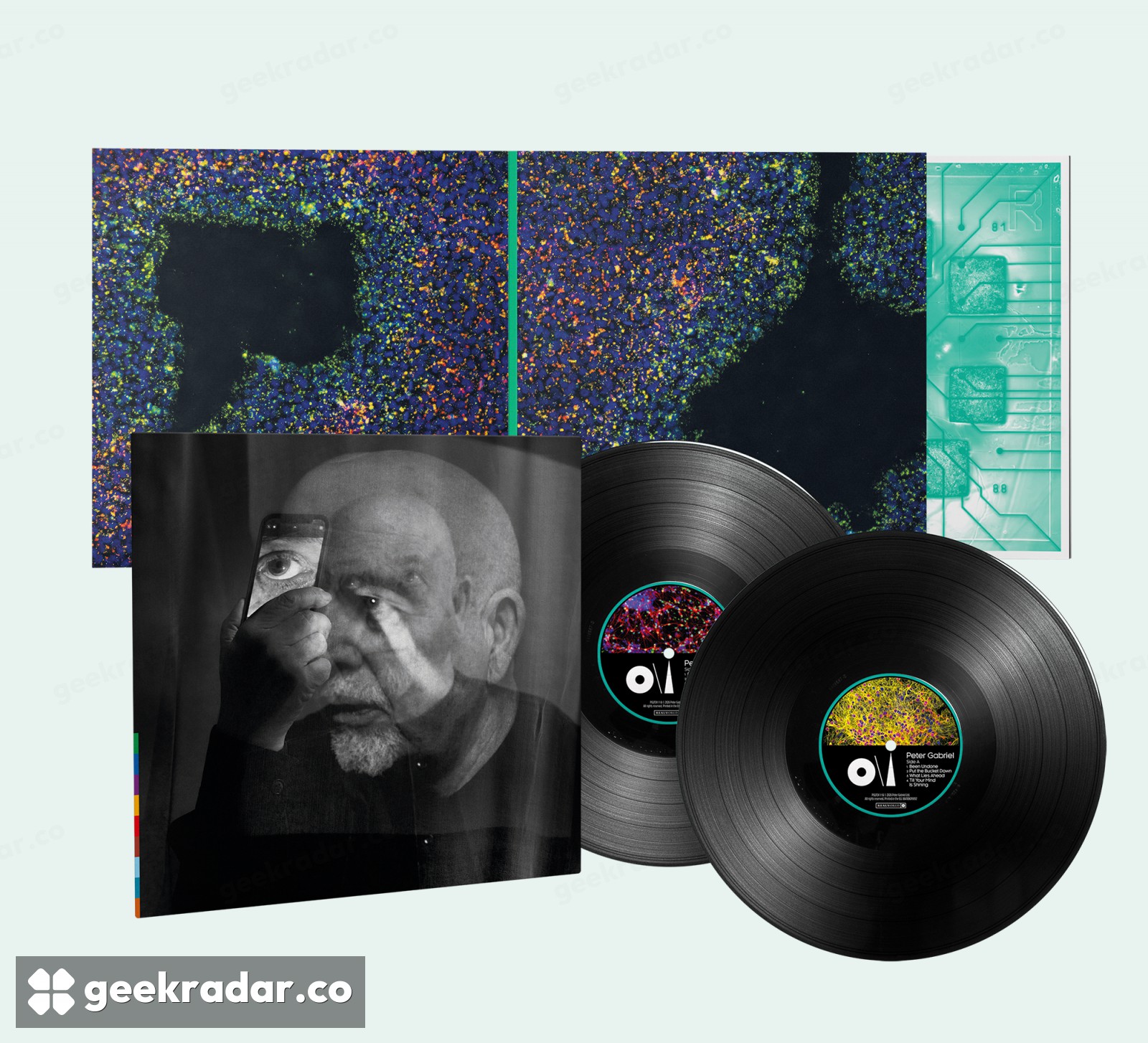
One trumpet, two places to listen for it
Gabriel has given listeners a way to make the choice before buying. On March 3, the full moon, he released Stent’s version of What Lies Ahead. Blake’s version followed on March 18, the new moon. The song began with a melody Gabriel heard his son Isaac playing. He tried it on tour before it had words, and kept a cello line from that stage of its life. Linnea Olsson plays the cello on the recording; Paolo Fresu plays trumpet. Gabriel’s account of the song traces those parts back to the people who brought them in.
Try following Fresu’s trumpet through a phrase in the Bright-Side mix, then return to the same phrase in the Dark-Side mix. Listen for how readily you can follow the instrument as other parts enter, and where its last note seems to end. Balance, stereo position and the space around a sound are all decisions a mixer can make. Both sets of credits identify Fresu. You can keep the player, volume setting and headphones fixed and give your attention to that one line.
What comes home on each format
The label’s release details give the black-vinyl versions separate catalogue numbers. PGLP24 is Bright-Side and PGLPX24 is Dark-Side. Both run at 33 rpm and include a 32-page booklet and a high-resolution download card. PGCD24 is the book with four CDs, two per mix. The extra discs give you a second reading of the album from start to finish.
There is a third version for listeners interested in spatial audio. Hans-Martin Buff created the In-Side mix in Dolby Atmos, and the artist lists it as digital only. Four discs in the CD book still means four discs of stereo. If you want two stereo mixes to compare on a conventional hi-fi, the CDs put both mixes on the shelf. If you want one set of records to live with, the most revealing label on the sleeve might be the name of the person behind the mixing desk.