After 25 missed heartbeats, Perseverance still has a line to Earth
NASA is using the rover’s slower direct link for engineering data while both relay radios are under investigation. A separate fault aboard Mars Odyssey puts its ability to point at risk.
The first sign of trouble on Perseverance was a silence that lasted about 100 seconds. It happened entirely on Mars. The rover’s primary radio normally sends a regular pulse to the onboard computer. When 25 pulses in a row failed to arrive on October 30, the computer cut power to the radio, switched to its spare and put the vehicle into safe mode. Engineers later found that the spare was transmitting at roughly half its expected power.
That sequence explains something anyone following the mission can see from home: a gap in the rover’s raw image gallery. In its November 19 mission update, NASA said the rover was stable and communicating. Its cameras had stopped taking new pictures because the team was reserving the available connection for the data it needs to diagnose the radios.
The antenna that can reach Earth on its own
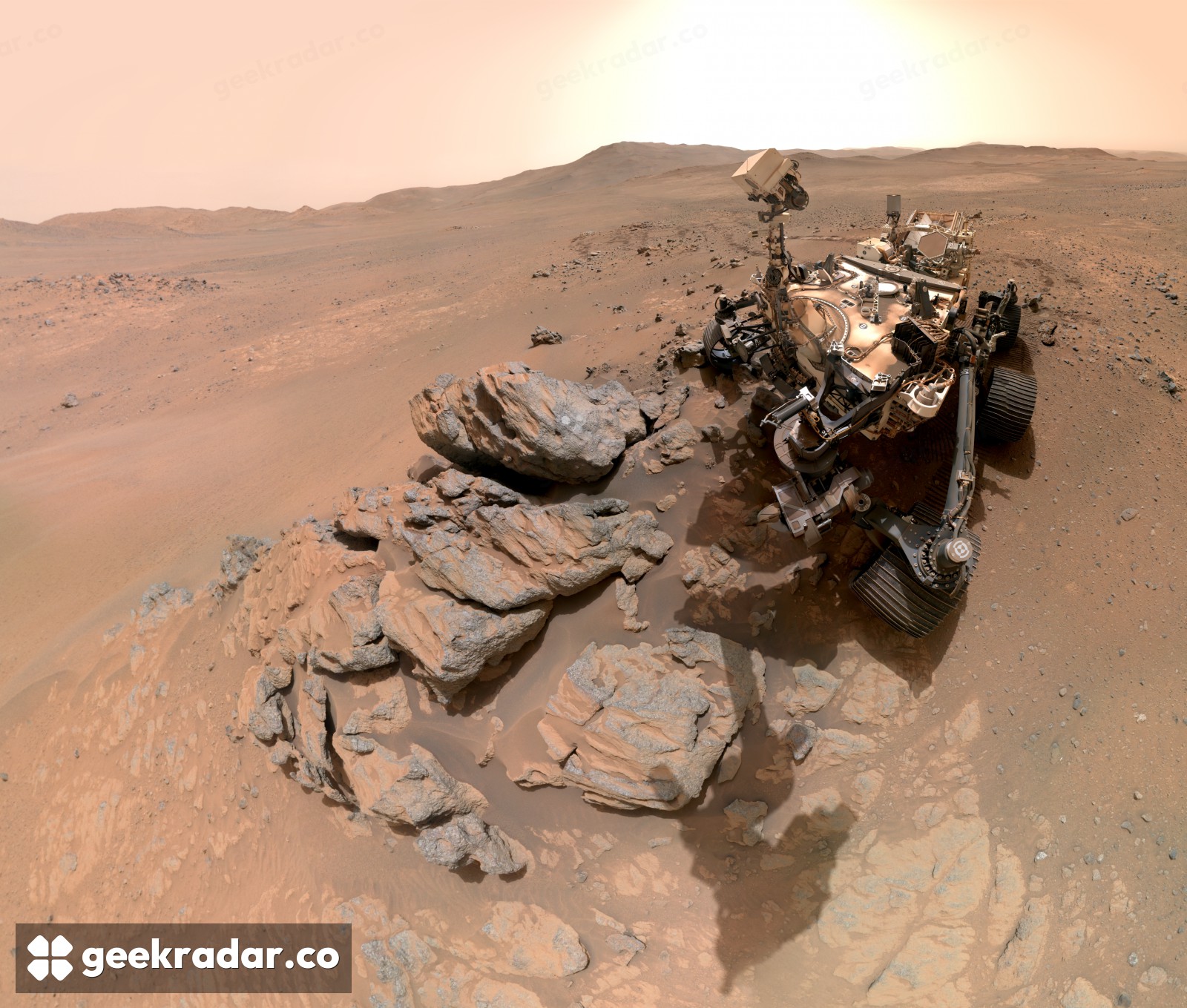
Perseverance normally hands its larger deliveries to a passing orbiter. The short first hop uses ultra-high-frequency radio, or UHF. The orbiter can then forward the data across interplanetary space. It is easy to underestimate how much traffic even one picture represents. The March selfie at Arathusa is assembled from 61 separate exposures taken by the camera on the robotic arm. The pieces were stitched together after they reached Earth.
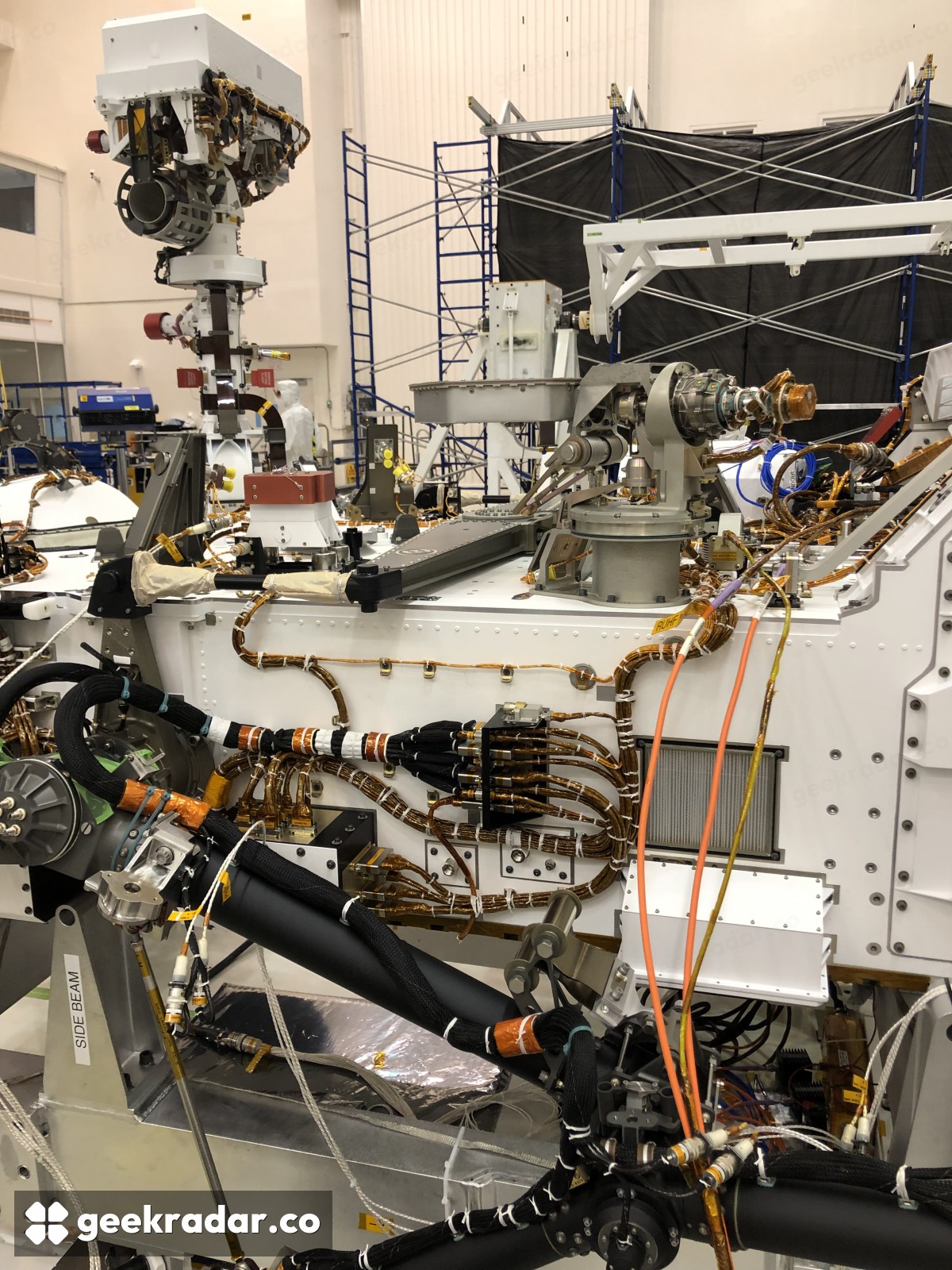
With both UHF radios set aside, engineers are using a different piece of hardware: a hexagonal antenna about 30 centimetres across that points toward Earth. Its X-band signal reaches NASA’s Deep Space Network directly. The rover’s communications specifications give the UHF hop a ceiling of two megabits per second. For transmission directly to a 34-metre ground antenna, the listed figure starts at 160 bits per second. Those are different links under different conditions, and NASA has not given the current operating rate. They do explain why a working connection can be enough to diagnose a fault while photography waits.
The ground antenna matters too, as it did when Madrid received Voyager 1’s signal from one light-day away. On Mars, the immediate priority is to understand the spare radio’s reduced output. NASA says engineers will turn their attention back to the primary unit after that.
A different problem in orbit
Mars Odyssey, one of the orbiters that has relayed surface data to Earth, has also suspended science. The timing is coincidental as far as NASA’s account goes. Odyssey entered safe mode between November 4 and 6 after a reaction wheel stopped spinning. Speeding up or slowing down these wheels turns the spacecraft, allowing it to aim its instruments and solar arrays. One of the original four failed in 2013. Odyssey needs three for this method of pointing.
The orbiter can use thrusters instead, at the cost of hydrazine it cannot replace. NASA’s preliminary estimate gives it one to two months of pointing if it relies on thrusters alone. That conditional matters. During a test, the troublesome wheel moved on command. The team still needs to establish whether it can do the job reliably.
NASA hopes to resume the rover’s science by the end of November and is aiming to restore Odyssey’s science and relay work in the month’s final week. Neither date is a confirmed restart. For now, the most valuable thing Perseverance can send across the remaining link is the engineering evidence that might let the pictures follow.