The Alpha Monocerotids return this weekend. Why did ten meteors fade near 90 km?
Cameras in Czechia recorded trails that began at strikingly different heights in 2019. Their endpoints clustered together. Here’s what to look for on the night of November 21–22.
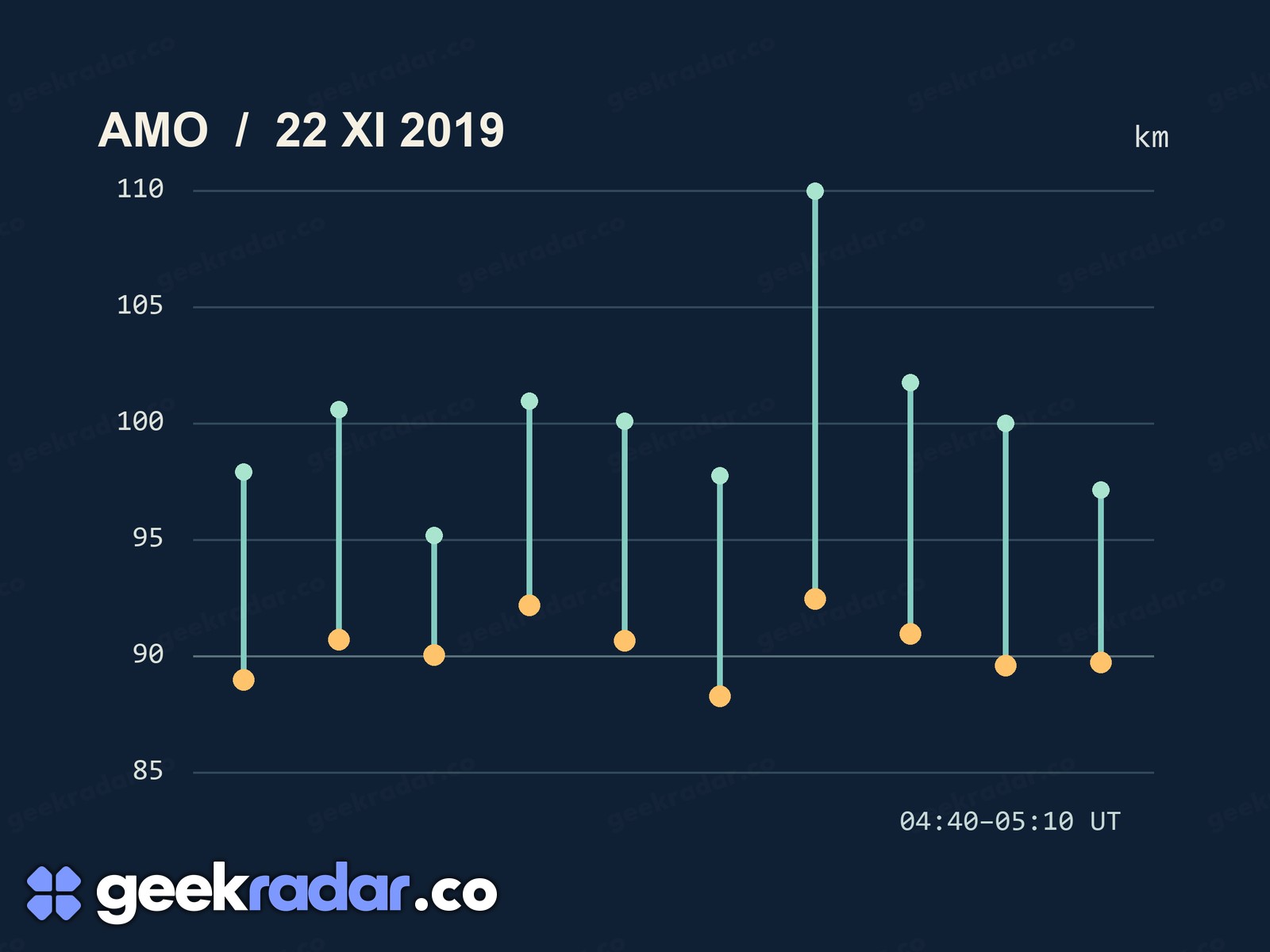
One Alpha Monocerotid first appeared on camera almost 110 kilometres above Earth. Another became visible at just 95 kilometres. Both went dark near 90 kilometres up. That curious agreement, found in records of the shower’s 2019 outburst, is worth remembering as the Alpha Monocerotids reach their annual maximum on November 22. The International Meteor Organization expects no surge in activity this year.
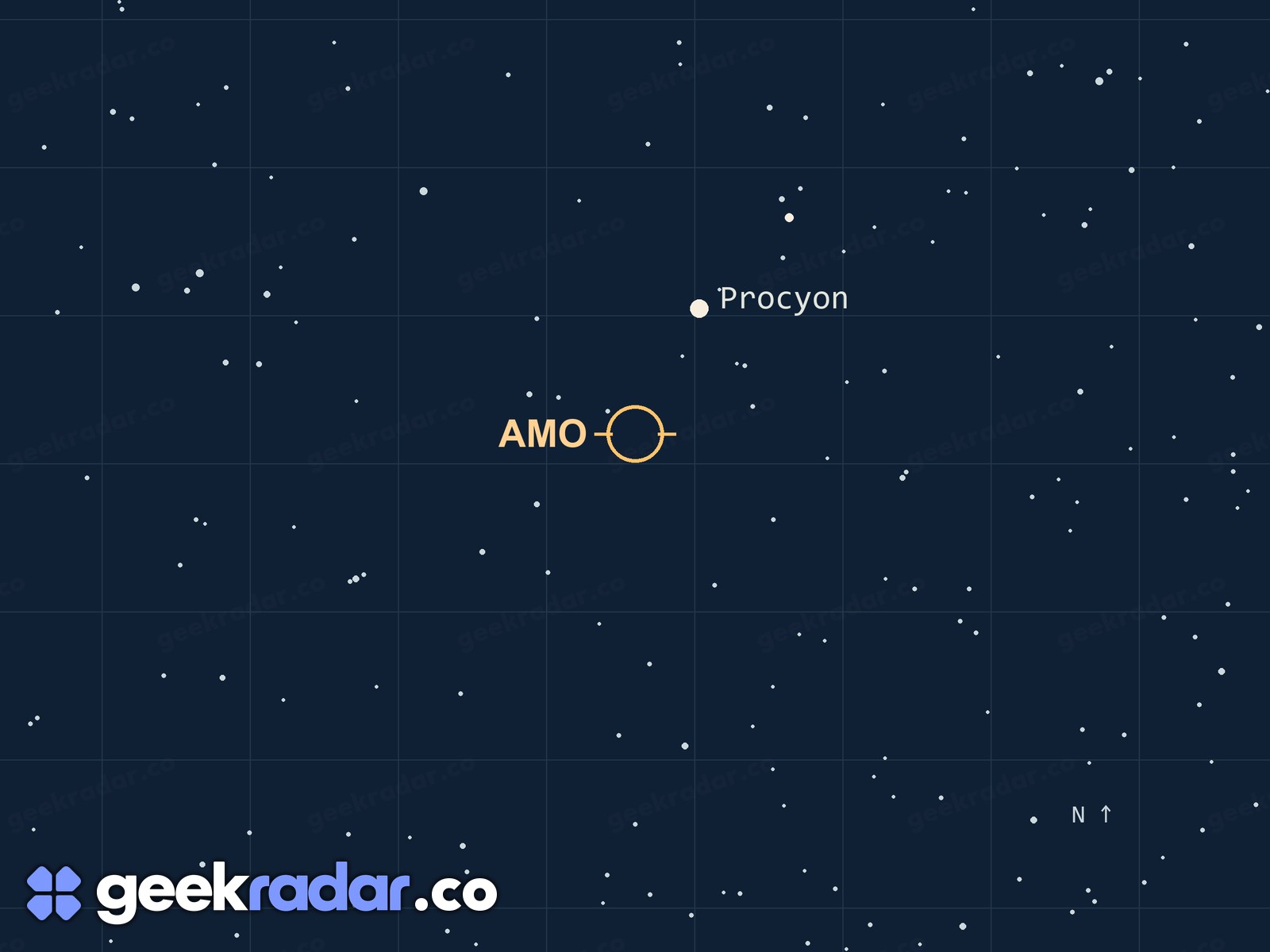
If you go outside on the night of November 21–22, the bright star Procyon is a useful landmark. The ring on the chart marks the radiant, the direction from which the shower’s paths appear to diverge. A meteor can light up well away from the ring. Imagine running its trail backwards across the sky to see whether it points towards that part of the star field. The November observing outlook favours the hours before dawn. Check when the bright waxing Moon sets where you live: its glare can hide a faint streak even under a cloudless sky.
Ten trails seen from more than one place
The first thing a meteor gives an observer is a direction. Measuring height takes another viewpoint. Two cameras several kilometres apart see the same flash against slightly different stars. Compare those lines of sight and the flash acquires a position in three dimensions. That is also the principle behind NASA’s reconstruction of two Leonids. The Czech team that observed the Alpha Monocerotids had a further question. How much did the altitude of the last detectable light vary from meteor to meteor?
On November 22, 2019, one team member counted 44 shower meteors by eye in 57 minutes. Sixteen came in just ten minutes. The team could reconstruct atmospheric paths for ten meteors using images from multiple stations. These are different tallies with different jobs. A perfectly good visual sighting can tell you when a shower picked up, even if a second camera missed it and its altitude will never be known.
The chart uses the beginning and end heights in Table 3 of the team’s study. Read each column from top to bottom. The tallest column belongs to the meteor recorded at 04:58 UT. Its first light was detected almost 15 kilometres higher than that of the meteor at 04:47:20. Their last visible points were only about 2.4 kilometres apart in altitude. The columns show vertical extent only. The meteors themselves crossed the atmosphere at an angle.
Where the pattern stops
All ten measured trails were shorter than 40 kilometres. When the researchers compared their sample with another camera network’s catalogue, they found four longer Alpha Monocerotid trails. In those four cases the longer paths reached progressively lower altitudes. There is also an instrumental limit: a camera loses a fading meteor when its light falls below what the detector can record.
That gives the number on the chart a precise meaning. Ninety kilometres is a remarkably good description of where this group of short trails faded in 2019. If a streak crosses your sky this weekend, you can trace its direction back towards Procyon yourself. To put a height on its final glimmer, you would need someone watching the same instant from somewhere else.