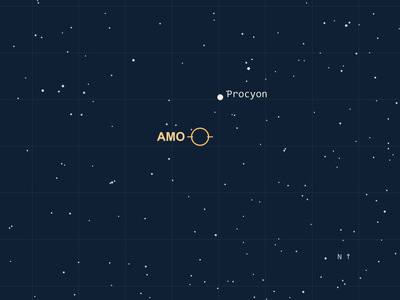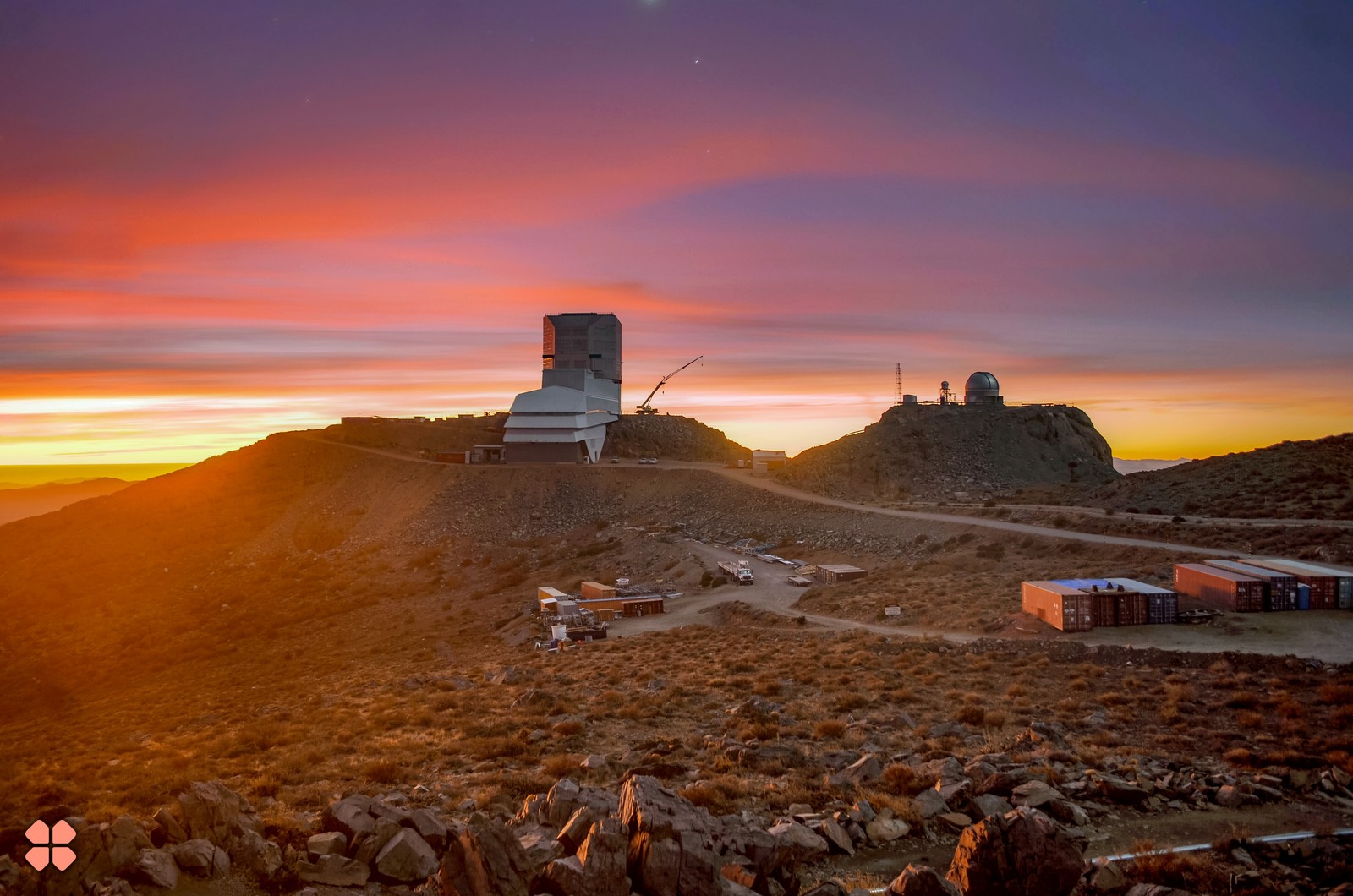
Rubin found three objects trailing Neptune. Why do only two count as stable Trojans?
Older telescope images stretched two observation records to years. The third object had only 38 days, and most of its possible orbits broke step with Neptune in simulations.
The Vera C. Rubin Observatory picked up three objects moving through the patch of sky that trails Neptune. Two earned a place in a remarkably short catalogue. The third looks convincing if you plot its single best orbit. It is what happens when you draw the orbit a hundred other ways that keeps it on the waiting list.
The two confirmed objects, 2025 MH348 and 2025 NN80, double the known sample of long-lived Trojans trailing Neptune from two to four. The detections came from Rubin’s 2025 test observations in Chile. The team reported its findings this October. In a November 19 interview with Live Science, the researchers explained why an entire population had been so difficult to see.
Looking behind a planet from inside its orbit
A Trojan circles the Sun in step with a planet. Seen from above the Solar System, one group moves around a point roughly a sixth of a turn ahead of the planet. Another moves around a point the same distance behind it. Astronomers call the trailing region L5. A Trojan can swing from one side of that point to the other and still keep time with Neptune. The asteroids NASA’s Lucy mission is heading for have the same kind of relationship with Jupiter.
From Earth, the stretch of sky behind Neptune had an unfortunate backdrop for years. In the direction of the Milky Way, a faint moving speck can be hard to pick out from the crowded field of stars. As the viewing geometry changed, Rubin’s wide field caught a more favourable part of the sky. Once the researchers identified the moving objects across different nights, they could ask a second question. Had another telescope already seen them?
Why 38 days left one orbit open
Earlier Pan-STARRS1 observations lengthened the record for MH348 to 2,595 days and the record for NN80 to 1,547 days. The third object, 2025 MD138, had just 38 days of measurements. A short stretch of a curve can fit many slightly different paths. Around the Sun, those small differences have a long time to grow. The paper’s orbit fits and stability tests show exactly what this meant for each object.
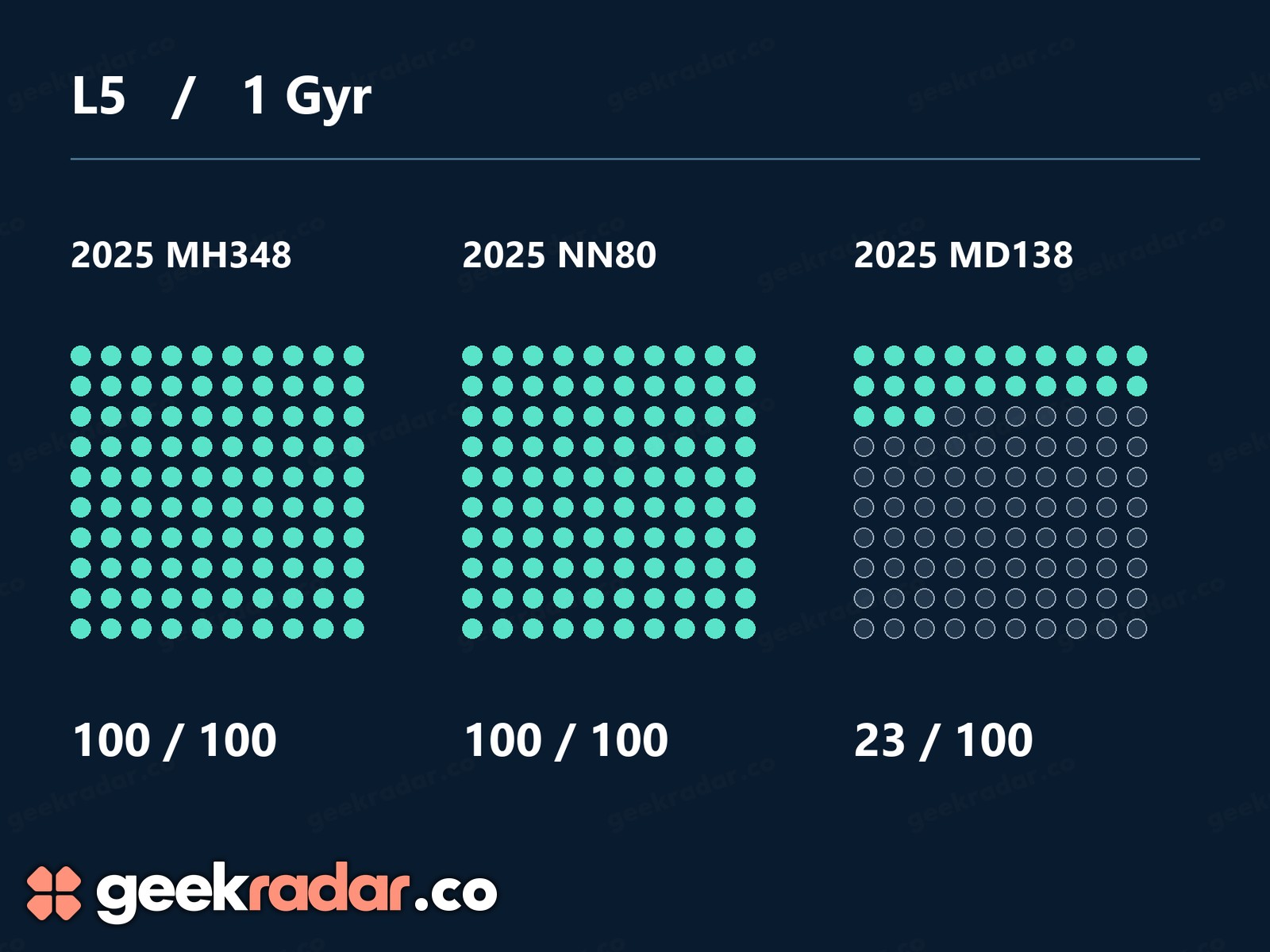
The team took 100 plausible starting orbits for each one, varied within the uncertainty of the measurements, and let the simulated Sun and four giant planets pull on them for a billion years. For each confirmed Trojan, all 100 stayed in step with Neptune. For MD138, only 23 did. Its best-fitting orbit also lasted the full simulation. The team’s published calculation makes clear why one good fit alone cannot settle the case.
There is a reason to keep looking for that third speck. All four confirmed long-lived trailing Trojans have orbits tilted more than 25 degrees to the plane of Earth’s orbit. MD138’s best fit is tilted only about six degrees. Another observation could do more than put a fifth name on the list. It could establish that Neptune keeps a long-lived companion in a part of the trailing cloud where none has yet been confirmed.