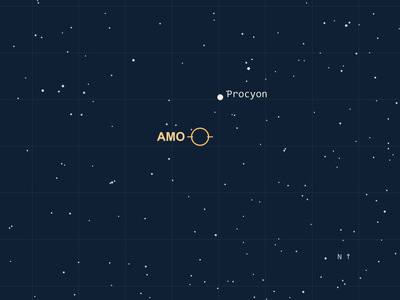
To look for sodium close to Europa, astronomers waited for the lights to go out
Keck tracked sodium far above Jupiter’s icy moon. In eclipse, a much fainter signal hints that some atoms stay close to the surface.
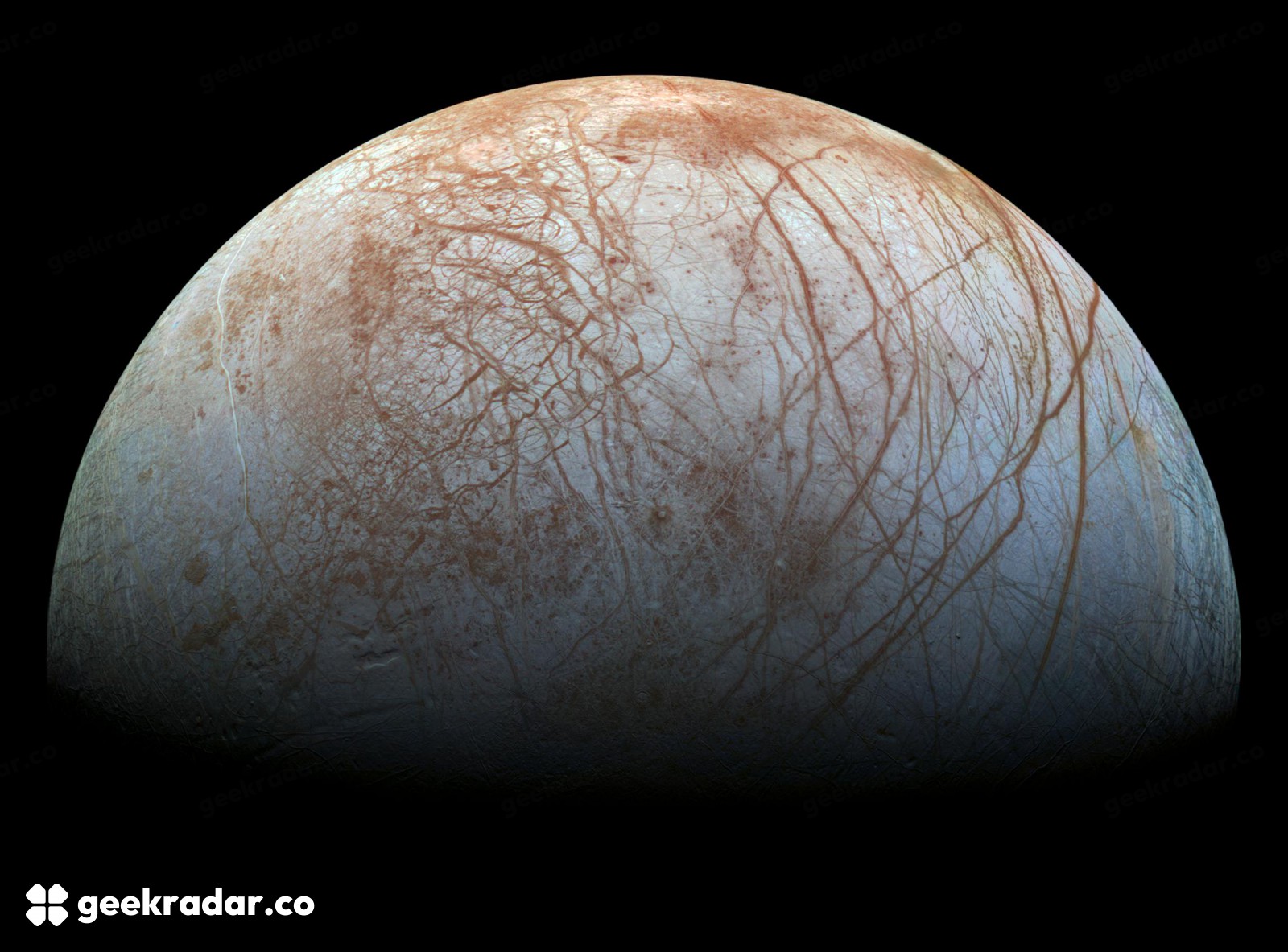
Europa’s ice is bright enough to hide part of its atmosphere. Astronomers can pick out sodium atoms glowing far from the icy moon, but bringing a telescope’s sights closer to the surface brings in a flood of reflected sunlight. So a team led by Boston University looked again when Jupiter cast a shadow over Europa. The faint signal they found hints that the moon keeps some sodium close even as other atoms escape.
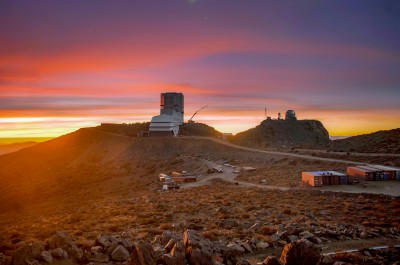
The Keck Observatory’s November 19 account draws on a study first published on October 10. The authors compared seven sets of observations with the HIRES spectrograph on the Keck I telescope in Hawaiʻi. The earliest dates from 1999, the most recent from 2025. Those are snapshots spread over decades. What makes them valuable is that they caught Europa in different parts of its orbit and in different regions of Jupiter’s magnetic environment.
A cloud bigger than the moon that supplies it
In sunlight, sodium atoms scatter light at two distinctive yellow wavelengths. A spectrograph separates those wavelengths from the rest of the light entering the telescope. From how bright the lines are at different positions, the researchers could map the gas surrounding Europa. The cloud stretches farther along the plane of the moon’s orbit than it does above or below it.
Even far out, at distances of 20 to 30 Europa radii from its centre, the amount of sodium along a line of sight differed by only about a factor of two across the observations. Previous work had suggested a wider range. One possible explanation is travel time. By the time atoms reach the outskirts, Jupiter has rotated appreciably; gas released under different conditions can end up in the same measurement. A comparatively steady cloud needn’t have a steady source.
What changes when Jupiter blocks the Sun
In eclipse, the bright reflection from the ice goes away. So does the sunlight that makes distant sodium easy to see. The team instead looked for light from atoms excited by collisions with electrons. Across the face of Europa they measured 16 ± 11 rayleighs, a unit of sky brightness. The uncertainty is large compared with the signal; the authors describe this as a tentative detection.
Why pay attention to it? Extending the measured distribution of the distant gas down to the surface predicts roughly one-sixth of that brightness. If the signal holds up, simply adding up the fast atoms on their way out misses a population that stays close. The open question is whether those atoms started out slower or lost energy in collisions. The distinction between a faint count and a secure detection also mattered in Chandra’s search for X-rays before a supernova.
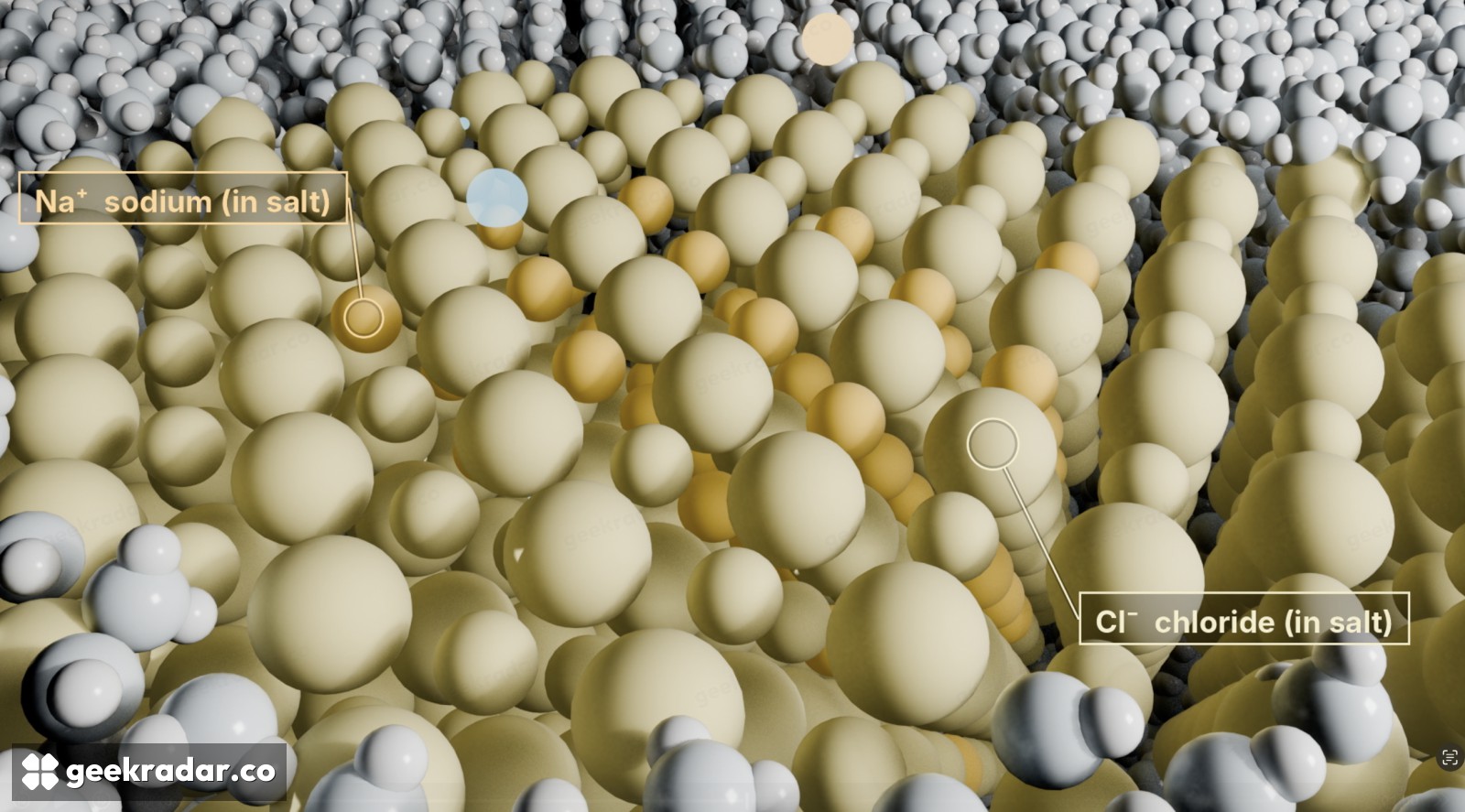
There is a plausible source for the sodium underfoot. Earlier Hubble observations found a signature of irradiated table salt on parts of Europa’s surface. Connecting that salt to an ocean beneath the ice takes another inference. Waiting for Jupiter to turn out the light has given astronomers a way to investigate what happens just above the ice. It still leaves the salt content of the water below it an open question.