When 400 game gems cost €4 but your card is charged €5
The EU’s proposed Digital Fairness Act would put a money value beside items sold for paid virtual currency. The pack you need to buy can still cost more.
A jacket costs 400 gems. The game sells 500 gems for €5. From an empty wallet, the jacket is worth €4 at that rate, but buying it takes €5 from your card. The euro missing from the first price is still yours to spend, provided you come back to the same shop.
That gap is the problem behind Article 14 of the European Commission’s proposed Digital Fairness Act. A trader selling virtual currency for use on its own items would have to show those items’ monetary value, or an estimate, in the currency used to buy the original tokens. The Commission put the proposal forward on November 11. The draft is still before EU lawmakers. The 400-gem jacket is a worked example, and the proposal would leave shops free to set their prices.
The price belongs beside the item
A price on the top-up page only helps while you’re on that page. Once you’ve bought the gems, the next screen asks whether a jacket is worth 400 of them. A real-money figure there makes the comparison with a €4 purchase elsewhere possible again. The same principle matters when one paid currency buys another. Converting euros into coins and coins into crystals inserts an extra calculation between the buyer and the price.
Bulk discounts complicate the arithmetic. Someone who bought a large pack on promotion may have paid less per gem than someone buying the smallest pack today. Recital 61 explains how the Commission envisages an estimate when there’s no single directly identifiable price. Use the full amount a consumer would ordinarily have to pay, leaving out quantity discounts and special offers. That gives two shoppers a common reference even if their wallets have different histories.
A shop can show the price and still leave change behind
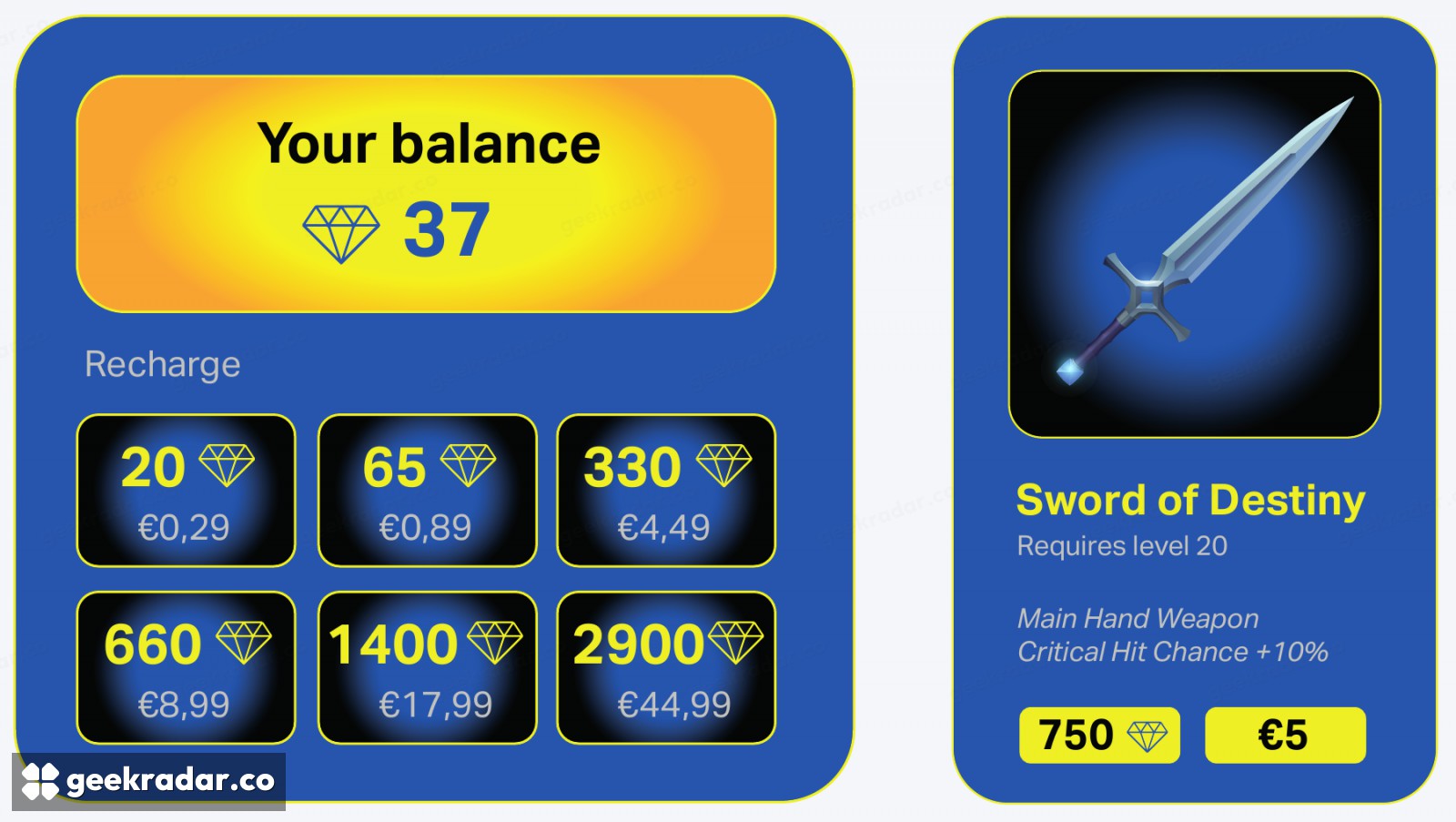
Europe’s consumer enforcement authorities made this point in their March 2025 guidance on in-game currencies. Their sample shop puts a balance of 37 gems next to an item costing 750. The same item also shows a €5 price. None of the six individual top-ups on display supplies the missing 713 gems. The authorities identified forced, mismatched bundles among the practices traders should avoid under existing consumer law. The guidance predates the draft regulation. Article 14’s price-display clause would make the cash value explicit, but displaying it does not automatically let someone buy exactly 713 gems.
For children, paragraph 2 proposes a different intervention. Where a product is directed at minors, or the trader knows with reasonable certainty that minors use it, paid virtual currencies would start switched off for them. Activating them would require approval from a parent or guardian. That is a purchase setting, separate from a game’s age rating for content.
The distinction is practical for an adult at the checkout, too. Seeing €4 on the jacket answers whether it’s worth the price. Seeing €5 on the payment screen answers whether you want to leave a euro in this particular game.