Dragon leaves the space station with Canadarm2’s failed wrist joint
A spacewalk gave the robotic arm a spare wrist joint. The return flight gives engineers the original hardware behind a puzzling motor-current reading.
SpaceX’s cargo Dragon left the International Space Station on Friday carrying a piece of Canadarm2 that engineers have been waiting to get their hands on since May. During a routine manoeuvre, the robotic arm drew unusually high motor current and failed to move as expected. Astronauts replaced a wrist joint in June. The one that came off is now on its way back to Earth, where engineers can examine what happened inside it.
Ground controllers commanded the uncrewed Dragon to detach from the space-facing port of the Harmony module at 17:05 UTC on November 20. NASA’s departure update puts splashdown off California at about 21:55 UTC on Saturday. The weather that postponed Wednesday’s departure mattered even while Dragon was still attached to the station. The team needed suitable conditions where the capsule and its cargo would come out of the Pacific.
A spare was already in orbit
When the wrist malfunctioned on May 27, the Canadian Space Agency, its international partners and the arm’s builder, MDA Space, had two different problems to solve. One was how to get the arm moving properly again. The other was how to explain the current reading. On the first, they had a head start. Canadarm2 was built in sections that astronauts could remove, and the Canadian agency had arranged for key spares to fly ahead of need. The station could pause less urgent work with the arm while the team planned a spacewalk.
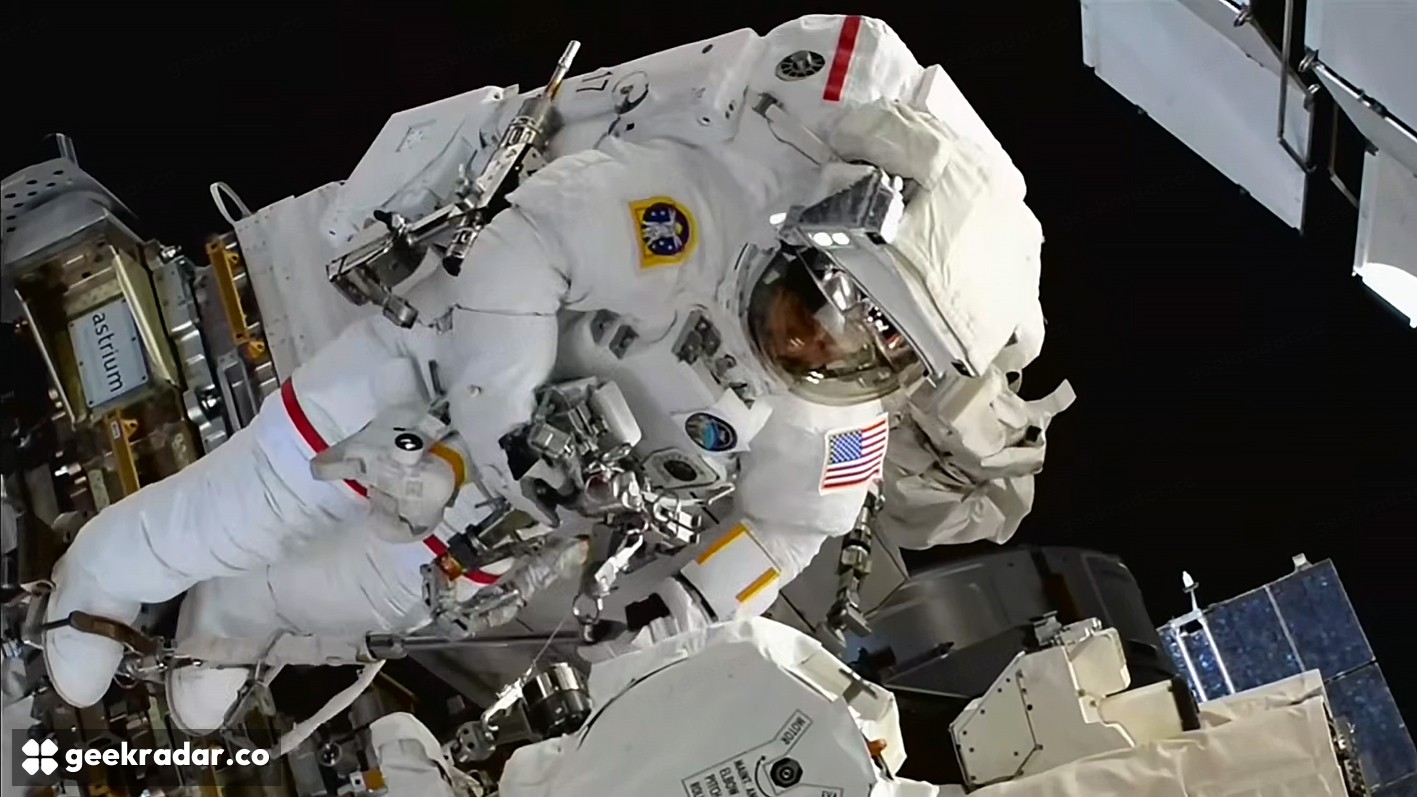
On June 30, Chris Williams and Jessica Meir removed the faulty wrist joint and installed its replacement during a seven-hour, twenty-minute spacewalk. Back in Houston, controllers powered up the arm and checked that electricity and data could pass through the reassembled system. NASA’s account of the repair describes motion tests as a separate step. A good electrical connection was something the team could establish that afternoon. It could say little about what had happened inside the joint the astronauts had taken off.
Why the old joint merited a ride home
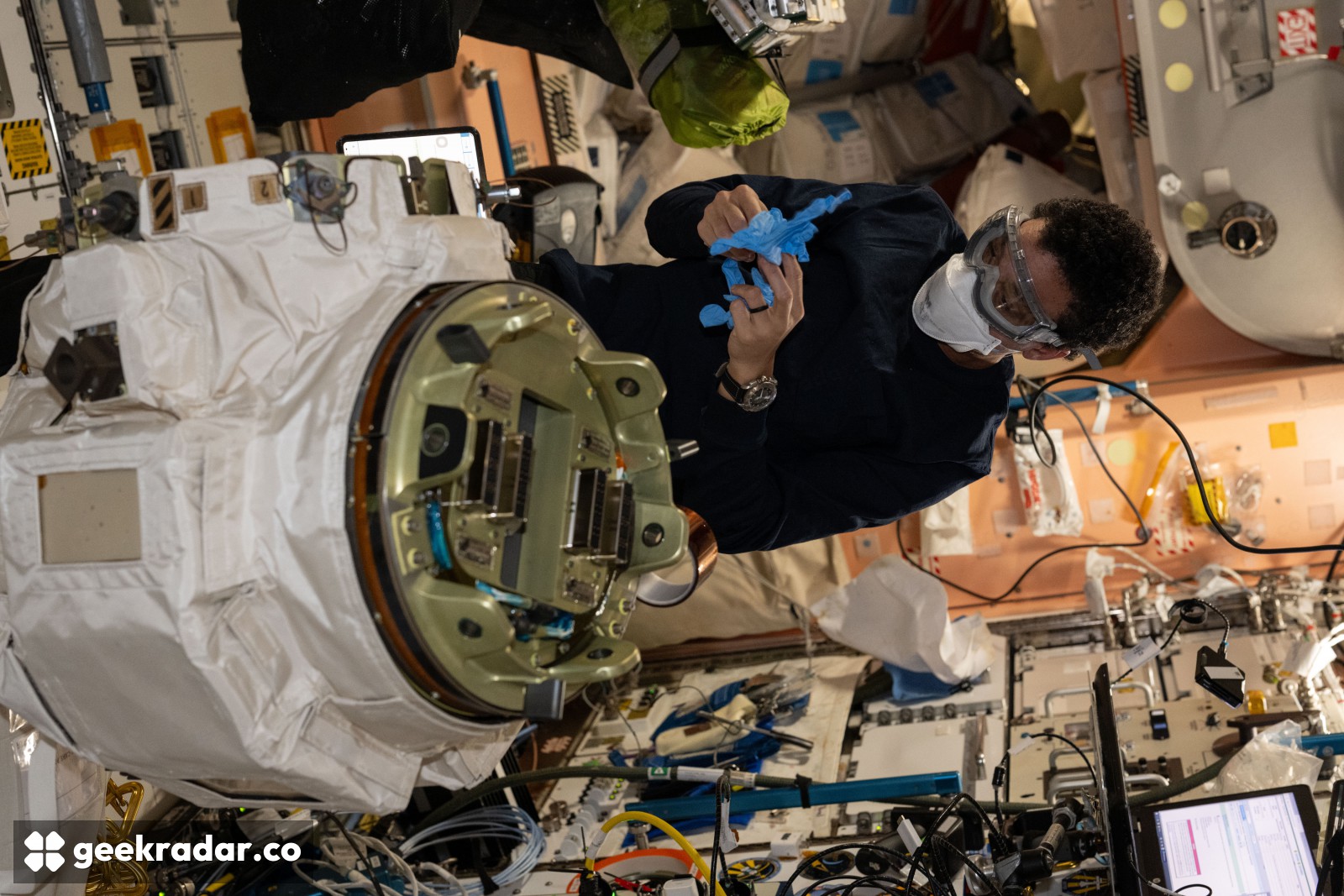
Before the hardware went into Dragon, Jessica Watkins and Luke Delaney photographed it, then fitted protective covers to seal its sensitive components. Only then did they load it into the capsule. The station crew’s packing report records that sequence. The photographs preserve its condition before transport. The hardware gives the people who receive it something more than the photographs or the May current readings could provide.
NASA intends to inspect and refurbish the unit for possible reuse. Whether it flies again is still open. The spare sent up in advance allowed the crew to repair the arm without waiting for a diagnosis. If the joint coming down on Dragon can itself become a spare, a future crew could have the same advantage.