GTA VI’s buses and trains give Leonida another pace
Edge’s developer visit describes working transport systems and arrival checks. Their appeal is the chance to experience a journey as a passenger.
In this guide
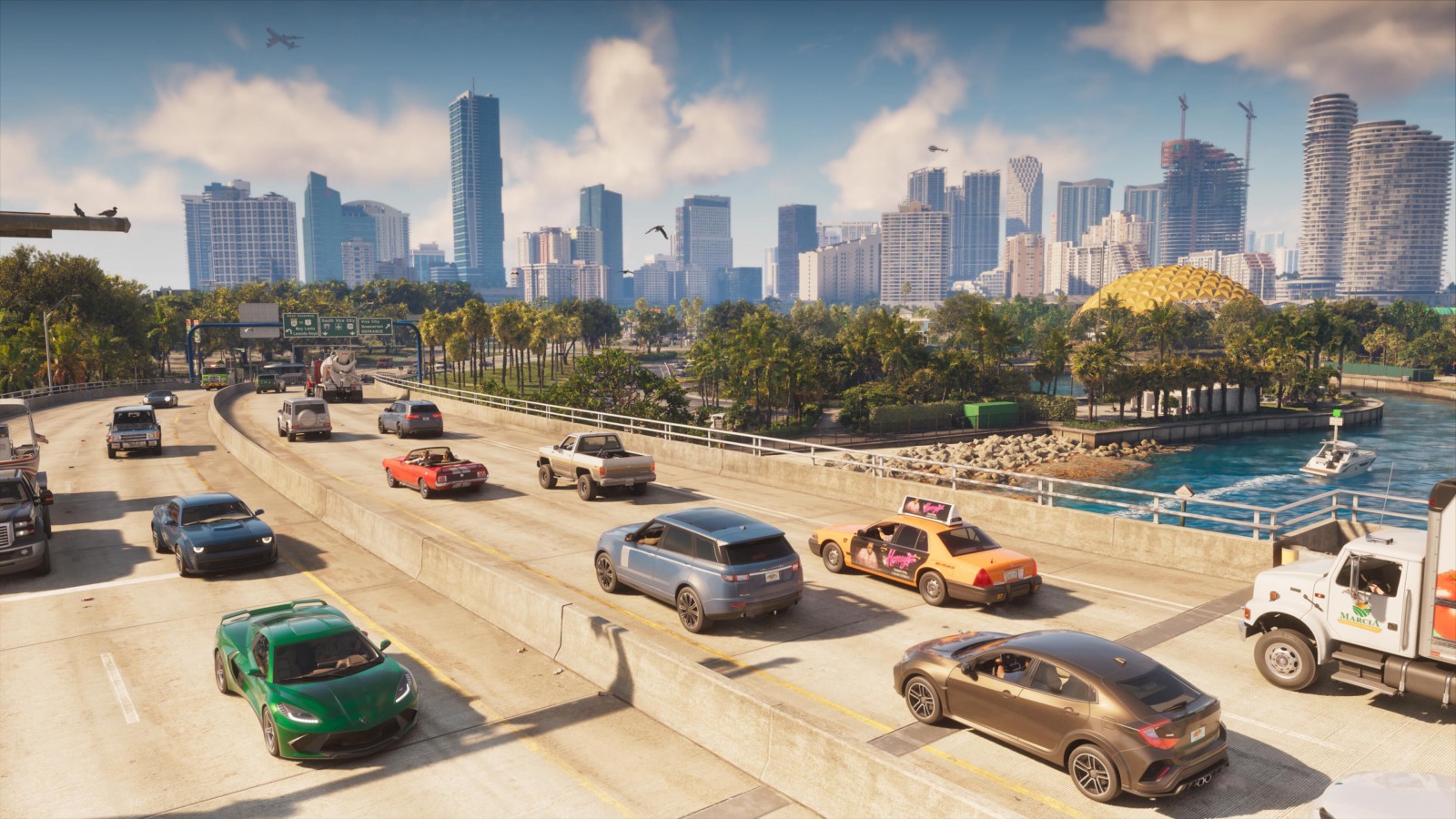
GTA VI’s public transport is interesting because it lets the player stop being the driver. Edge’s visit to Rockstar North describes working bus and train systems, with development lead Phil Hooker checking bus arrivals and riding routes through Leonida. That gives travel a different purpose from simply finding another vehicle to take.
The account comes from Simon Parkin’s October 29 Edge feature. This is a launch-week examination of that reported design, not a newly announced feature or an independently tested guide to routes, fares and timetables.
A passenger reads the city differently
Driving concentrates attention on the road ahead. The player is judging gaps, steering around traffic and deciding where to turn. As a passenger, the same journey can become an opportunity to watch buildings, intersections and changes between districts. The world does not need to be bigger for that shift in attention to reveal more of it.
This is one reason a functioning route can add something that a destination menu does not. A journey has a beginning, an interval and an arrival. Repeated travel can build familiarity with a place through the order of its landmarks, rather than through icons alone.
That is a design interpretation, not a claim that GTA VI has a particular ticketing interface or that every trip must be watched in real time. The published account establishes the transport systems and a developer’s testing routine. It does not provide a complete passenger manual.
Reliability makes an optional activity usable
Hooker’s focus on arrivals is an unusually revealing development detail. A bus that exists visually but cannot be relied on is largely scenery. A service that turns up becomes something a player can choose to incorporate into a plan.
There is a simple practical test behind that difference. If a player decides to travel without taking a car, the alternative needs to remain understandable enough to use. An optional activity can be demanding; it should not require guessing whether the underlying system has stopped working.
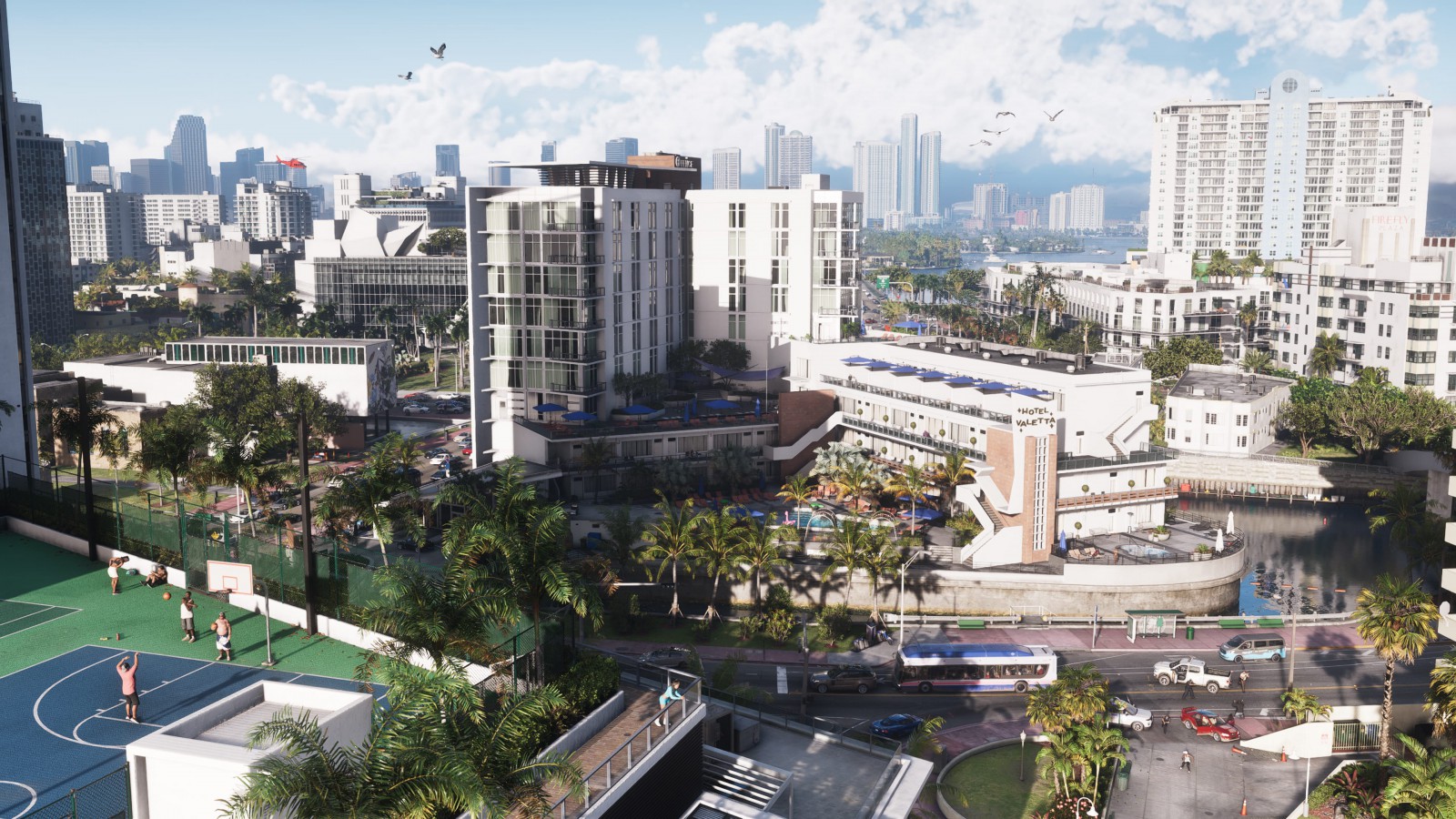
The official geography of Leonida helps explain why journeys matter: the game presents distinct places rather than one uniform backdrop. It would still be a mistake to draw unannounced rail lines between every named region. A varied world and a confirmed transport system do not establish universal coverage.
Another way to inhabit Leonida
Our article about the Leonida Keys considers the crossing as part of a place’s identity. Public transport raises a related question at a smaller scale: how does the route shape what a player notices before arriving?
It also offers a useful counterweight to the assumption that more freedom always means more speed. Choosing to let someone else drive can be an expression of freedom too. A player might spend one session chasing objectives and another simply learning a neighborhood’s rhythm.
For GTA VI, the promising part is not a claim that everyone will abandon their cars. It is that an ordinary journey could become a viable choice in a game usually discussed through extraordinary acts. A dependable bus gives the city something valuable: a way to experience it without having to control every meter of the road.