The Fireworks incident shows why a conversation without a name can still be sensitive
Notion distinguishes exposed integration credentials from a limited set of Insights transcripts shared for analysis.
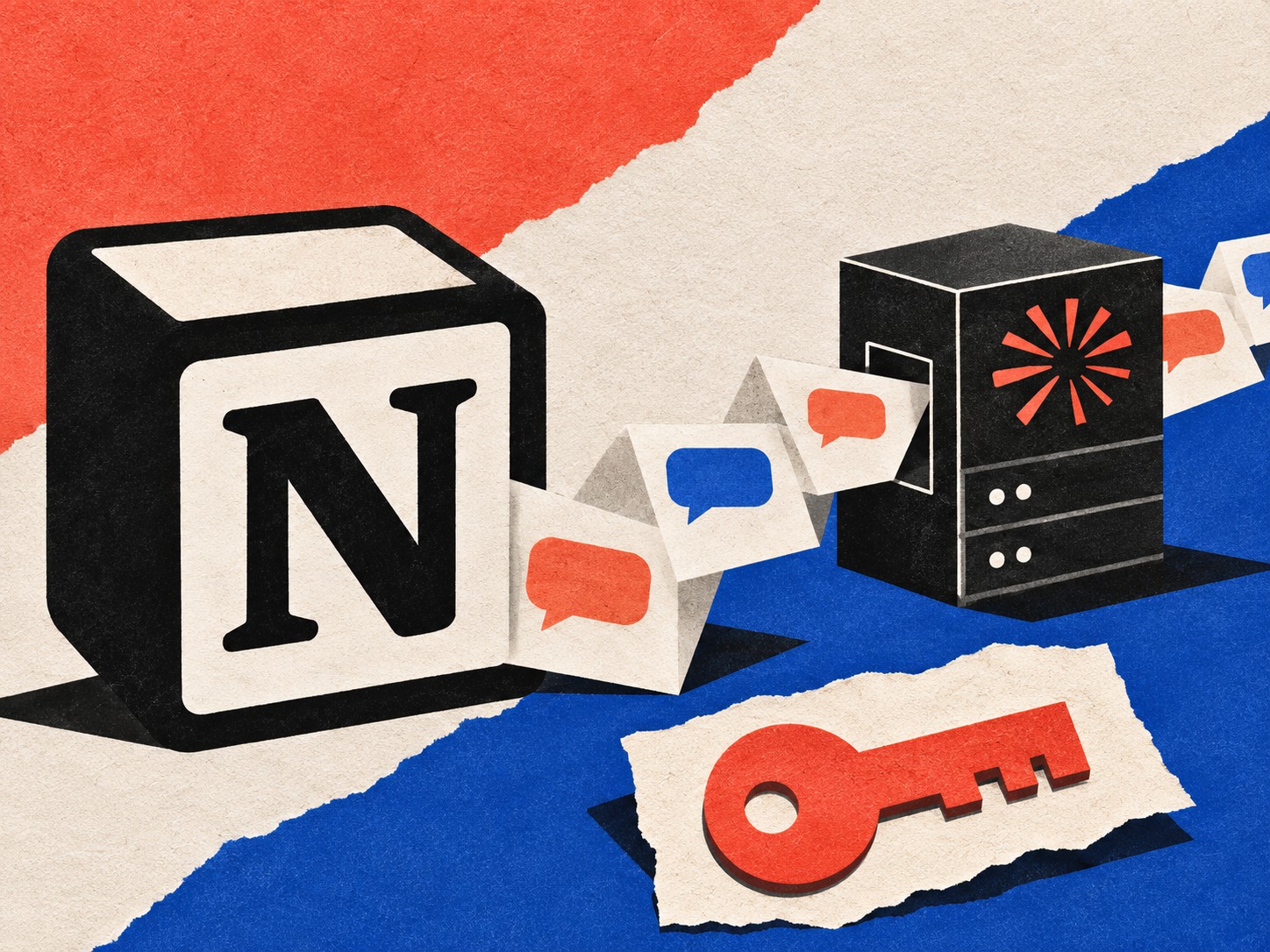
Notion has reported exposed third-party API keys to their issuing vendors as its investigation into the Fireworks AI incident continues. The November 13 advisory update follows the revocation of exposed Notion API keys on November 11 and confirms a consequence that extends beyond the AI service itself: credentials pasted into a chat can create obligations in other systems when that chat is exposed.
Notion says the incident affects fewer than 1% of its workspaces. Affected customers have been contacted and can retrieve the relevant data securely inside their workspace. The company advises those customers to treat that data as exposed and rotate sensitive credentials included in it. It says no incident-specific action is currently needed for workspaces it has not identified as affected, while leaving open the possibility of further notifications as the investigation develops.
The affected data was not just synthetic testing material
Notion’s timeline describes an initial November 2 notification involving a small dataset it determined contained synthetic testing material. It disconnected from Fireworks by the following morning and deleted its data there on November 4. A subsequent November 6 notification raised the possibility of customer data; Fireworks confirmed the final impacted dataset to Notion on November 8, and Notion contacted affected customers on November 9.
According to Notion, that dataset contained Notion AI chat transcripts used by Insights, a feature intended to help customers understand their AI usage. The company says the vast majority were not labeled with the person or workspace that produced them, and that they did not include tool-call results.
Those qualifications narrow the exposure but do not make the text harmless. A transcript can contain an identifying name, an internal project description or a credential in its own words. Removing a separate user label does not remove information someone included in the conversation. Notion’s recommendation to review the affected material and rotate embedded secrets reflects that distinction.
Two advisories describe different boundaries
Fireworks’ own security bulletin describes unauthorized use of internal credentials and access to environment variables used in evaluation jobs for a limited number of customer accounts. Its account of the investigation says it has not detected certain categories of access within its security perimeter or control, including inference traffic, while also asking affected customers to rotate exposed third-party credentials and review their use.
That statement should not be flattened into “no customer chat data was exposed.” Notion has separately identified transcripts in the dataset it received. The services describe different parts of the incident, and their stated scope and investigation dates matter. A reader assessing Notion exposure should use Notion’s customer-specific notice rather than infer safety from a broader sentence in a supplier’s bulletin.
Notion has disabled Insights during the investigation and says it is no longer serving open-weight models through Fireworks. These are containment decisions. They do not establish that previously exposed secrets can no longer be used elsewhere.
Revocation happens where the credential works
Fireworks makes a practical point in its guidance: deleting a stored secret does not invalidate the underlying credential. If a key grants access to another provider, revocation or rotation must happen with that provider, followed by updates to the applications that legitimately depend on it. Reviewing the relevant access logs can help establish whether the exposed permission was used.
For an affected organization, the useful unit of response is therefore the credential and its reach: which system issued it, what it could access, whether it has been replaced and what its logs show. The incident demonstrates how an AI conversation can become part of a wider security boundary. A chat window may feel like a temporary place to ask a question; a valid key pasted into it still carries the authority of the system that issued it.