
GTA VI’s safehouses have a job beyond ending the journey
Shared routines and limited grooming options give quiet interiors a purpose while keeping reasons to visit the city.
In this guide
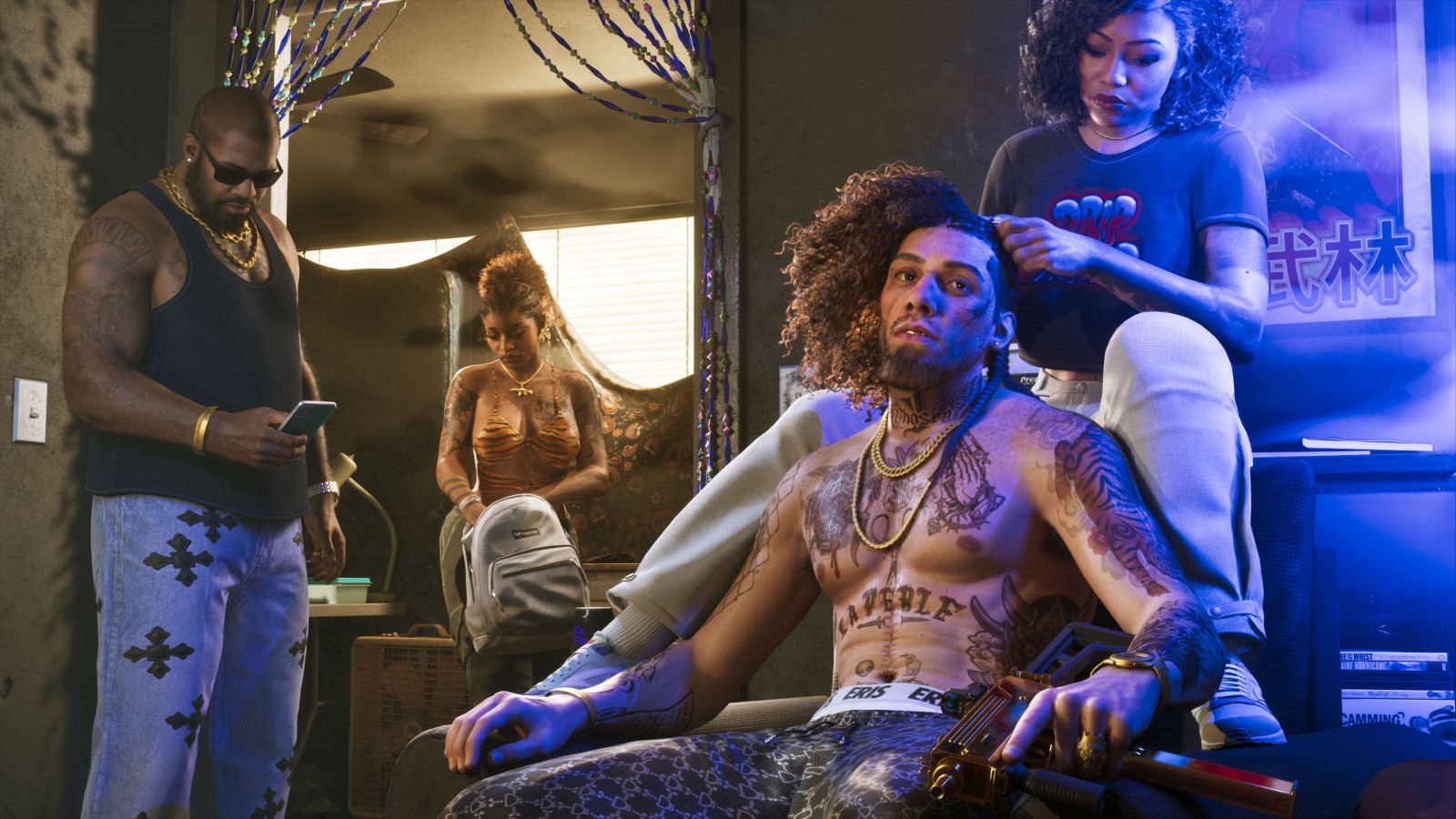
GTA VI's safehouses are being designed as places to spend time with the protagonists, rather than only convenient stops between activities. Rockstar's preview description emphasizes interaction, daily routines and limited personal adjustments. The important change is what the player can do while apparently doing very little.
In IGN's October interview, Rob Nelson demonstrates Jason and Lucia sharing a safehouse and describes the effort to give both believable schedules. He compares the intended level of interaction with the camp experience in Red Dead Redemption 2. That is a useful design reference, but it does not turn Grand Theft Auto VI into a survival game or announce an unrestricted home-building system.
A familiar place makes small changes visible
An open world asks the player to keep moving. A recurring interior works differently: familiarity gives ordinary details a baseline. Another character's presence, an available interaction or a change in routine becomes easier to notice because the room is not entirely new each time.
The demonstration includes mundane activities such as getting a drink and looking at an object on a table. Their value is not the mechanical difficulty of the action. It is the opportunity to occupy the character's time without immediately converting every moment into a mission objective.
Nelson also makes a specific distinction about the demonstrated location: the couple is staying in someone else's house. It would therefore be a mistake to use that scene as evidence of buying that property, owning every room or furnishing it freely. A safehouse describes a function in the game; it does not automatically establish a real-estate system.
Small adjustments preserve reasons to go outside
The interview describes limited grooming options at the safehouse, such as cutting hair shorter or shaving. New hairstyles require visiting a salon or barber. Nelson also says shops around the world can carry both common and location-specific options.
This is a modest but useful boundary. A home can be convenient without replacing every service in the city. If every cosmetic choice were available from one private room, a set of public locations would lose a practical reason to exist. Keeping some options outside gives an ordinary journey a purpose beyond moving toward a story marker.
The distinction should not be expanded into an unsupported promise. These examples do not confirm every grooming rule, a universal hair-growth timetable or complete interior customization. They explain how Rockstar is dividing a few ordinary actions between private and public spaces.
Routine is another way to express a partnership
The official character profiles establish Jason and Lucia's starting circumstances. Our spoiler-free introduction considers those motives. A safehouse can express the same partnership in a different register: through occupying a room together, switching perspective and seeing what the other person is doing.
That kind of interaction has a pacing function. A campaign built only from urgent moments can make every event feel equally loud. A place that permits a slower rhythm gives action something to contrast with. It can also leave the player in control during quiet stretches instead of making every character moment a cinematic interruption.
There is a risk of turning routine into obligation. Repeated chores would serve a different purpose from optional interactions that make a place feel familiar. The interview establishes the ambition of a more interactive home, not a compulsory maintenance schedule, and those two ideas should remain separate.
The wider Leonida setting supplies the destinations. A convincing safehouse supplies a reason to recognize the return journey. Its success will not be measured only by the number of objects with prompts, but by whether coming back feels different from simply arriving at another menu.