GTA VI’s Leonida is more interesting as a set of places than a guessed map size
Rockstar’s city and wetland imagery shows contrasting ways to read the world, without establishing distances or unannounced systems.
Grand Theft Auto VI's official world presentation is already enough to retire one misleading shortcut: Leonida is not simply another name for Vice City. Rockstar places the city alongside the Keys, Grassrivers, Port Gellhorn, Ambrosia and Mount Kalaga. The contrast between those places is more informative than an unverified claim about how many square miles the map contains.
The Only in Leonida presentation and official screenshot collection provide the basis for this spoiler-free look at the setting. They establish named destinations and visible environments. They should not be treated as a complete navigable map, a measured travel-time test or a list of every activity available in each region.
The skyline is one kind of scale
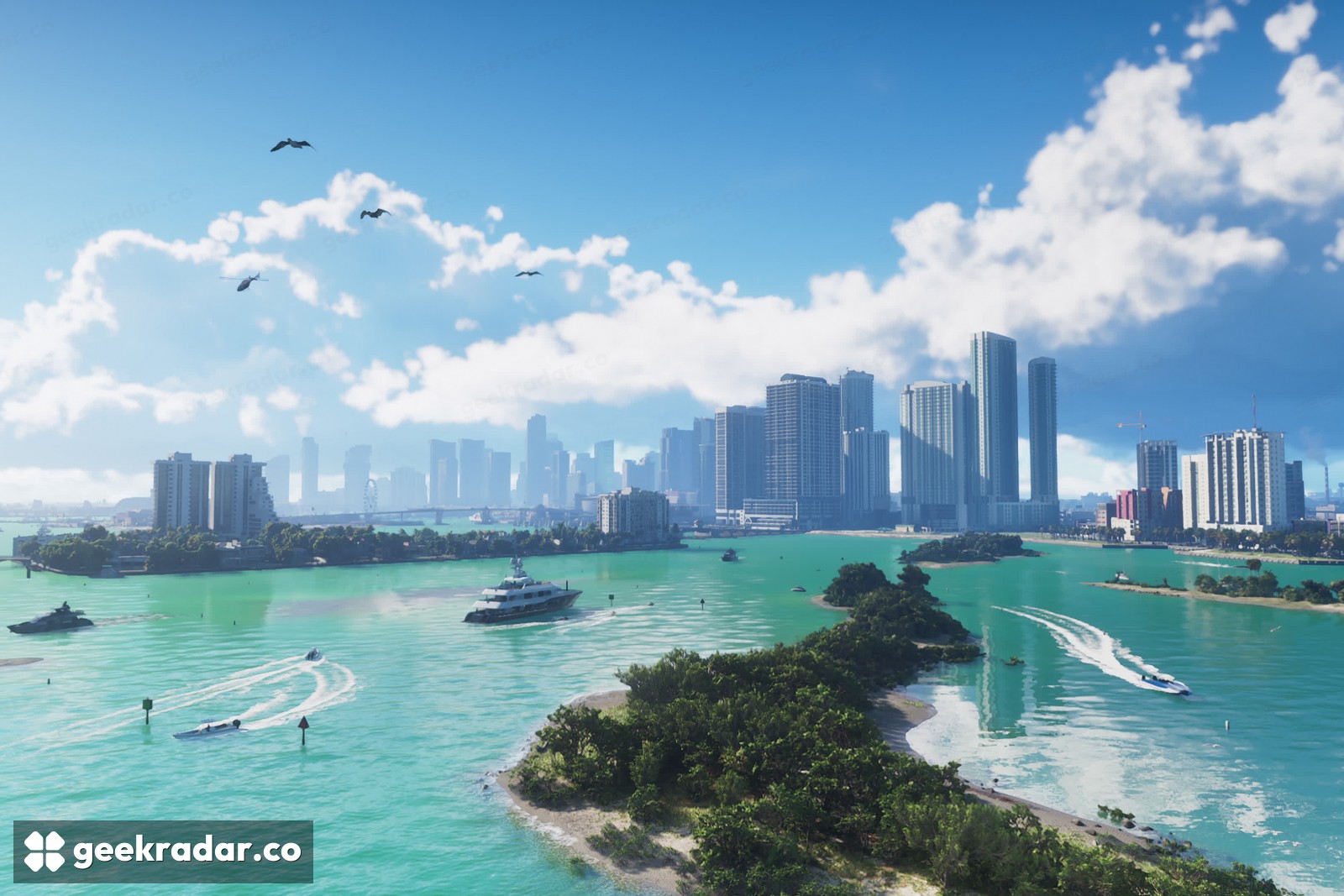
Rockstar's Vice City image puts towers behind a broad stretch of water, with boats and low islands in the foreground. The composition makes the city feel like part of a coastline rather than a wall of buildings that fills the entire world. That is a visible artistic choice, not a measurement of the distance between the camera and the skyline.
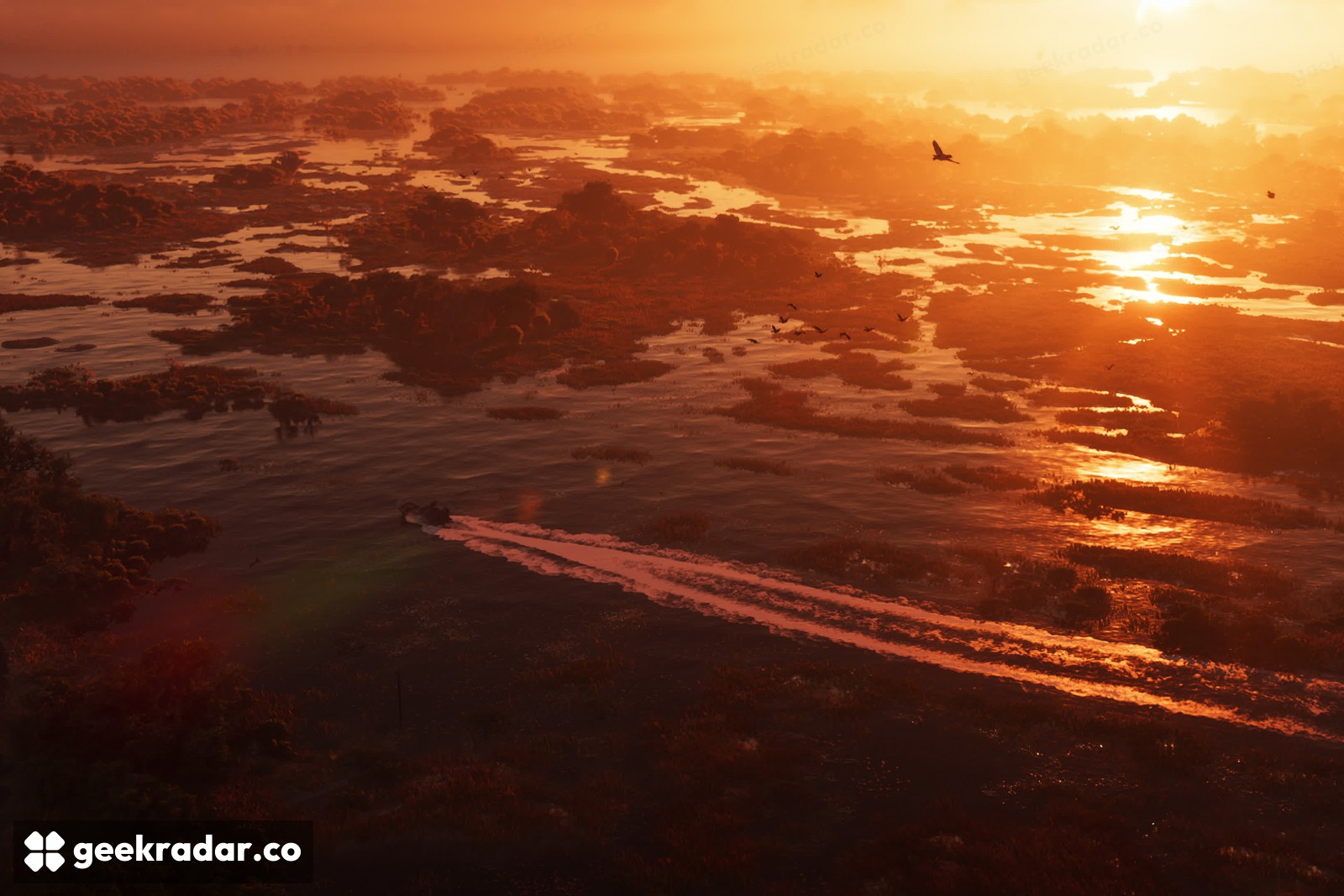
Grassrivers offers a different visual vocabulary: vegetation and water replace the towers as the organizing features. Moving between such environments can change what a player notices even before a mission asks for something different. In a dense city, a building can become a reference point; in wetlands, the shape of a waterway or a break in the trees can take that role.
That is why environmental variety matters independently of raw area. More terrain can extend a journey, but distinct places help a player understand where they are. A memorable open world needs enough contrast that a destination has an identity beyond its marker on a menu.
A recognizable place is more useful than a guessed coordinate
The named regions also provide a way to discuss the game without turning every background detail into a prediction. A landscape can be interesting because of its composition and relationship to the rest of Leonida. It does not need an invented mission attached to it to justify attention.
For example, the contrast between a built-up coast and a wetland suggests a different rhythm of looking and navigating. It does not, by itself, confirm a particular hunting system, wildlife simulation or route between the two. Those would require their own evidence.
Rockstar's current release page lists November 19, 2026 for PlayStation 5 and Xbox Series X|S. Our earlier coverage of the launch trailer and music concerns another part of the presentation; the images here are useful precisely because they let the setting speak without discussing story outcomes.
The strongest promise in Leonida's published geography is not that a journey will take a record amount of time. It is that leaving the city may feel like leaving a particular place, and arriving somewhere else may require learning how to read the landscape again.