HeroQuest’s digital adaptation keeps a person on the other side of the dungeon
Solo play, a four-hero party and a playable Zargon role preserve different parts of the tabletop experience.
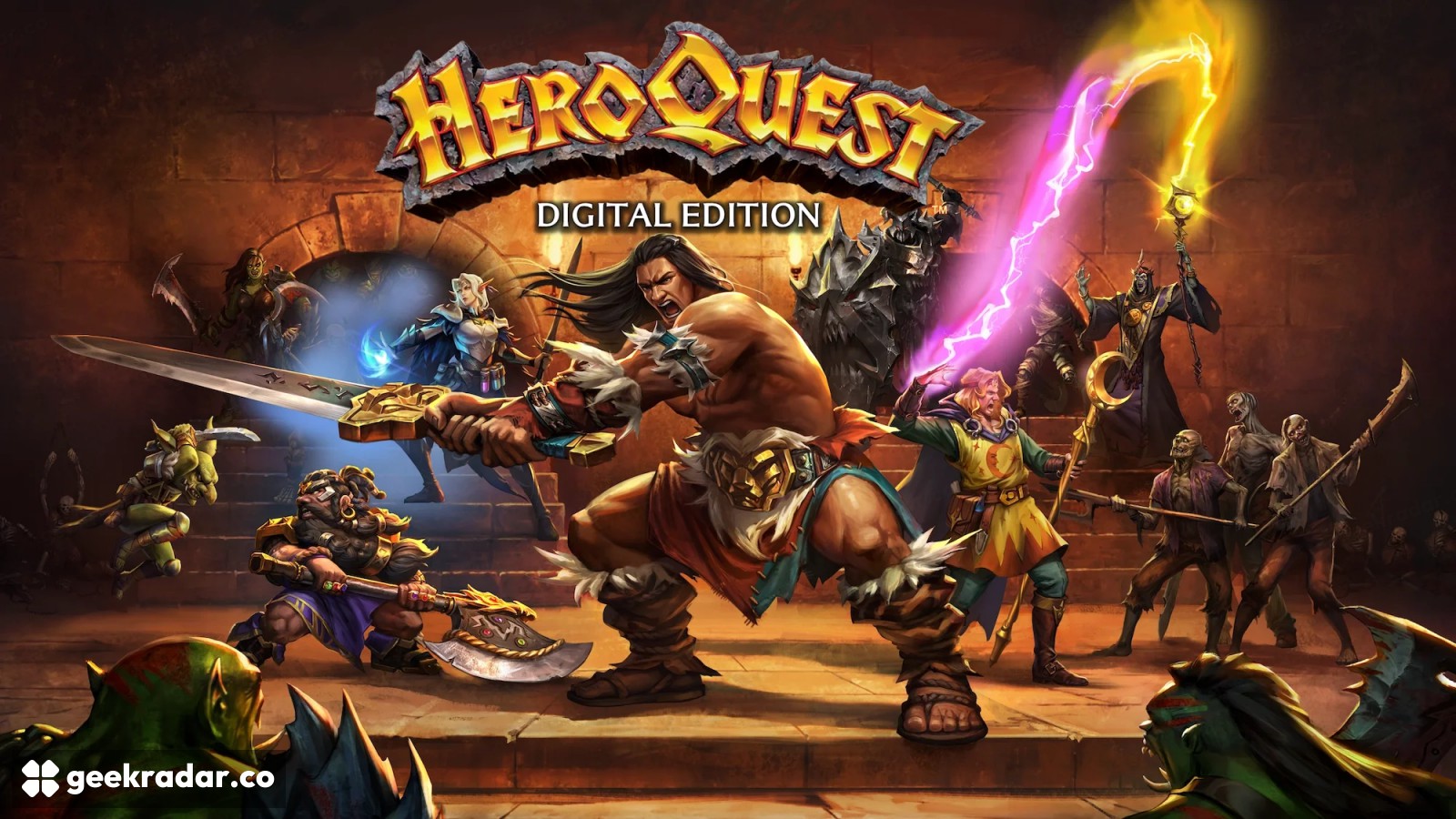
HeroQuest's digital adaptation is keeping a person on the other side of the dungeon. Alongside solo play and online cooperation, HeroQuest: Digital Edition lets a player take the role of Zargon, directing the opposition. That is a meaningful choice for a board-game adaptation: automating the rules does not have to eliminate the social role that helped make those rules entertaining.
The official game site identifies Nomad Games as developer and Balor Games as publisher of the Hasbro adaptation. The Steam listing currently gives the release timing as coming soon, rather than a firm launch date. The announcement is a look at the proposed structure, not evidence that the finished game is available or that its online modes have been tested publicly.
Four heroes, two ways to organize the table
The familiar party consists of a Barbarian, Dwarf, Elf and Wizard. Players can control the adventure alone or form an online group of up to four heroes. The important distinction is between the party and the person controlling Zargon: the role is documented, but a brief mode description should not be stretched into a guarantee about every possible connection or matchmaking arrangement.
At a physical table, players interpret the board together. They discuss movement, decide who should open a door and react to what the opposing player reveals. A digital version can take over arithmetic and enforce legal moves, but it still has to decide where the conversation belongs.
Keeping Zargon playable preserves room for an adversarial participant instead of making the opposition exclusively a background system. Solo play answers a different need: it lets someone explore the game without first assembling the group. Neither mode makes the other redundant. They solve different problems around the same dungeon.
A cinematic corridor still needs a readable board
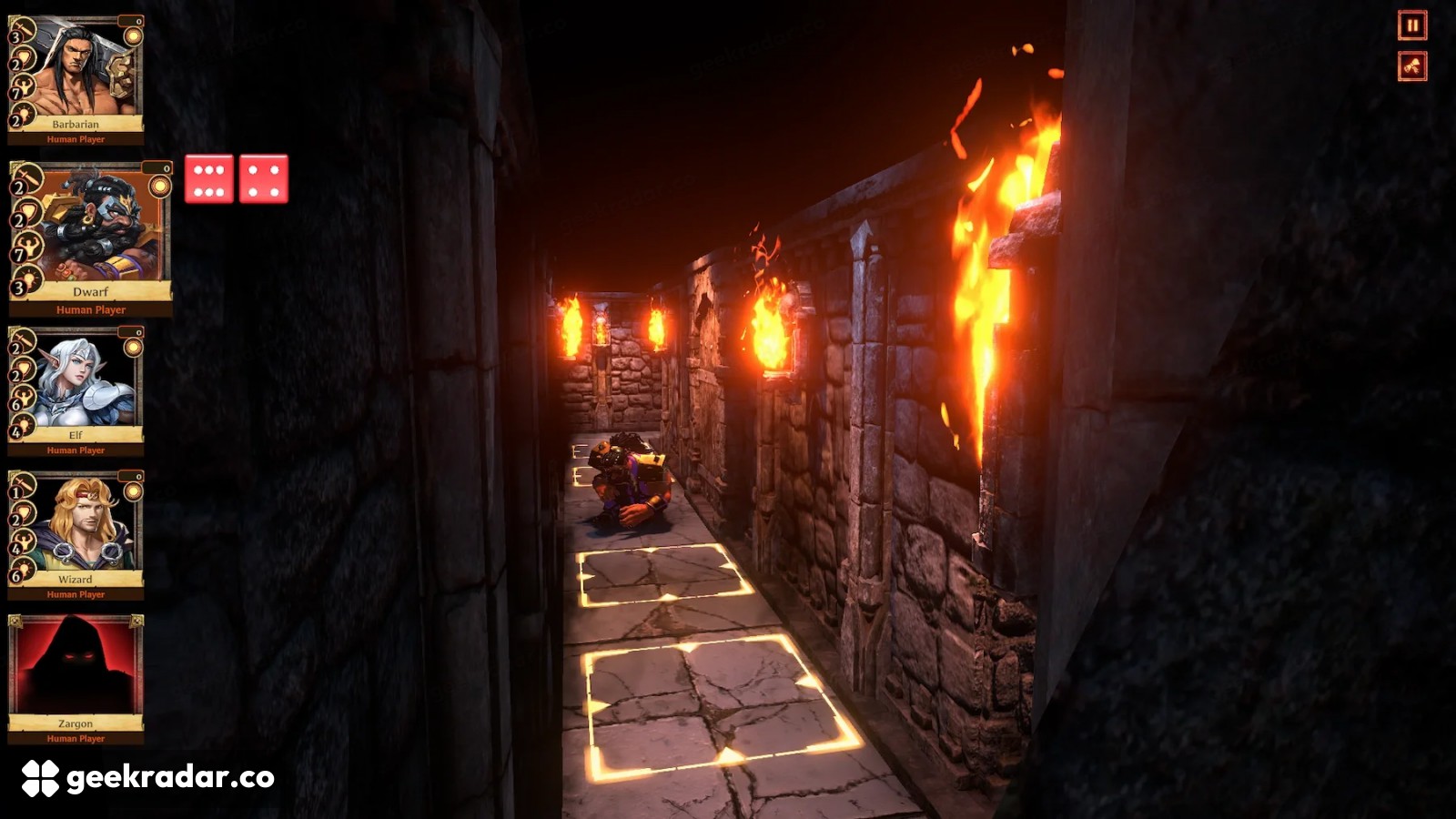
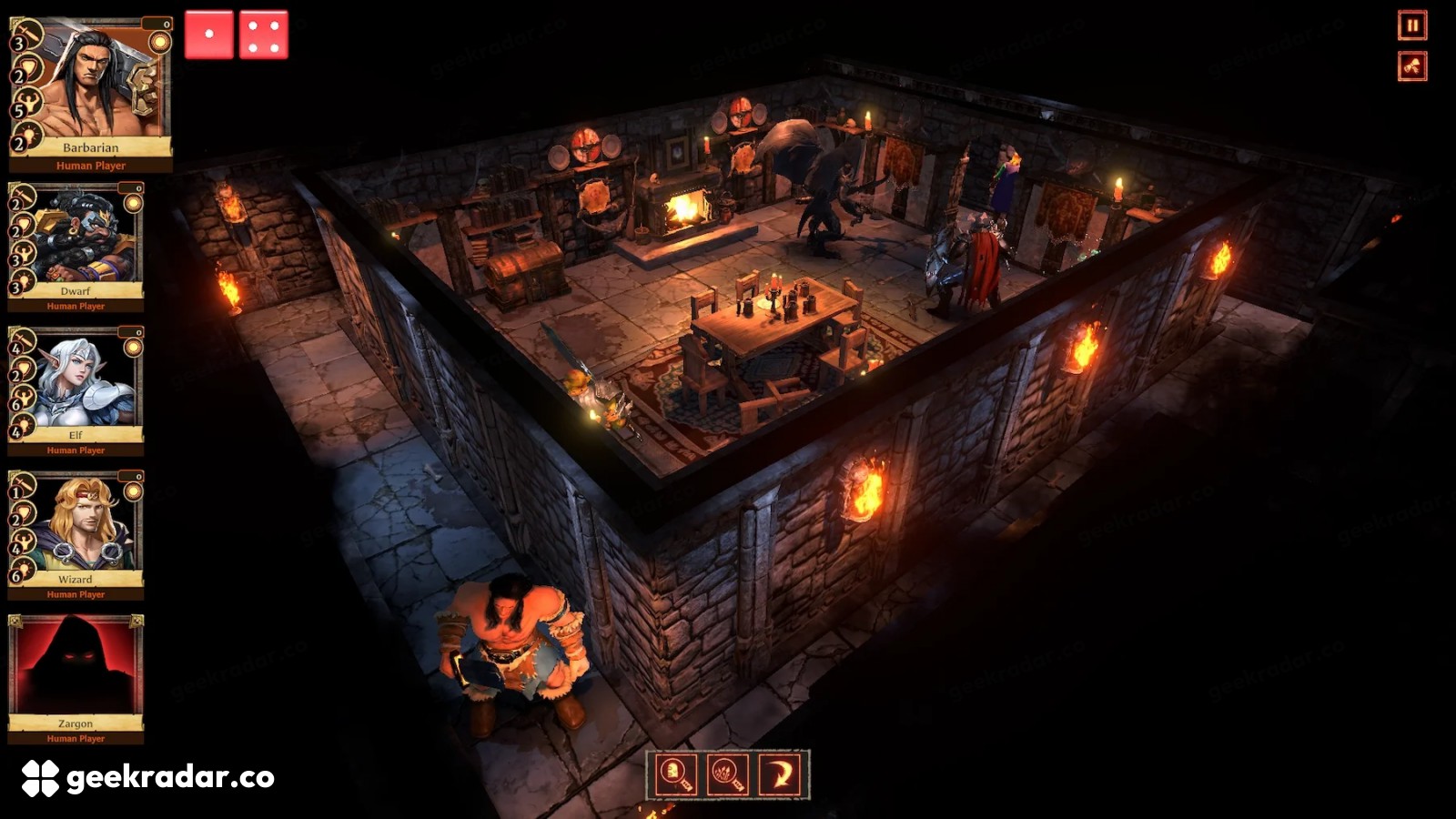
The official screenshots show both close, atmospheric views and a more elevated view of rooms and corridors. The movement grid remains visible. That combination explains the adaptation's central visual challenge: a dungeon should feel like a place while continuing to communicate a board game's discrete spaces.
A close view can make a hero's movement more tangible, but it cannot replace information about reachable squares or where the rest of the party stands. The overhead view serves that second task. The screenshots establish the intended presentation, not proof that the final camera is comfortable in every room or that all controls are clear during a complicated turn.
This matters especially in a cooperative game. If one player can understand the tactical situation and another cannot, visual atmosphere becomes a coordination cost. The useful balance is a view that supports discussion rather than forcing the group to spend its turn explaining what the interface hides.
Custom quests are the longer-term proposition
The announced quest-building tools and mod.io integration give the adaptation a route beyond its supplied adventures. Players creating and sharing content could extend its usefulness for groups that already know the standard challenges.
That is a capability, not a catalogue that exists at launch. An editor's value depends on what it allows creators to express, how players find compatible quests and how reliably shared content works. The announcement supports the intention to make community adventures part of the product; it does not establish their eventual quality or volume.
The interesting prospect in this PC adaptation goes beyond a familiar board appearing on a monitor. HeroQuest is trying to preserve the roles around the board as well as the pieces on it. If the interface can make the rules easier to manage without making the other people incidental, the digital adaptation will have carried over something more valuable than the box art.