Thelio Prime makes a small Linux desktop without sealing away its parts
System76’s 11-liter design starts at $1,599, with repair access and graphics choices that matter more than a maximum-spec headline.
System76’s Thelio Prime puts a conventional, serviceable Linux desktop into an 11-liter enclosure that can stand upright or lie flat. The machine is due on November 18 with a starting price of US$1,599, but that headline price should not be confused with the maximum memory, storage or graphics options listed beside it.
The official specification page describes Ryzen 9000 processors, up to 96GB of DDR5 memory and up to 8TB of storage. The interesting design decision is how much of a regular desktop System76 is trying to retain while reducing the space around it.
Small does not have to mean sealed
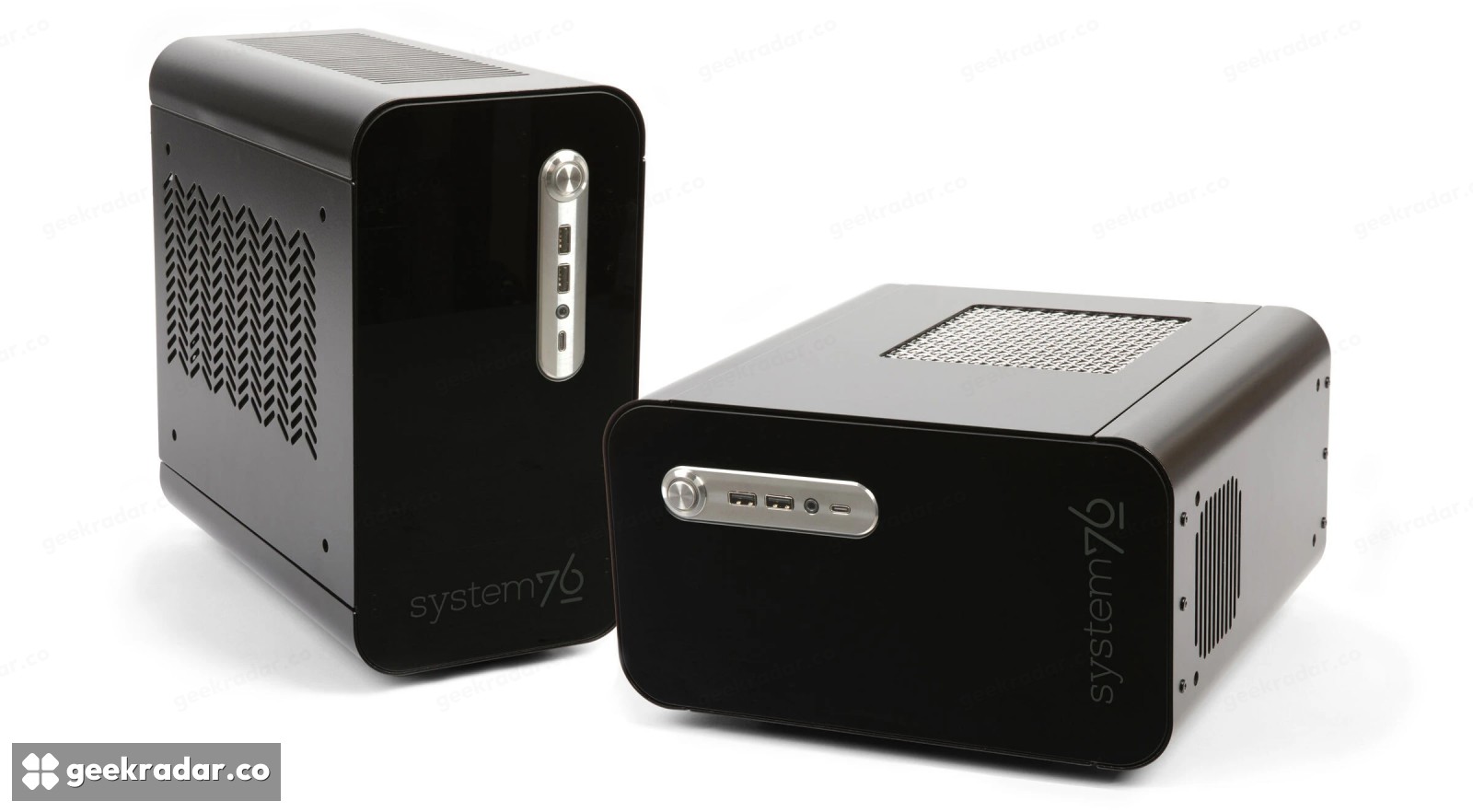
The enclosure uses aluminum panels and magnetic attachments, including feet that accommodate either orientation. System76 also emphasizes off-the-shelf components. Those choices address a different problem from making the smallest possible box: they make access and component replacement part of the product’s intended use.
Orientation has a practical consequence before any benchmark enters the discussion. A machine that fits upright beside a monitor may need to lie horizontally under a shelf. The published upright dimensions, including the feet, are approximately 288 by 149 by 282mm. The 11-liter description is useful shorthand, but the actual measurements are what determine whether the chosen space works.
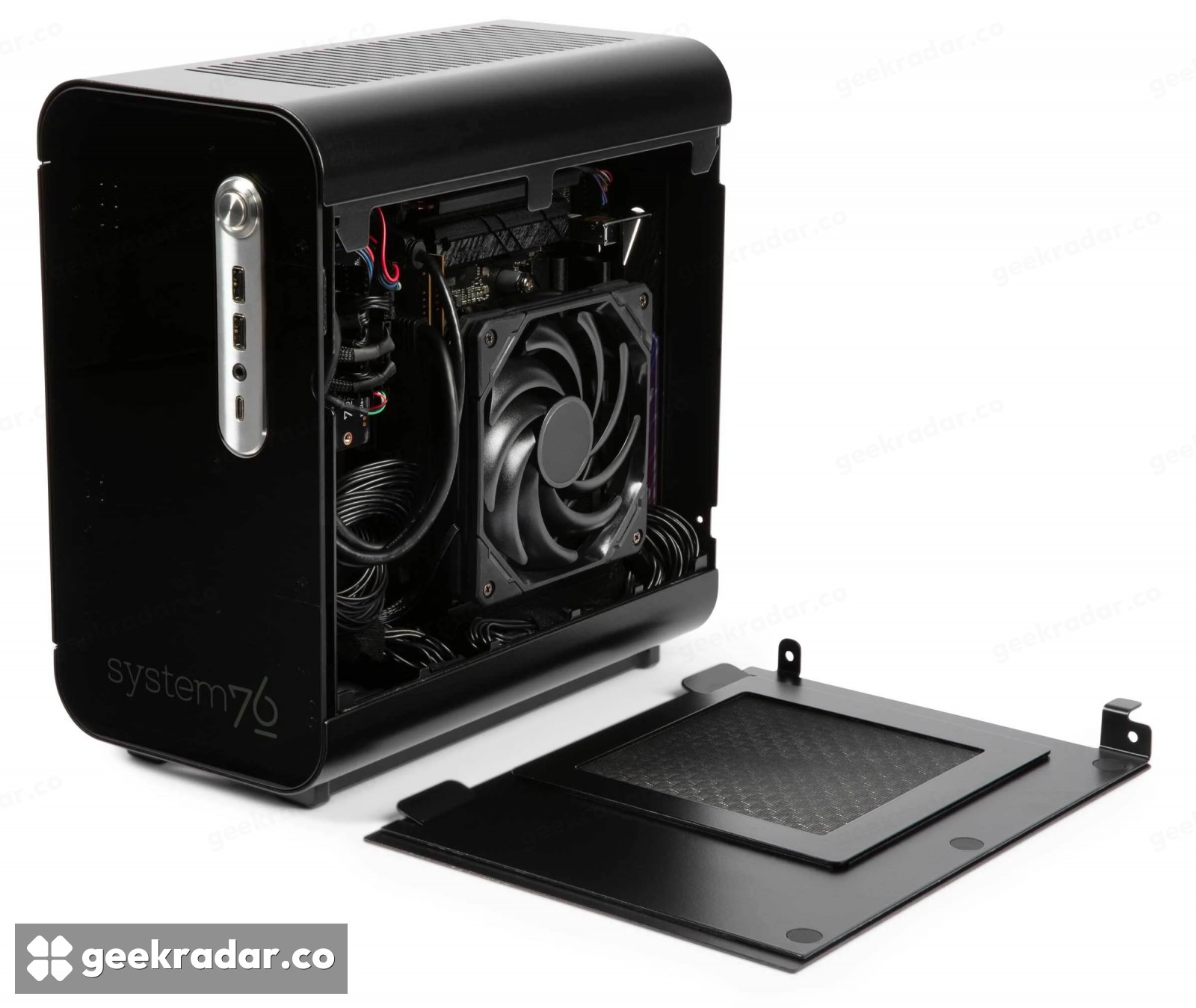
The open-case photograph is equally revealing. It shows how closely the cooling hardware, cabling and outer panels are packed. A removable panel makes access possible; it does not make the interior as spacious as a full tower. Buyers planning future component changes still need to respect the enclosure’s physical limits.
The graphics choice defines the job
System76 lists integrated AMD graphics as well as discrete AMD and Nvidia options. That makes Thelio Prime a family of configurations rather than one performance profile. An integrated-graphics system for development or ordinary desktop work and a discrete-GPU system for heavier graphics tasks can share the enclosure while differing substantially in price and power behavior.
The company describes two internal air chambers and promotes quiet cooling. Those are design claims, not independent acoustic measurements. Their significance is the attempt to manage airflow in a dense enclosure; the announcement does not establish that every configuration will produce the same noise under load.
Storage also deserves a closer look. The two M.2 positions use PCIe Gen5 and Gen4 connectivity. “Up to 8TB” describes capacity, while the two interface generations describe the connections available to the drives. Neither number alone tells the buyer how a particular storage configuration will behave.
A Linux purchase includes the integration
The software choice is part of the appeal. Buying a machine offered with a specific Linux environment shifts some of the initial integration work into the product configuration. It does not make all applications, games or peripherals automatically compatible; those remain workload-specific questions.
For readers comparing portable PC and console libraries, the same distinction applies on a desktop: hardware capability and software availability are separate checks. Thelio Prime’s compact shape cannot answer the second one.
Its strongest proposition is a more specific compromise. It keeps desktop component choices and access to the interior, while asking for much less room than a traditional tower. The right configuration is the one that fits both the desk and the intended work. Paying for the largest numbers on the page would miss the point of a machine designed around using space carefully.