Roblox rolls back terrain optimizations, while custom materials stay live
An iOS crash delays the performance rollout. New live servers revert; Studio, materials and larger terrain remain available.
Roblox has temporarily disabled its new terrain memory and performance optimizations in live experiences after discovering an iOS crash. Custom terrain materials remain available, including in published games. The distinction is the central point of the October 24 developer update: creators have not lost the new material palette because one part of the underlying rollout needs repair.
Roblox says it has fixed the crash internally, but the correction still has to reach players. New servers revert to the previous terrain system in the meantime. Servers already running retain their existing behavior until they close, so two sessions can temporarily operate under different conditions without a creator changing the place.
The editor and the live game are different checks
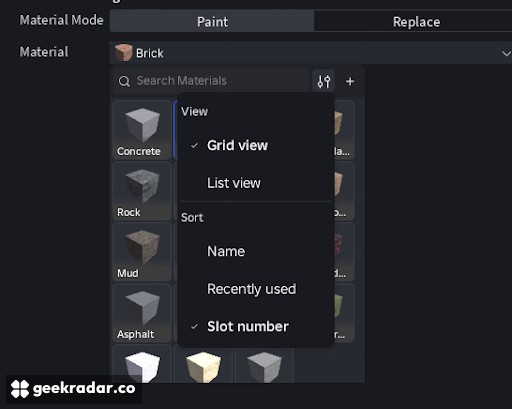
The October 22 launch announcement moved custom materials out of Early Access. It allows up to 62 editable terrain materials through the Expanded Terrain setting. That gives a creator room to distinguish environments through their surfaces, instead of relying only on changes in geometry or separate decorative objects.
The launch also bundled technical optimizations. Combining those changes under one announcement made the rollout easy to describe, but it did not make them inseparable. Roblox says larger terrain can still be published, custom materials still work, and Studio and Team Create are unaffected by the rollback.
For a development team, that means a successful Studio session is not evidence that the new memory improvements are active in a public server. Equally, a rollback of those improvements is not a reason to delete newly painted terrain. The platform explicitly says creators do not need to take action and their places and materials remain unchanged.
A mobile update sets the pace
Roblox warns that restoring the optimizations may take a few weeks because mobile releases can take longer to reach everyone. This is a deployment estimate, not a dated commitment. An internal fix and a fix installed on every affected device are different milestones; re-enabling the new path too early would bring old clients back into contact with the problem.
The initial announcement's performance figures should therefore not be treated as the current behavior of every published experience. They described a particular benchmark for the new implementation, not a universal frame-rate uplift, and the implementation is now temporarily disabled on new live servers.
There is a useful lesson here for players as well as creators. A more varied landscape can be visible immediately while the work that makes it cheaper to stream follows a separate timetable. This is a gaming-platform infrastructure change rather than a content event: there is nothing to claim before a timer expires. Its next meaningful milestone is a stable client rollout, after which the terrain already built can finally benefit from the optimizations intended to support it.