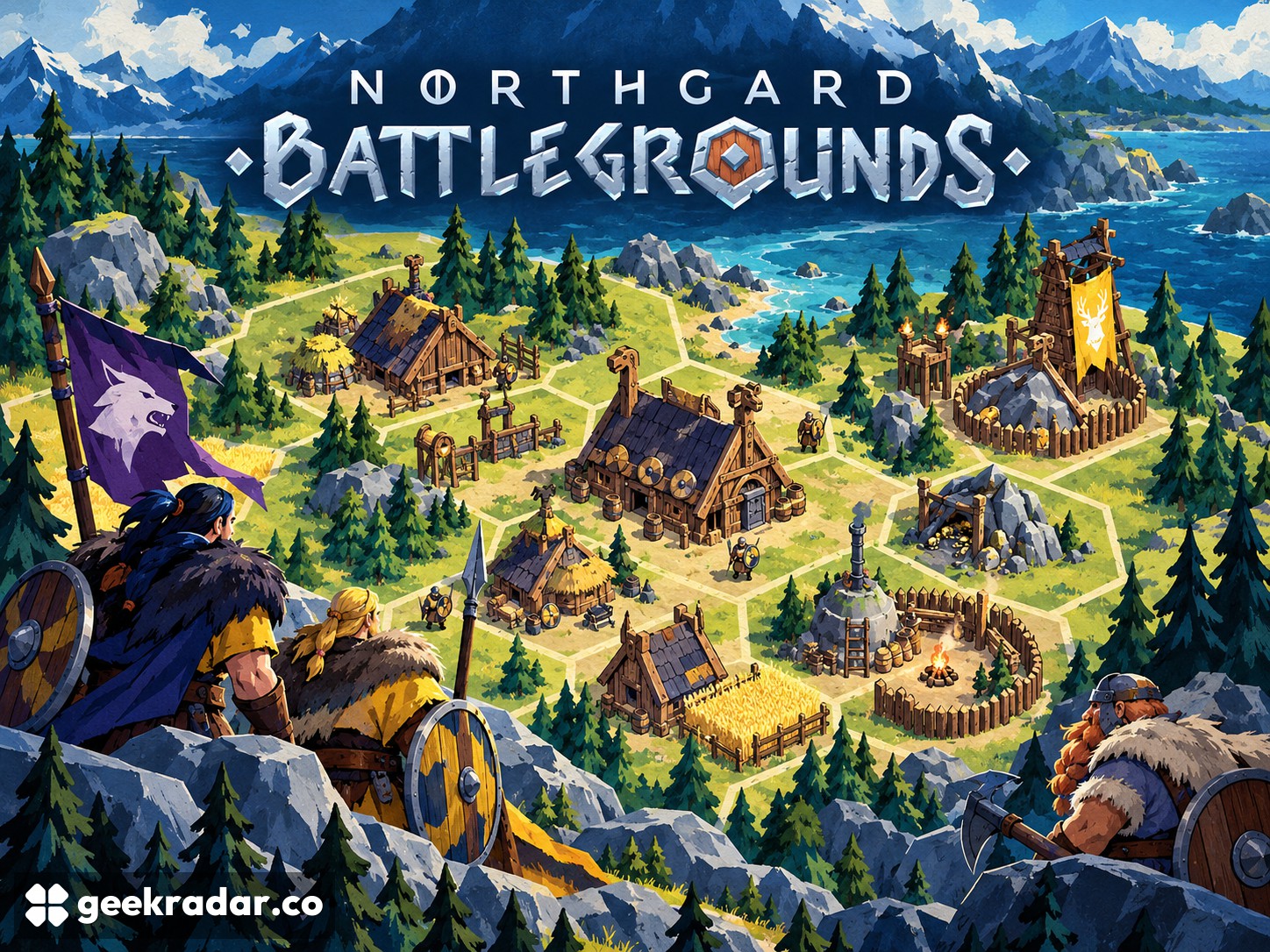
Northgard Battlegrounds makes the village your battle plan
The October 27 Early Access release links building placement to automatic combat. Its demo offers a more useful test than a roadmap.
Northgard Battlegrounds turns the layout of a Viking settlement into the preparation for an automatic battle. Its Steam Early Access launch is scheduled for October 27, and the distinction between building and fighting is the useful part of the pitch: your decisions happen in the village, then the warband has to live with them.
Funday Games is developing the game, with Shiro Unlimited publishing. The Steam listing describes turn-based construction and asynchronous battles against rival players. This is an upcoming work-in-progress release, not a finished 1.0 edition or evidence of an established competitive balance.
The village is the build
The core sequence connects spatial planning to combat. Economic structures benefit from nearby resources, military buildings contribute warriors, and divine blessings modify how the settlement and its forces work together. When battle begins, the units fight automatically. The layout is therefore more than the attractive place surrounding an army menu: it is part of how that army is assembled.
That creates a useful tension for a strategy game. A placement that improves immediate income may consume space that could support a different combination later. A combat loss can make the player reconsider the village rather than blame a missed command during the fight. Whether those choices remain varied depends on the actual balance, but the design gives each building an argument to make beyond filling an empty tile.
This format may suit someone who likes competitive planning but cannot always commit to an uninterrupted live match. It should not be mistaken for an absence of competition, or a guarantee that every run will be short. The store’s description establishes the asynchronous structure, not an independently measured average session length.
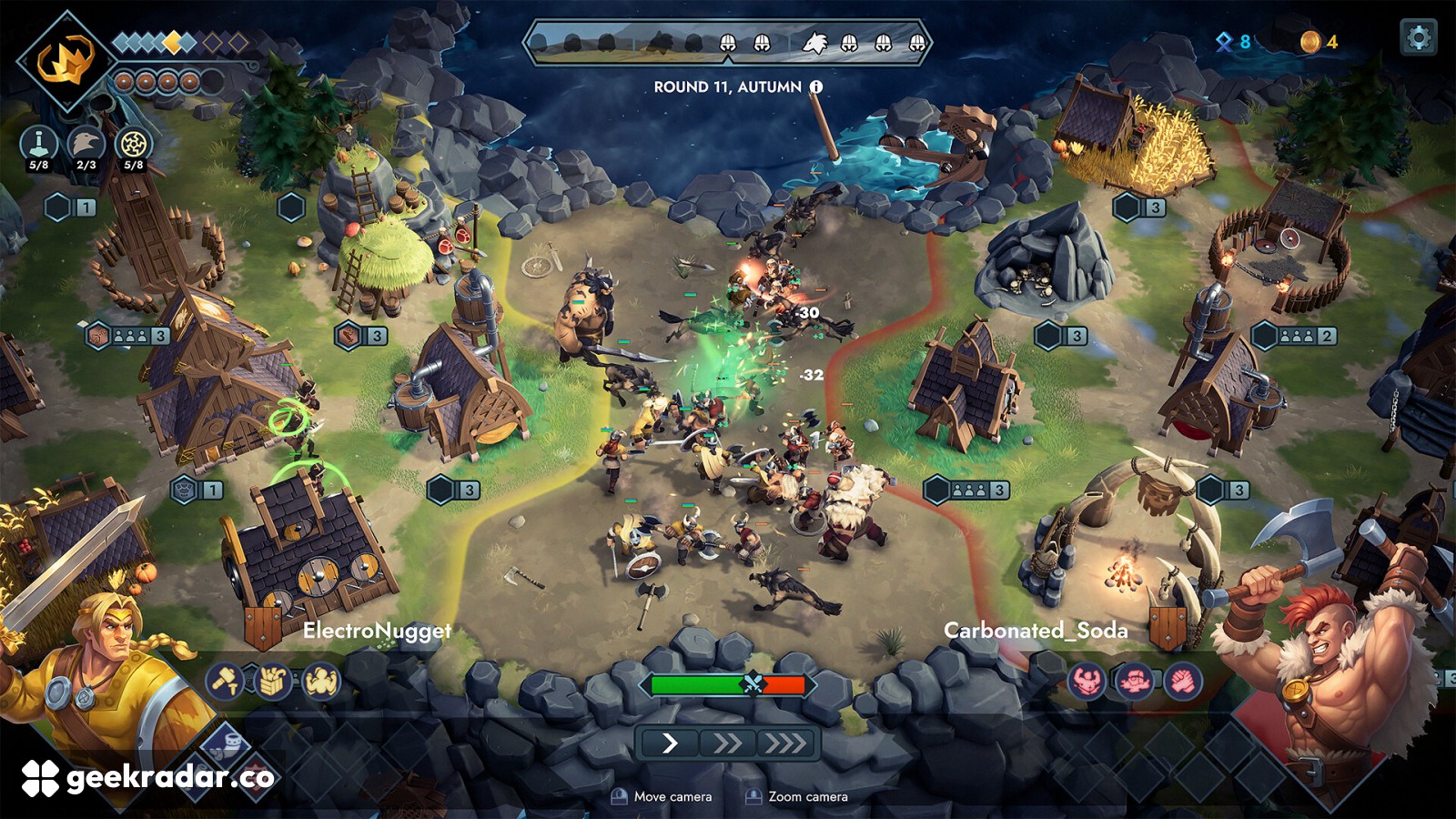
Try the decision loop before buying the roadmap
The developer’s release announcement accompanied the October demo rollout, and the current store page still offers the demo. Our earlier Steam Next Fest guide explains why a downloadable sample can be useful amid a busy discovery event. Here, the question to bring to that sample is particularly concrete: does rearranging the village make the next battle meaningfully more interesting?
A demo can help answer that question without settling how much variety the Early Access version will sustain. The developer expects at least six months in Early Access and plans additional content and refinement, but that duration is an estimate. A prospective buyer should value the game available at purchase, rather than treat future clans, systems or balance changes as already delivered.
There is also a local consideration. The Steam page lists eight supported interface languages, and Italian is not among them as of October 24. Italian readers can still have every reason to follow the game, but should make that language check before buying. A translated news article is not confirmation of a translated game.
The most revealing moment in this kind of strategy design comes after defeat. If the player can identify a placement to change and wants another attempt, the village has become a tool for reasoning. If the response is only to repeat the same arrangement and hope, the automatic fight has concealed too much. Battlegrounds’ demo lets prospective players look for that distinction before committing to the longer Early Access journey.