VBoy Color gives Virtual Boy games new palettes without replacing their graphics
The open-source emulator separates game emulation from hand-painted color packs. That makes its alternative look interesting—and worth distinguishing from restoration.
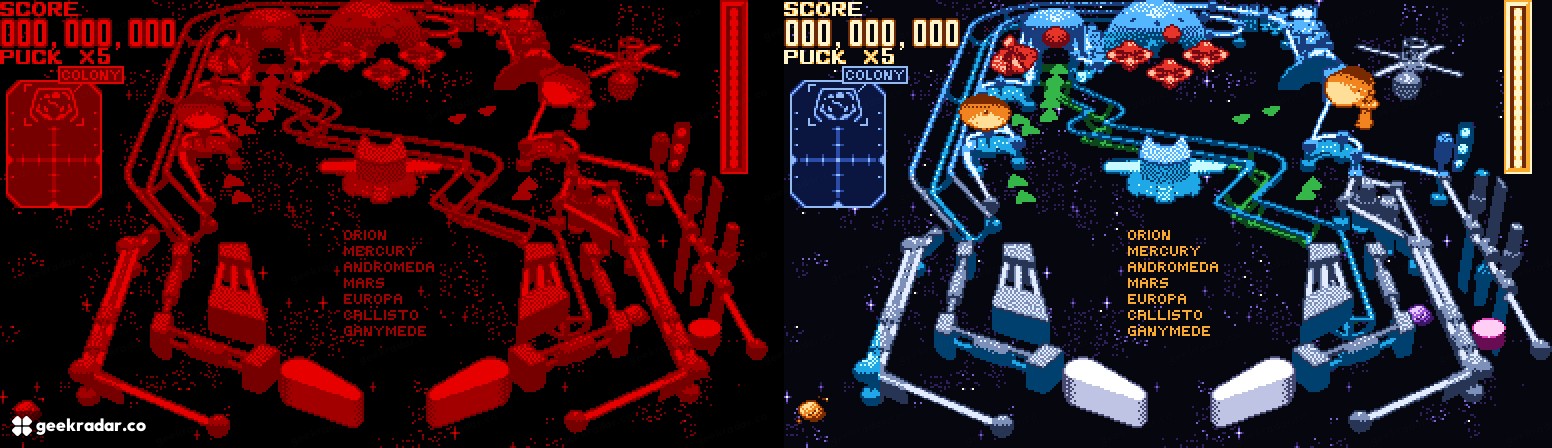
The red image is familiar. The colored one makes the same little pinball table much easier to separate into objects. That is the appeal of VBoy Color, an independent open-source Virtual Boy emulator whose most interesting feature sits between emulation and illustration: it can assign new colors to the graphics a game already draws.
On Meta Quest, the project offers stereoscopic presentation; desktop and Android versions make the software useful beyond a headset. It is a fan project, with no Nintendo or Meta endorsement, and it includes no games. The change in appearance should also be understood on its own terms. These are chosen colors, not a rediscovered official full-color version hidden inside the original cartridge.
A tile keeps its identity as the scene changes
The color-pack documentation explains a more deliberate technique than applying one tint to a finished frame. Many game graphics are assembled from small reusable tiles. VBoy Color records which tile produced each screen pixel, allowing an artist’s color assignments to follow that tile when it appears elsewhere.
This matters because an object moves, scrolls and reappears. Painting a single screenshot would only produce a still picture. Associating colors with the pieces from which that picture is constructed can carry the treatment into later frames. The pack stores identifying hashes and colors, rather than a replacement set of game graphics.
The complication is reuse. Two objects can share a tile while needing different colors. The documentation describes more specific matching by map position, palette and layer, as well as handling for shared character pieces. This is the unglamorous work behind a convincing result: deciding when two matching shapes represent the same thing and when they do not.
Two eyes make consistency harder
A stereo display adds another constraint. The left and right eyes see related pictures from slightly different positions. Coloring them independently could give one object conflicting appearances. VBoy Color’s pack system therefore tries to preserve consistent colors across both views, including cases where the game uses separate imagery for each eye.
That is a useful distinction from judging the project only through a flat comparison image. A screenshot can show the new palette, but it cannot establish comfort, depth perception or the behavior of every scene in a headset. The project’s implementation describes its approach; it does not substitute for testing a particular game and device.
The software also offers simpler presentation modes. A tint or gradient changes the palette in a different way from a detailed game-specific pack. Those choices let users decide how far to depart from the original red presentation, rather than treating one recoloring as the definitive edition.
An alternative view can coexist with preservation
There are two separate questions here: whether old software remains playable, and how it should look when it is played. Our coverage of GOG’s preservation work concerns the first problem in another part of gaming. VBoy Color makes the second unusually explicit by putting the presentation layer under the player’s control.
For Italian users, the technical appeal is the same as elsewhere; the project does not announce a separate regional edition. Device requirements and the chosen build still matter, and owning an emulator does not supply the games it runs.
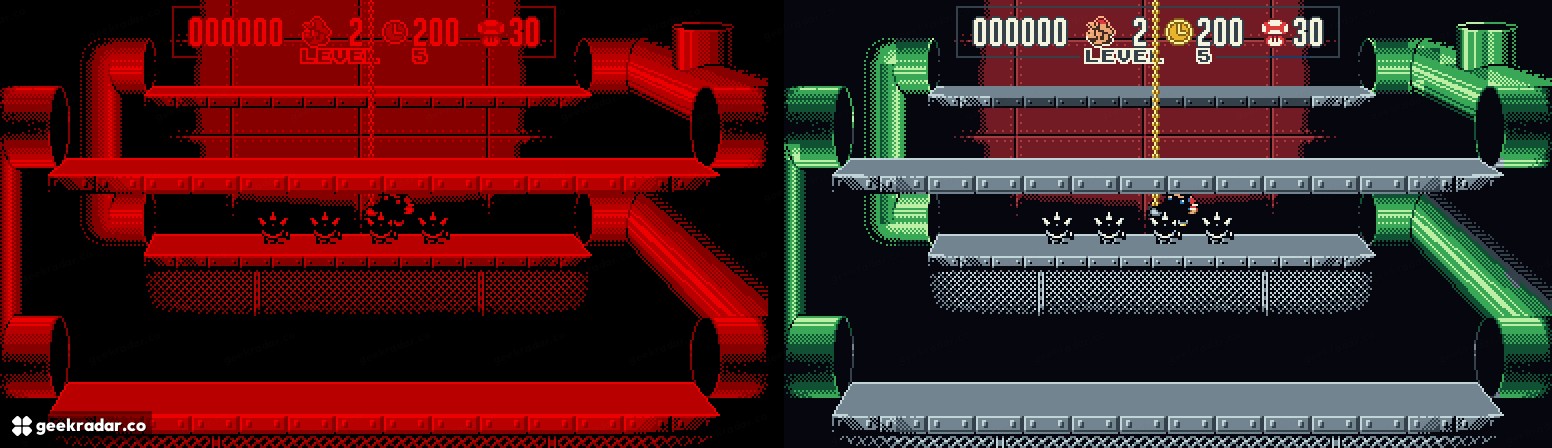
The strongest reason to explore this project is that its new look can be treated as an option. A colored pipe may make a scene read differently. Keeping the original available lets players notice that change instead of quietly rewriting what the game used to be.