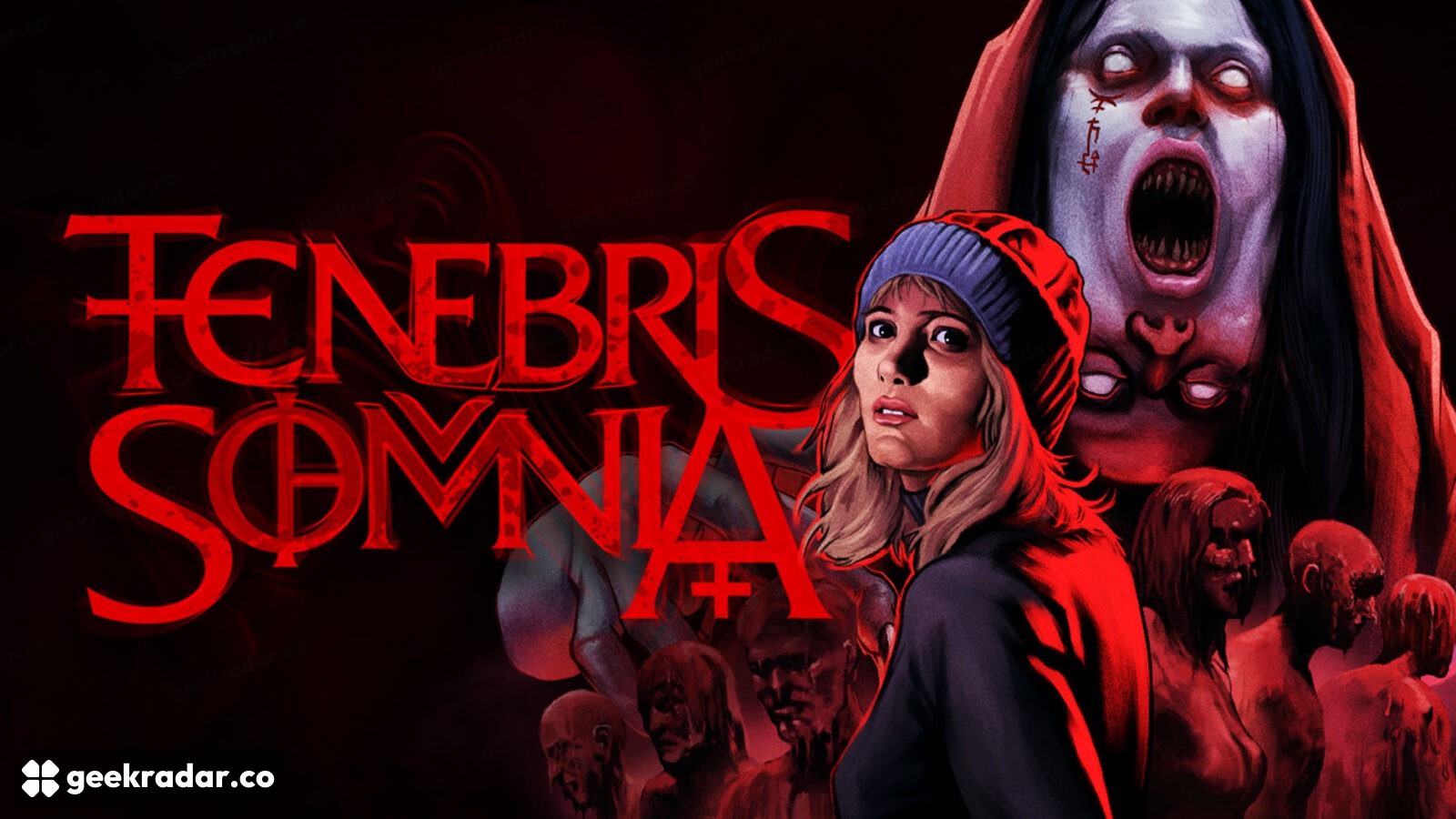
Tenebris Somnia builds one horror world in pixels and physical sets
Its creators describe matching filmed locations to playable spaces. That continuity matters more than simply adding live-action scenes.
Tenebris Somnia moves between pixel-based survival horror and filmed scenes with actors and physical sets. The difficult part is making those two worlds feel like the same place. In an account published at the October 16 launch, executive producer Airdorf describes the planning needed to match the filmed locations to the spaces players navigate.
That is a more useful way to understand the project than treating live action as a decorative reward between levels. A change of visual language can alter how much information the audience receives, while continuity has to preserve the sense that the information belongs to one world. The production approach can be discussed without revealing what happens to its characters.
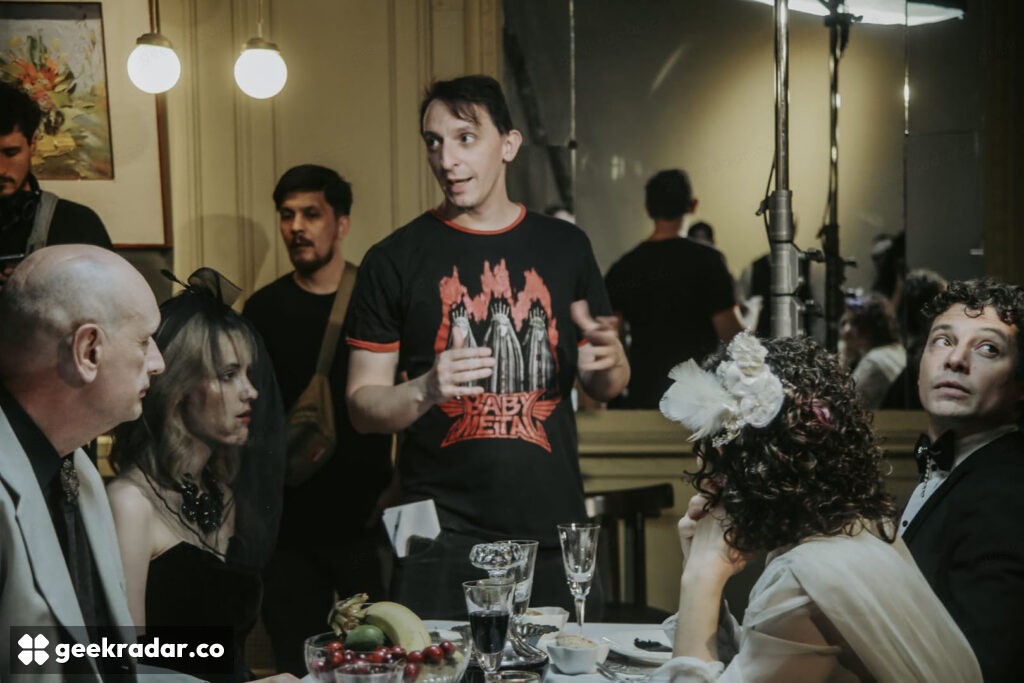
The room has to survive the change of medium
Pixel art relies on selection. A few shapes and colors can establish a door, a face or a threat while leaving detail unresolved. A filmed image supplies much more surface information: texture, small movements and the physical relationships between objects.
Moving between those forms creates an opportunity, but also a continuity problem. If a room’s layout ceases to make sense when it becomes a film set, attention can shift from the scene to the mismatch. Matching locations therefore serves the player’s understanding as well as the production’s appearance.
The creators’ account describes practical set dressing alongside visual-effects work. It also identifies the Argentine film crew, director Andrés Borghi and effects supervisor Marcos Berta. Those details explain the kind of production involved; they do not independently establish how effective every transition is in the finished game.
The cut is part of the design
According to the producer, filmed sequences are integrated into the gameplay flow rather than reserved as a simple end-of-section reward. That changes what a transition can do. It can interrupt an established visual rhythm or return control with the player’s attention directed differently.
The relevant craft is consequently shared between game direction and editing. The moment a cut begins, what remains recognizable across it, and when control returns can matter as much as the detail of the filmed image. More realistic footage is not automatically more effective; it needs a reason to arrive at that point.
This is an account from someone involved in making and selling the game. We can use it to explain the intended method without adopting its claims about how frightening or successful the result must be. That judgment requires playing the finished work.
Availability is easier to explain than the plot
The Xbox listing confirms the October 16 release and Xbox Play Anywhere support for console and PC. Supported cloud access still requires purchase; the presence of a Game Pass-related cloud option does not mean the game is automatically included in the subscription catalog.
Italian readers should check the local language list before buying. An Italian article about a game does not establish an Italian localization, and the production account’s examples of translated languages are not a complete guarantee of regional support.
The most interesting promise here is continuity through a dramatic change in representation. The pixels do not need to imitate film, and the film does not need to erase the pixels. They need to leave the player convinced that the same door is still on the other side of the cut.
Artwork and production photograph: New Blood Interactive / Saibot Studios.