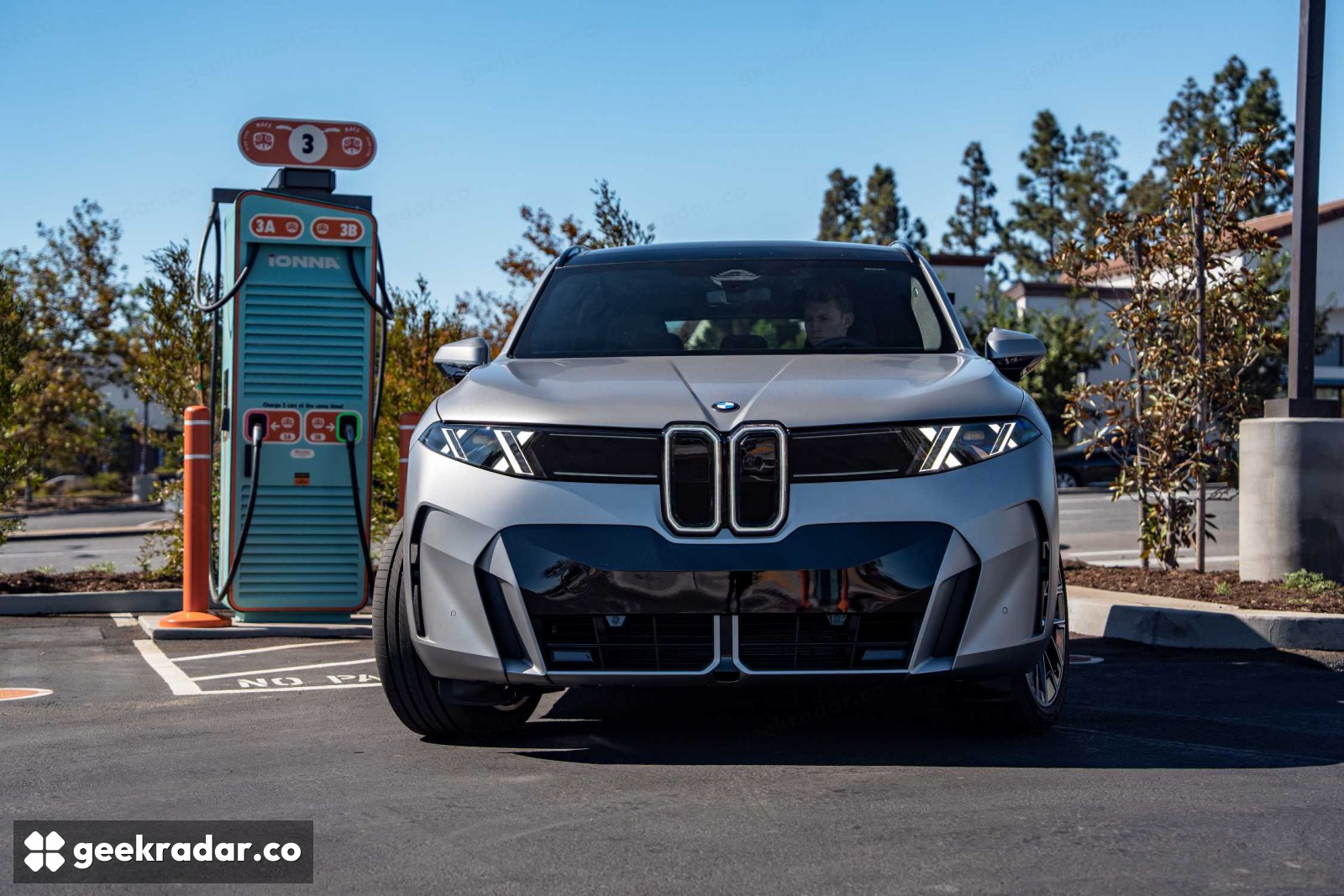
BMW’s 460kW charging demo makes the whole stop more important than the peak
The iX5 demonstration pairs a large battery with a short claimed 10–80% time. Its US charging hardware is still a technology demonstration.
BMW’s latest charging demonstration puts a useful question behind an impressive number: how much of a stop does the car actually spend taking energy quickly? The company says its iX5 60 xDrive can reach 460kW, but the more revealing claim is a 10–80% charge in 23 minutes for a battery with 141kWh of usable capacity.
Those figures come from BMW’s October 20 demonstration with charging operator IONNA and equipment maker Alpitronic. They are manufacturer figures, rather than results from a GeekRadar road test. There is also a substantial availability qualification: BMW explicitly says the charging hardware demonstrated is not commercially available in the United States today.
Read the charging session, not one instant
A kilowatt measures power: the rate at which energy moves. A kilowatt-hour measures energy. Confusing them turns a large number on a charger into a promise about the entire journey. A 460kW peak does not mean the car receives 460kWh in an hour-long session, because the rate can change throughout that session.
The two published battery figures help make that distinction concrete. Seventy percent of a 141kWh usable pack is about 98.7kWh. Dividing that amount by 23 minutes gives a simple battery-energy average of roughly 257kW. This is an illustrative calculation from BMW’s specifications, not a measured charging curve; it excludes the additional electricity lost between the charger and the battery.
Even with those limits, the arithmetic answers an important question. The peak and the session average describe different things, and both can be correct. Advertising the former tells us something about the system’s ceiling. Reporting the latter tells us more about the stop a driver is trying to plan.
A vehicle and a charger have to agree
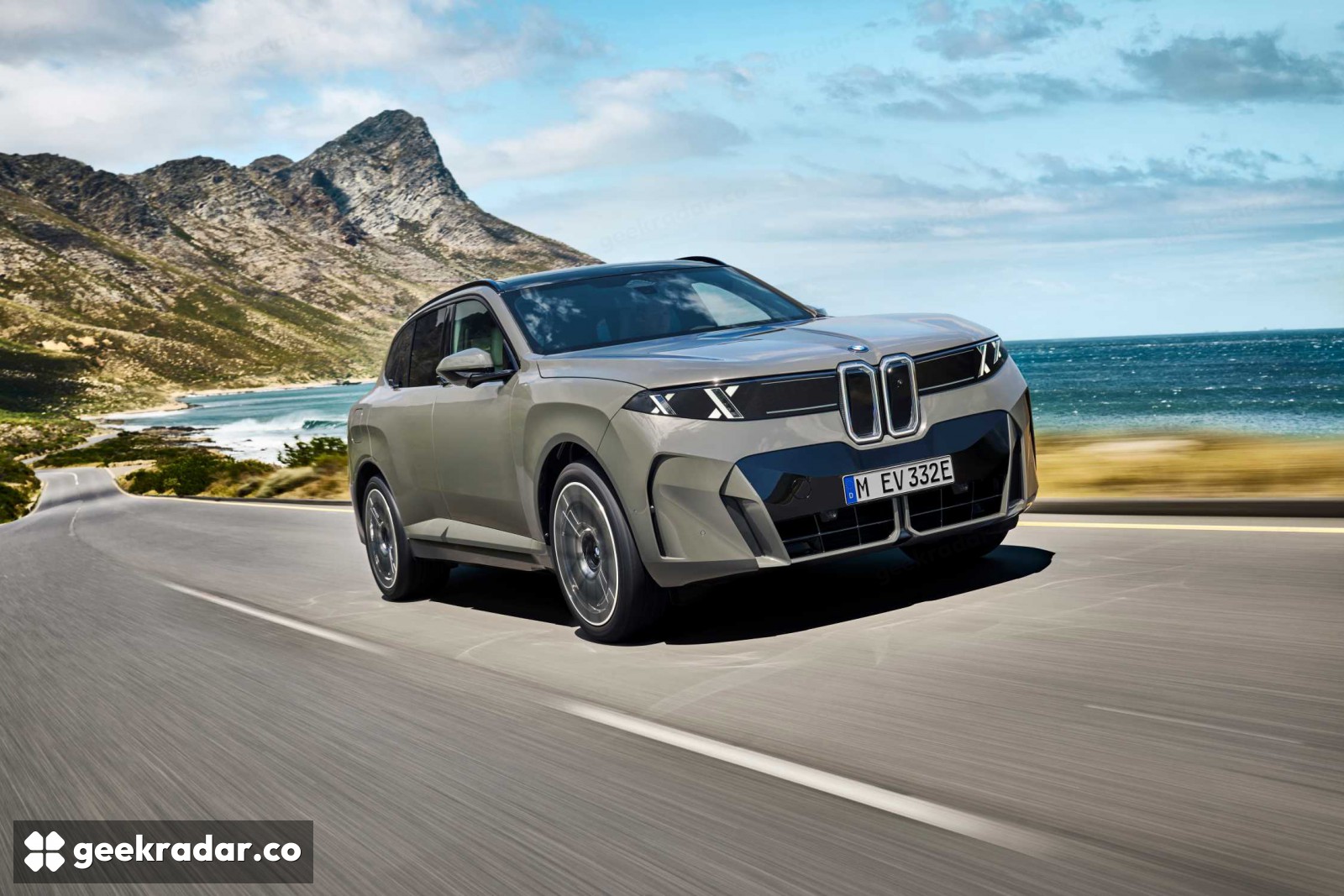
BMW’s June introduction of the new X5 family placed the electric iX5 on its sixth-generation eDrive system, with an 800V architecture and cylindrical battery cells. These are properties of the electric version; the wider X5 family also includes other powertrain types, with separate introductions.
The demonstration makes the infrastructure side unusually visible. BMW supplies the vehicle, Alpitronic the high-power charging equipment, and IONNA the operating environment. A compatible plug alone does not establish that every station can deliver the advertised maximum. The vehicle and the particular charging installation are parts of the same result.
For European and Italian readers, the California location neither rules out relevance nor establishes local availability. It demonstrates a technology intended for a globally marketed vehicle family. It does not confirm that a particular Italian motorway charger, tariff or vehicle configuration will reproduce the session. Those details belong to the actual installation and regional specification.
Range added is another conditional figure
BMW also quotes up to 363km of WLTP range added in ten minutes. That is a standardized range expression, not a promise of 363 motorway kilometres in any weather. It combines charging with the consumption assumptions behind the range figure. A driver comparing cars should therefore keep the test basis alongside the distance, just as they keep usable battery capacity alongside charging time.
The worthwhile advance here is the possibility of making a large-battery vehicle less demanding of a long-distance stop. The 460kW label is easy to remember. The harder achievement is sustaining useful charging across the part of the battery a driver needs, on equipment that is actually on the route.