Green Lantern: Doomed Cosmos makes humanity the empire to resist
DC’s six-issue Elseworlds comic starts in January. Its alternate continuity and heavily armored visual design give new readers a distinct entry point.
DC's next Green Lantern Elseworlds series turns a familiar superhero perspective around: humanity is the conquering power, and the Lanterns are part of the resistance. Green Lantern: Doomed Cosmos, announced this week, will tell that story in six issues beginning January 20, 2027.
The publisher's announcement pairs writer Dan Watters with artist Kyle Hotz, colorist Dan Brown and letterer Steve Wands. Hal Jordan is presented as the only human Green Lantern in this setting. That premise supplies a clear point of tension without requiring the promotional synopsis's later character developments to be repeated here.
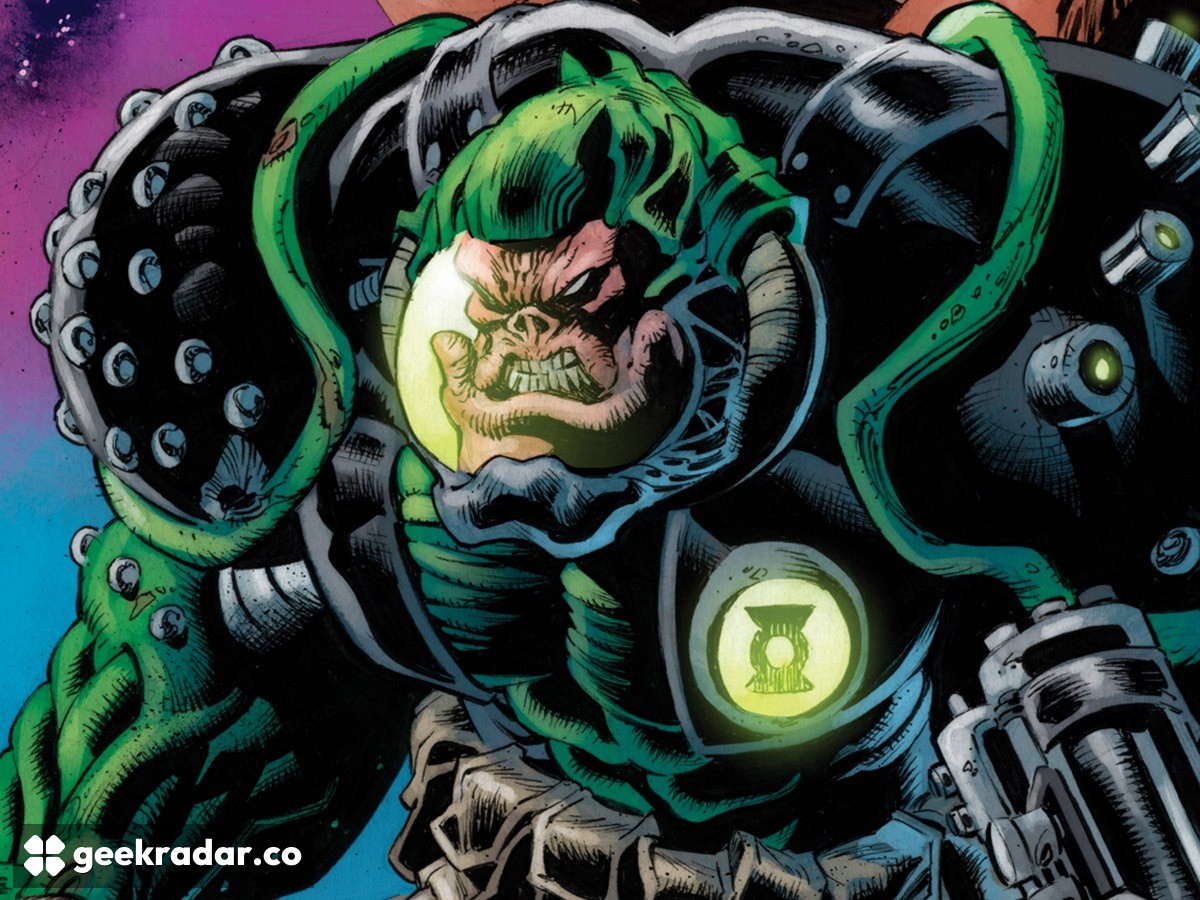
Artwork: Kyle Hotz / DC.
Elseworlds is an invitation to start somewhere different
The label matters as much as the character name. As DC's explanation of Elseworlds makes clear, these stories sit outside the regular comic-book continuity. Writers and artists can change a setting's assumptions without treating every change as a permanent revision to the main publishing line.
For a new reader, that removes a particular kind of homework. You are not being asked to discover which monthly issue last changed Hal Jordan's status before understanding this premise. The book establishes a different world and gives its characters a position inside it.
That does not make every Elseworlds comic interchangeable. The value of this one will depend on how carefully it develops the reversal. Making humanity the empire can challenge a familiar tendency to identify automatically with the human side of a science-fiction conflict. Giving the resistance a human Lantern creates a way to explore that question from within, rather than leaving it as a slogan about good and evil species.
Those are implications of the announced setup, not a verdict on an unread story. The six issues still have to make those loyalties convincing through their characters and events.
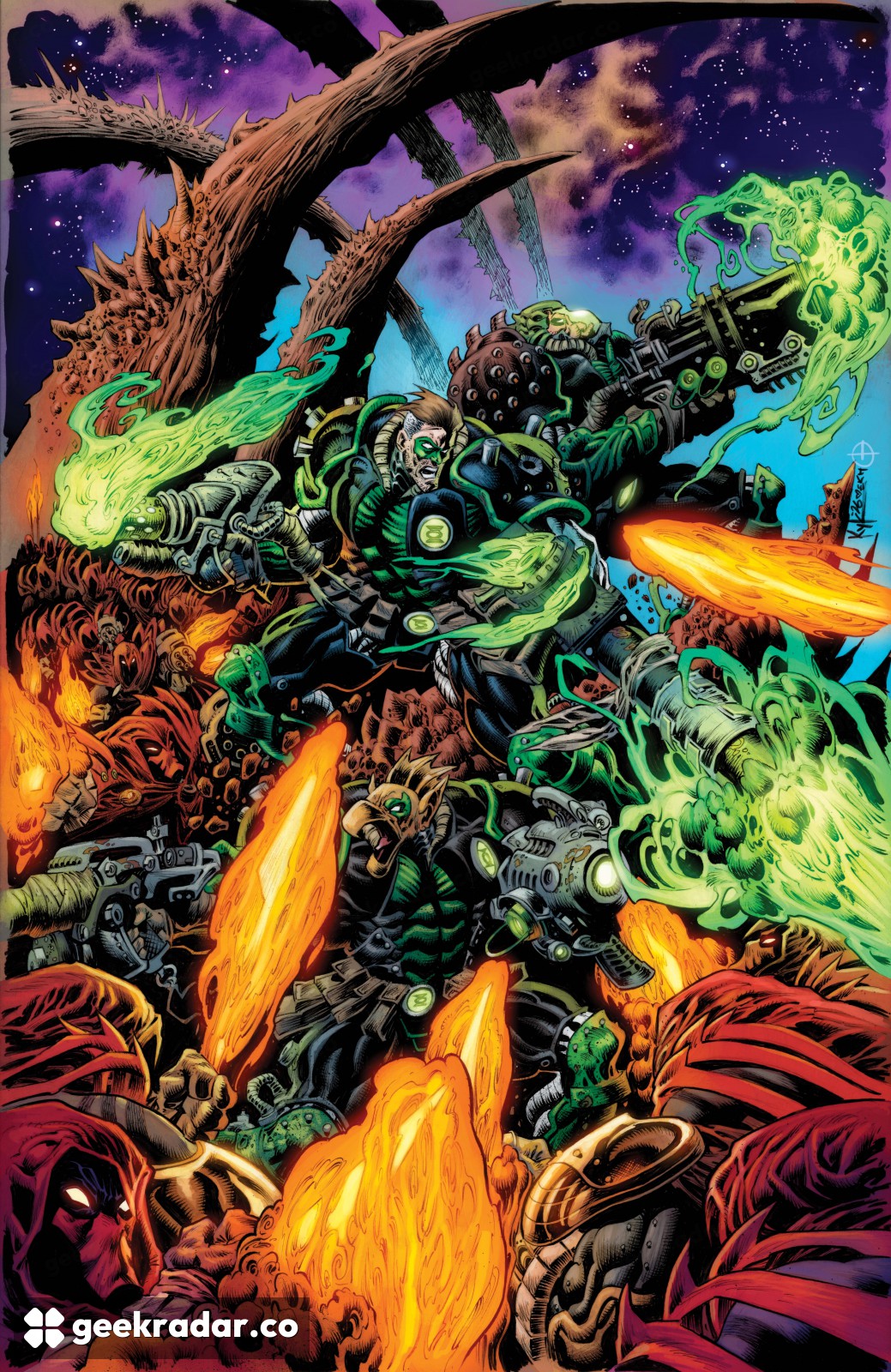
The armor carries the military idea
The released cover art gives a more concrete sense of the proposed visual language. Heavy armor, exposed tubing and oversized equipment make the Lanterns look burdened with machinery. Green energy remains the identifying color, but it sits against battered surfaces and a crowded battlefield composition.
That treatment connects to Hotz's comments in the announcement about studying war films and bringing a worn, practical character to equipment. It is a useful choice for this premise: resistance can look like difficult physical work, rather than a clean lineup of emblems floating against space.
Choose the edition, not a presumed continuity obligation
Variant covers offer different artwork and physical finishes. They do not, on the evidence announced, create separate narrative entry points. Someone interested primarily in the story can distinguish the standard issue from a collector's preference for a particular cover without treating the more expensive format as required reading.
The January date is an announced future publication date, not a claim that the comic is available today. Nor does DC's general promotion of its subscription service establish that a new issue will be included there on its retail release day. Readers outside the US should check their retailer's edition, language and pricing rather than converting the dollar cover price into an assumed local offer.
Our recent Mister Miracle coverage concerns a separate screen project; this is a comic-book announcement. The connecting interest for the Culture desk is how familiar characters are put to different creative uses.
Doomed Cosmos offers a specific reason to try a new version of Green Lantern: the human hero no longer gets to assume humanity occupies the right side of the conflict. That is a stronger invitation than continuity homework, provided the story makes the reversal matter beyond its first page.