ElevenLabs vs Google Cloud Text-to-Speech: narration or an application pipeline?
Voice direction and software delivery put different demands on speech synthesis, especially for Italian technical material.
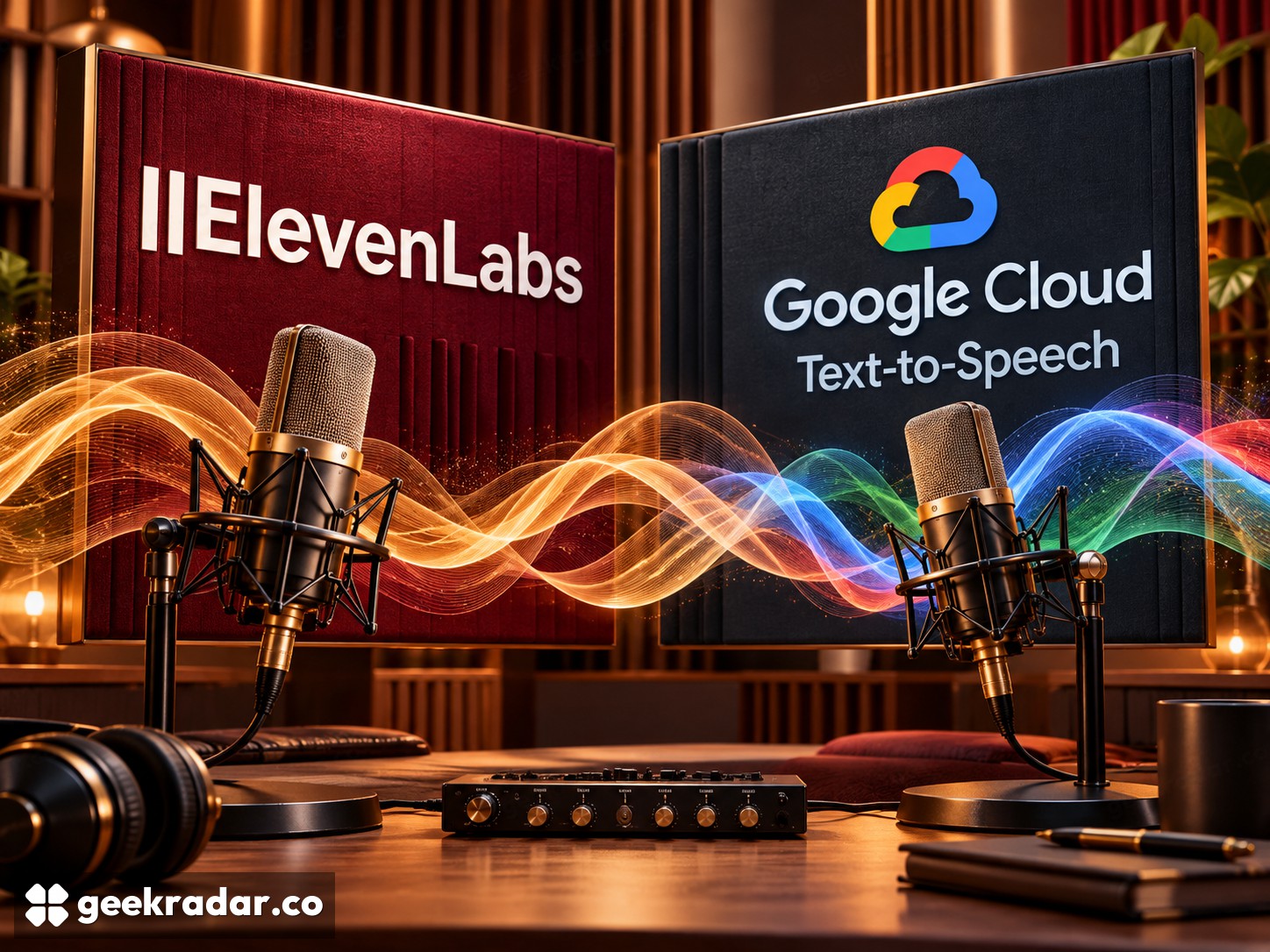
ElevenLabs and Google Cloud Text-to-Speech can both turn text into spoken audio. Choosing between them requires a more specific question: are you producing a voice performance for a piece of content, or building speech into an application that must behave predictably at scale?
Those uses overlap, and ElevenLabs also offers APIs. The distinction is where the work concentrates. A narration project spends effort selecting delivery and revising passages. An application spends effort on request handling, pronunciation, audio formats and the delay before the listener hears a response.
Voice selection is part of authoring
ElevenLabs' speech documentation describes a voice library, designed voices and cloning options, together with several speech models. Their capabilities and language coverage differ. Italian is supported in documented multilingual options, but that does not make every voice equally suitable for every Italian script.
A creator producing an explanation or a narrated presentation can benefit from treating voice selection as casting. Pace, emphasis and the relationship between speaker and subject matter. An intimate delivery can suit a reflective passage while making a technical instruction harder to follow. The best choice serves the text rather than advertising the expressiveness of the synthesizer.
The corresponding workload is consistency. A revised sentence should not sound like it belongs to a different recording. Keep a record of the voice, model and settings used for approved material. If a real person's voice is involved, use only material and permissions appropriate to that voice; the availability of a cloning control does not supply consent.
Google makes the request details consequential
Google's voice and language catalog identifies voice families and locales, including Italian. Its Chirp 3 HD documentation distinguishes supported controls by request mode. For example, listed SSML controls apply to synchronous requests, while that page excludes them from streaming requests.
SSML is markup that supplies pronunciation and structure hints. In an application, such controls can be useful for abbreviations, pauses and names. Their presence somewhere in a platform's documentation does not establish support in every voice or delivery mode.
This is why a voice that works well for a completed narration may not be the right configuration for an interactive assistant. Waiting for a whole paragraph before playing it changes the conversation. Streaming can change that experience, but the application must handle partial audio and the controls available in that mode.
Italian requires editorial attention too
Numbers, dates, product names and English technical terms deserve explicit decisions in an Italian script. A written abbreviation that is obvious on screen may be confusing when spoken. Expanding it in the narration can improve comprehension without changing the visible text in the application.
This is a script-design task, not evidence that one provider has inferior Italian. A meaningful comparison uses the same intended pronunciation and equivalent output conditions. Comparing a carefully prepared passage on one service with raw text on the other measures preparation as much as synthesis.
| Project | Reason to consider ElevenLabs | Reason to consider Google Cloud TTS |
|---|---|---|
| Narrated editorial content | Voice selection and creative speech workflow | A suitable catalog voice within an existing cloud process |
| Speech inside an application | API access with the appropriate model and audio settings | Explicit voice, locale and request-mode configuration |
| Italian technical material | Review the chosen voice on the actual script | Review locale and supported pronunciation controls |
Count approved audio, not generated characters
Both choices need budgeting around the real workflow. Corrections, retries and discarded passages can matter as much as the initial synthesis. Compare the exact model and service conditions, rather than assuming all voices share one cost or all subscriptions include the same API use.
ElevenLabs is a strong candidate when voice direction occupies much of the work. Google Cloud Text-to-Speech is a strong candidate when speech must fit an established application pipeline with clearly specified requests. Neither recommendation is a listening-test verdict.
The useful finish line is audio that communicates the intended meaning, can be corrected consistently and arrives in the right form for the listener. A voice that impresses for one sentence has only passed the audition.