GitHub Copilot leaves the chat with a pull request: Slack and Teams reach general availability
Repository selection and follow-up fixes bring coding tasks into team conversations. Review still happens at the change itself.
GitHub Copilot’s integrations with Slack and Microsoft Teams are now generally available, bringing a route from a team conversation to an issue, a coding session or a pull request. The November 6 release note also adds Canvas in Teams, where implementation plans, code changes and previews can sit alongside the discussion that produced them.
The useful change is the location of the handoff. A bug often becomes understandable in a chat thread before anyone turns it into a formal task. Letting that thread initiate work can preserve context that would otherwise have to be reconstructed in another window. It also makes the quality of the handoff more consequential: an informal suggestion can become the beginning of a concrete change.
Shared context can improve the request
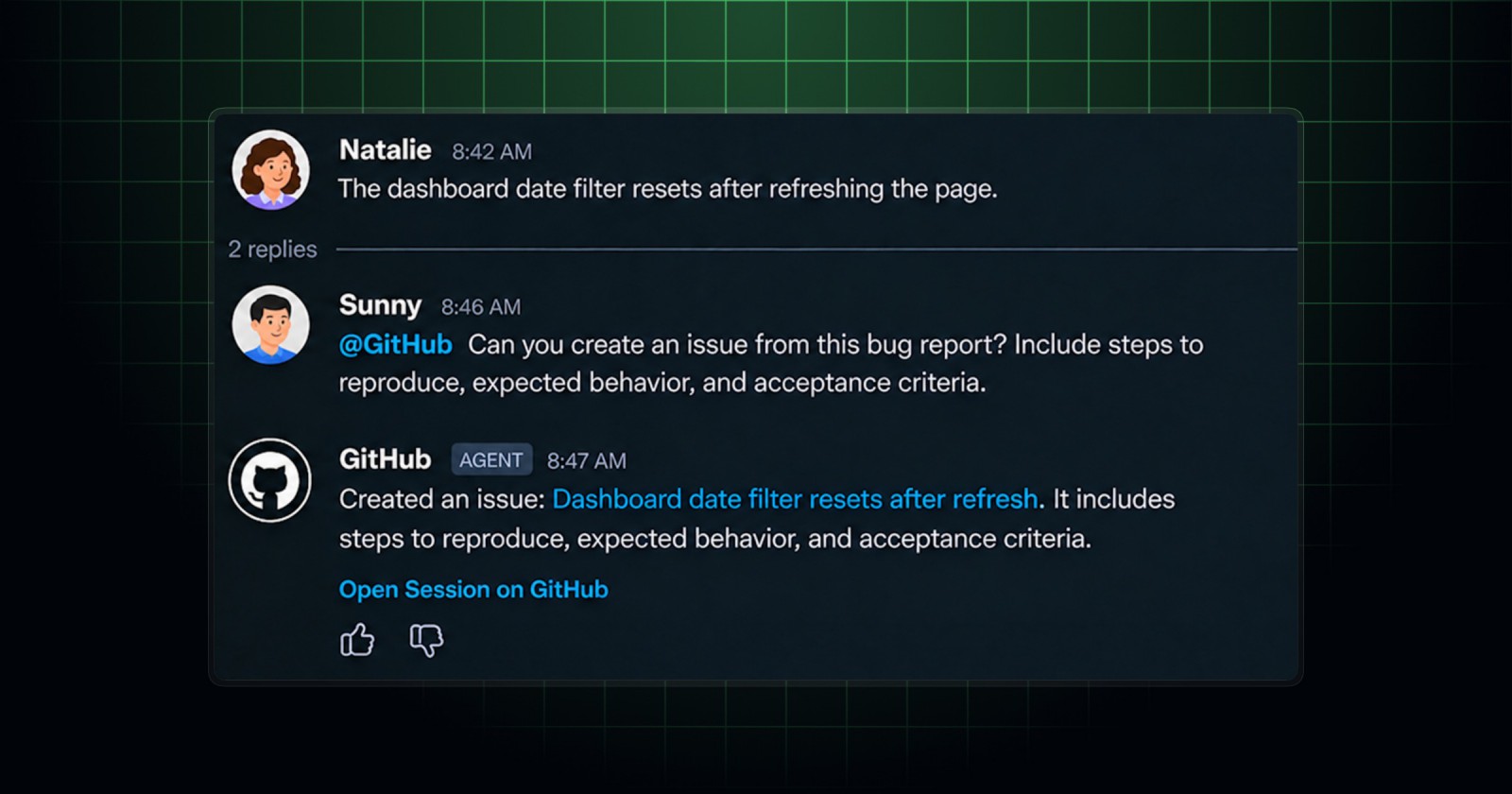
GitHub says an @GitHub mention can investigate a bug, create an issue, implement changes and open a pull request. The onboarding flow now infers the repository from the message, reducing the need to select it again. The update also fixes a problem that could prevent replies to follow-up messages.
Repository inference is convenient when a conversation already names the project clearly. It does not make an ambiguous request unambiguous. If a team discusses two repositories with similar names, the intended target still needs to be clear before work is accepted. Saving a selection step is useful only when the selected context is right.
A good chat-to-code request therefore needs the same substance as a good issue: the observed behavior, the expected behavior and the boundary of the change. The surrounding discussion can supply examples and constraints, but a passing remark should not silently become a new requirement simply because it appears nearby.
Canvas belongs to the Teams part of this release
The announcement specifically places Canvas in Teams. It describes a shared surface for reviewing the plan, changes and previews while teammates continue the conversation. That is more useful than treating the integration as a bot that posts a final link and disappears.
The distinction between Slack and Teams matters here. Both integrations reach general availability in the release, but the note does not announce identical Canvas functionality in Slack. A combined headline should not flatten those product differences.
Attribution follows the work into GitHub
Issues and pull requests created through the integration now identify the Slack or Teams conversation participant in their descriptions. That supplies a useful connection between the request and the resulting artifact. It does not mean the named person personally wrote every changed line or that the change has passed review.
Similarly, opening a pull request is not the same action as merging one. The release note describes a route into implementation and review; it does not establish that a chat mention bypasses branch rules, tests or a team’s approval process. Those controls still need to be understood in the actual repository configuration.
The strongest use of this integration is a shorter path to something reviewable. A conversation can carry the problem into a plan, the plan into a proposed change and the change back to the people who understand its consequences. Moving that loop into chat saves effort only if the team can still see where a suggestion ends and an accepted change begins.