Control Resonant reaches a million sales as physical editions arrive
Remedy’s fastest opening has added significance for its publishing ambitions, but the unit-sales milestone cannot establish profitability.
Control Resonant has passed one million copies sold, according to Remedy, reaching the milestone three weeks after its September 24 release. The studio calls it the fastest-selling game in its history. That is a significant result for a company now publishing a major release of this scale itself, although sales alone do not establish profitability.
Remedy's October 15 announcement places the figure across worldwide sales. It does not provide a platform breakdown or net revenue, so the million-copy total cannot tell us how purchases divide between PC and consoles, or how much each sale ultimately returns to the developer.
The timing also coincides with the arrival of physical console editions. Those versions give the game another retail route after the digital launch, rather than marking the beginning of its sales history.
Why the publisher credit matters
Self-publishing changes the business context of the milestone. Remedy has more direct responsibility for bringing the game to market, alongside the opportunity to retain more of the value generated by its intellectual property. The company describes Annapurna Pictures as a co-financier and co-producer, so “self-published” should not be read as “financed entirely alone.”
The relevant distinction is between control over a release and the way its costs and proceeds are shared. Storefront charges, distribution, marketing and financing arrangements stand between a retail transaction and the money available to a studio. Multiplying one million by a single advertised price would skip those relationships and ignore regional pricing.
PC Gamer's report on the milestone provides a useful historical comparison: Alan Wake 2 took longer to reach its first million. That supports Remedy's claim about launch pace. It does not make the two games economically interchangeable, since their publishing arrangements and routes to market differ.
The physical editions widen access
Remedy's physical-release notice lists a Standard Edition and a SteelBook Edition for PS5 and Xbox Series X. The announced European prices are €59.99 and €69.99 respectively, with regional retailer pricing allowed to vary. The higher-priced edition adds physical presentation items rather than being described as a separate campaign.
The hardware names matter here. Xbox Series S cannot use a disc edition, and a PS5 needs compatible disc hardware to play a physical copy. A platform family appearing in a launch announcement is not enough to determine whether a particular box will work with the console under a television.
Digital availability includes PC through Steam and the Epic Games Store, PS5 and Xbox Series X|S. Remedy also lists GeForce NOW support. That provides a connection to the cloud service's recent graphics controls, but it does not promise that every rendering feature is available in every game or subscription tier. The Mac version remains planned for later in 2026.
A distinct game, rather than a sales chart abstraction
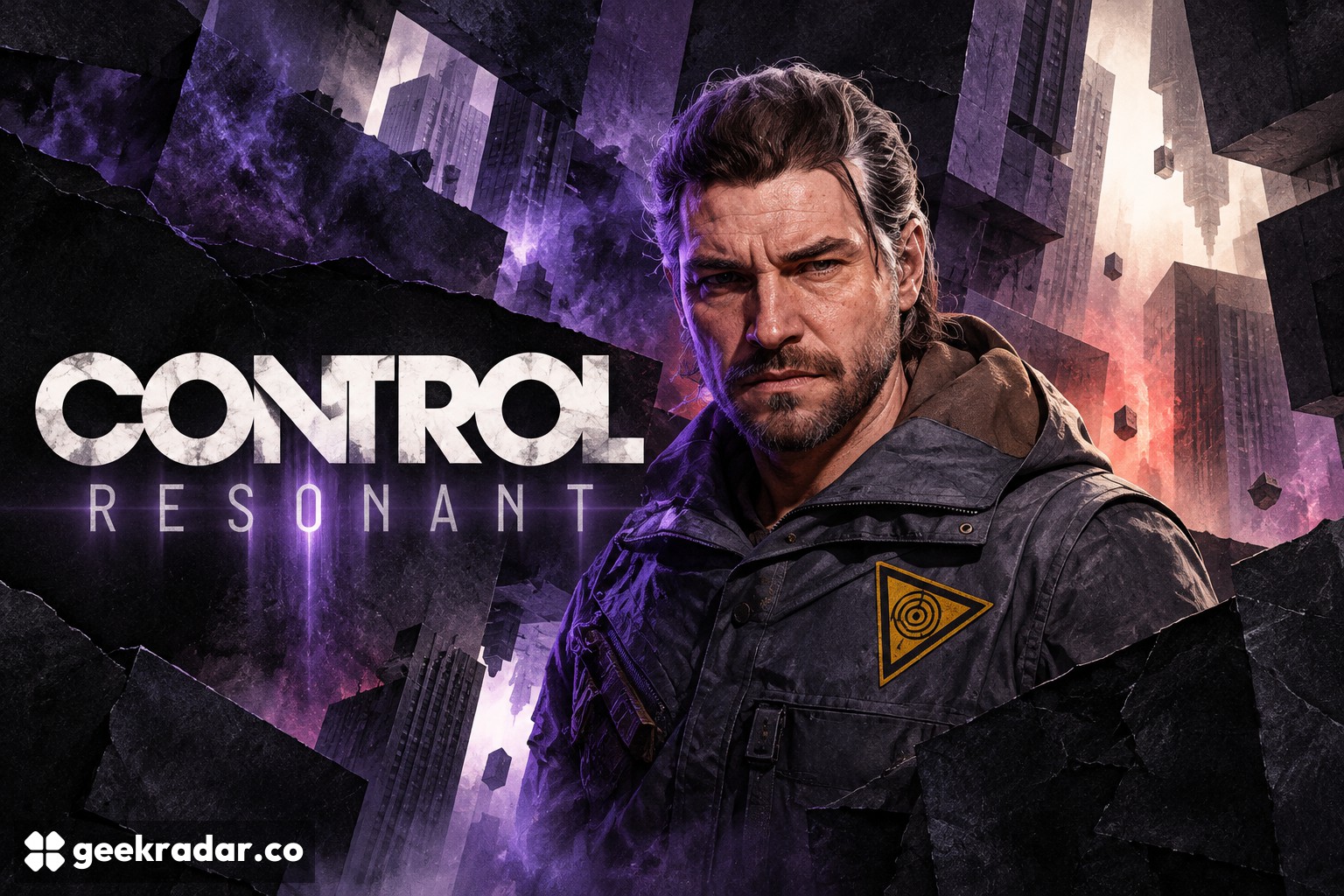
Resonant moves Control's supernatural action into a distorted Manhattan, with Dylan Faden as its playable lead and a shapeshifting melee weapon central to combat. That premise explains why a familiar franchise name does not mean the sequel simply repeats the first game's shooting. It asks an existing audience to follow a different combat emphasis.
The million-copy announcement is evidence that the release has found a substantial paying audience. It is not a review of that change, nor proof of how many buyers are new to the series. Remedy's next challenge is to turn a strong opening into sustained demand across digital and physical channels. Its expanded publishing role makes that longer sales life particularly consequential.