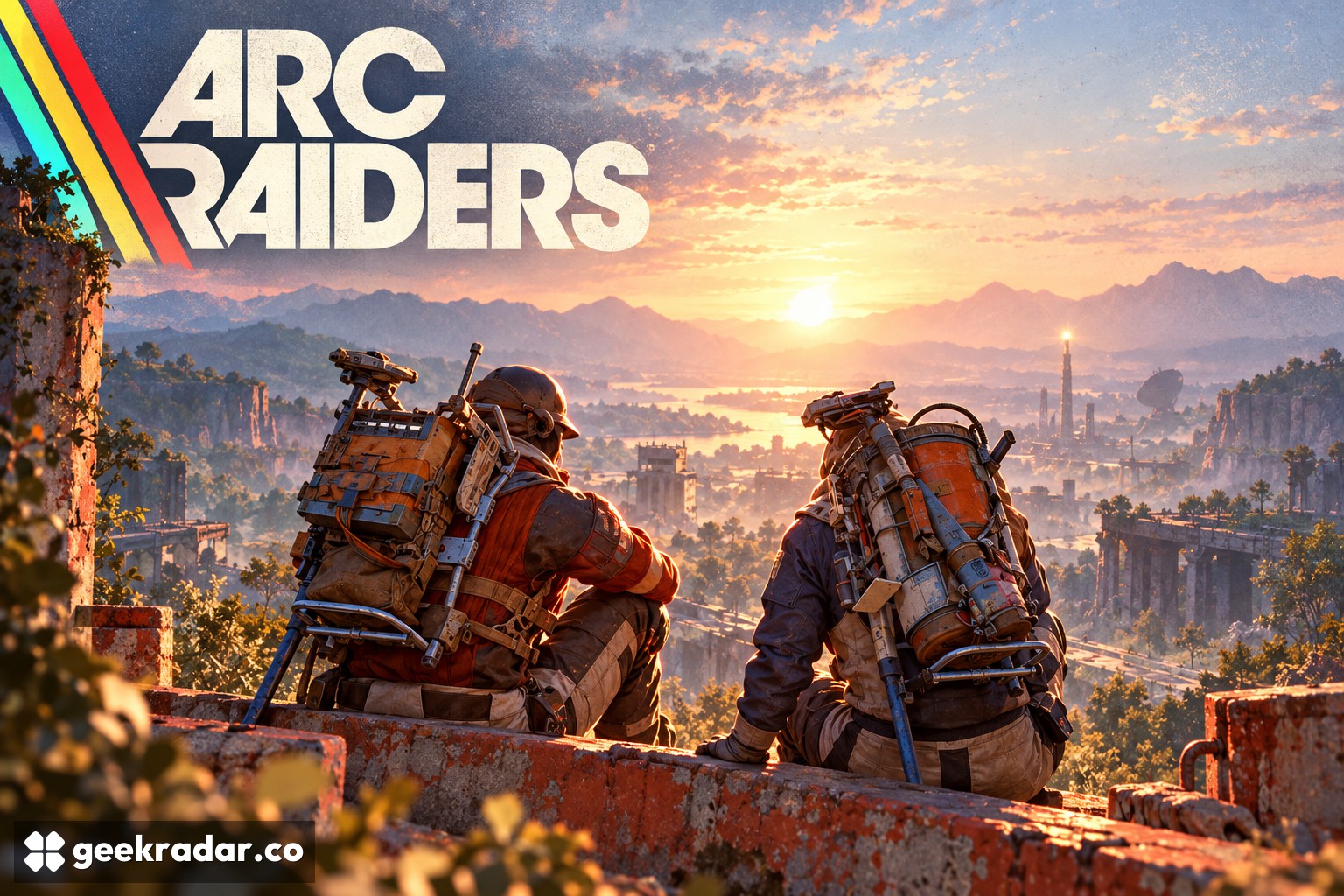
ARC Raiders has a PvE option—for now. The test ends October 20
Embark is testing safer expeditions with lower-value loot. Keeping that choice would also mean keeping two matchmaking populations healthy.
ARC Raiders players who want to explore without being shot by another Raider have a short window left to try it. Embark's PvE matchmaking test runs through October 20, and the studio says the toggle will disappear when the experiment ends. Its future has not been decided.
The distinction matters because this is already a playable change. Update 2.1.0 activated the test on October 13, turning a September proposal into a choice inside the live game. It removes player-to-player damage while retaining the machines, scavenging and decisions involved in getting home with supplies.
For a game built around uncertain encounters, that is a substantial alteration to the social contract. A stranger can still compete for resources, but their arrival no longer carries the same immediate threat. Cooperation becomes easier to attempt because the consequences of misplaced trust are smaller.
The experiment changes the economy as well as combat
Embark's detailed explanation describes a deliberately bounded trial. Solos, duos and trios share PvE sessions. Playing there does not change a player's PvPvE matchmaking rating, which is used for the standard mode that mixes human opponents with computer-controlled enemies.
The studio also reduces loot value in PvE. That is a necessary part of understanding the experiment: removing hostile players changes the probability of extracting successfully, so identical rewards could make the safer queue a more efficient way to gather resources. The decision affects players who enjoy both modes, not only those avoiding competitive combat.
The useful comparison is therefore the value brought home over several attempts, rather than the value of one container. A dangerous session can offer better individual finds while still producing worse returns for somebody who rarely survives it. Conversely, a player who consistently extracts in the standard mode may have little economic reason to move.
This also explains why a separate queue cannot be judged solely by whether it feels calmer. Its rewards feed into the same broader game, and changes to that balance can influence where people choose to play.
A quieter queue has its own cost
Embark acknowledges that dividing players could lengthen matchmaking in quieter regions and at less busy times. There is a simple mechanism behind that concern: a queue with fewer available people has fewer combinations from which to build a session. Preferences that improve one person's experience can reduce the pool available to another.
That is especially relevant to an international audience. A large evening population in one region does not demonstrate that the same arrangement works during an off-peak hour elsewhere. Regional queue data will be more informative than a single worldwide popularity figure.
The game is attracting renewed attention. GamesRadar reported a Steam concurrency rebound during the broader update period. That provides context for the experiment, but it does not isolate the PvE toggle as the cause: a major content update and a temporary test overlap, and Steam represents only one part of the audience.
Player choice needs a sustainable population
The test poses a more useful question than whether an extraction game is allowed to be cooperative. Can it support both preferences without hollowing out either experience?
For someone interested in the exploration side of PC gaming, this is a chance to evaluate ARC Raiders with one major source of friction removed. It is not evidence that every other part of the game has been redesigned around that preference. The strongest outcome would be a choice that remains practical across regions and hours, with rewards that do not quietly push everybody into the same queue.