East of Eden finds an audience—and a problem no faithful adaptation can avoid
Zoe Kazan explains how Steinbeck’s inner worlds become action and images in the seven-part Netflix series starring Florence Pugh.
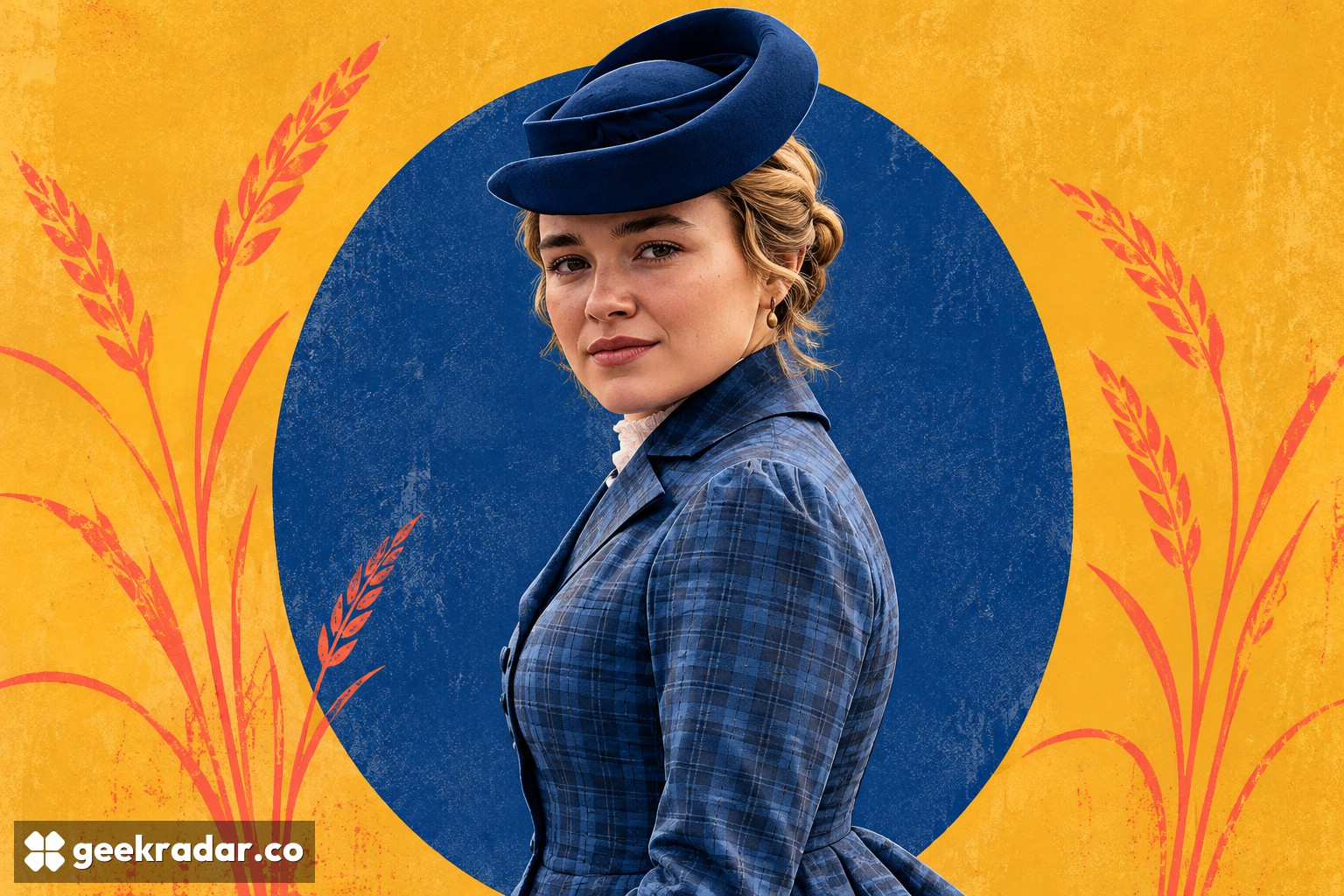
East of Eden drew 12.6 million views in its second week on Netflix's English-language television chart, placing second for October 5–11. The seven-part adaptation of John Steinbeck's novel stars Florence Pugh, but the most revealing explanation of its approach comes from writer and co-showrunner Zoe Kazan: translating a novel's inner life requires more than moving its events onto a screen.
Netflix's weekly update puts the series at 19.1 million views across its first two reporting weeks, providing a current reason to examine this month's adaptation.
The adaptation's brief
“It needed to be epic and intimate.”
What a camera cannot simply copy
In Kazan's account of adapting Steinbeck, she describes the novel's access to characters' thoughts and the need to find equivalents through action, dialogue and images. She also used Steinbeck's letters to his editor as a resource. The aim was to understand the work's organising ideas, rather than regard its published pages as a ready-made shooting script.
That is a concrete problem of form. A novelist can tell a reader what a person thinks while showing them saying something else. A camera can record the words and a reaction, but the relationship between the two has to be communicated through performance, framing, editing or an additional scene. Keeping every spoken line would not necessarily preserve the same meaning.
The opposite risk is equally real. Inventing an outward action to express an inward thought can make a character seem more decisive, more open or less ambiguous than they were on the page. Adaptation therefore involves choices about what an audience gets to know, not merely decisions about which chapters fit.
Seven episodes still require selection
Netflix's series overview identifies Pugh alongside Christopher Abbott, Mike Faist, Hoon Lee, Martha Plimpton and Ciarán Hinds. Kazan shares showrunning duties with Jeb Stuart. The source novel was published in 1952; the series follows an intergenerational story across a much earlier period of American life.
A seven-part format allows more space than a single feature, but it does not remove the need to select. Time spent with one character is time unavailable to another. A longer running time can preserve more incidents while still changing their relative weight. The useful question is which perspective organises the material, rather than whether the adaptation contains a particular number of pages' worth of plot.
Kazan explicitly says the series cannot replace everything the book offers. That is a helpful way to approach the two versions. Reading after watching need not be an exercise in checking for differences; prose can provide a separate experience of thought, voice and detail even when a reader recognises the broad setting.
A starting point that leaves the characters intact
The series is available through Netflix's Italian catalogue, as well as its wider release. Viewers do not need a family tree annotated with later revelations to begin. Such diagrams can quietly spoil relationships and discoveries while pretending to offer only background.
The creative problem is interesting enough on its own: how to make interior experience visible without flattening it into explanation. Kazan's comments establish the intention and the tools; they do not substitute for a judgment on every episode's success.
The contrast with Matchbox The Movie’s adaptation of a vehicle brand is instructive. One project must build a dramatic world around a familiar name; East of Eden must choose what to carry across from an already crowded one. Its seven episodes provide room, but every perspective still has to be selected.