Shure MV360 lets you record first and aim the mix later
The USB-C microphone can save ready-to-use audio alongside a spatial recording. That leaves room for a different edit, with important limits on what software can change.
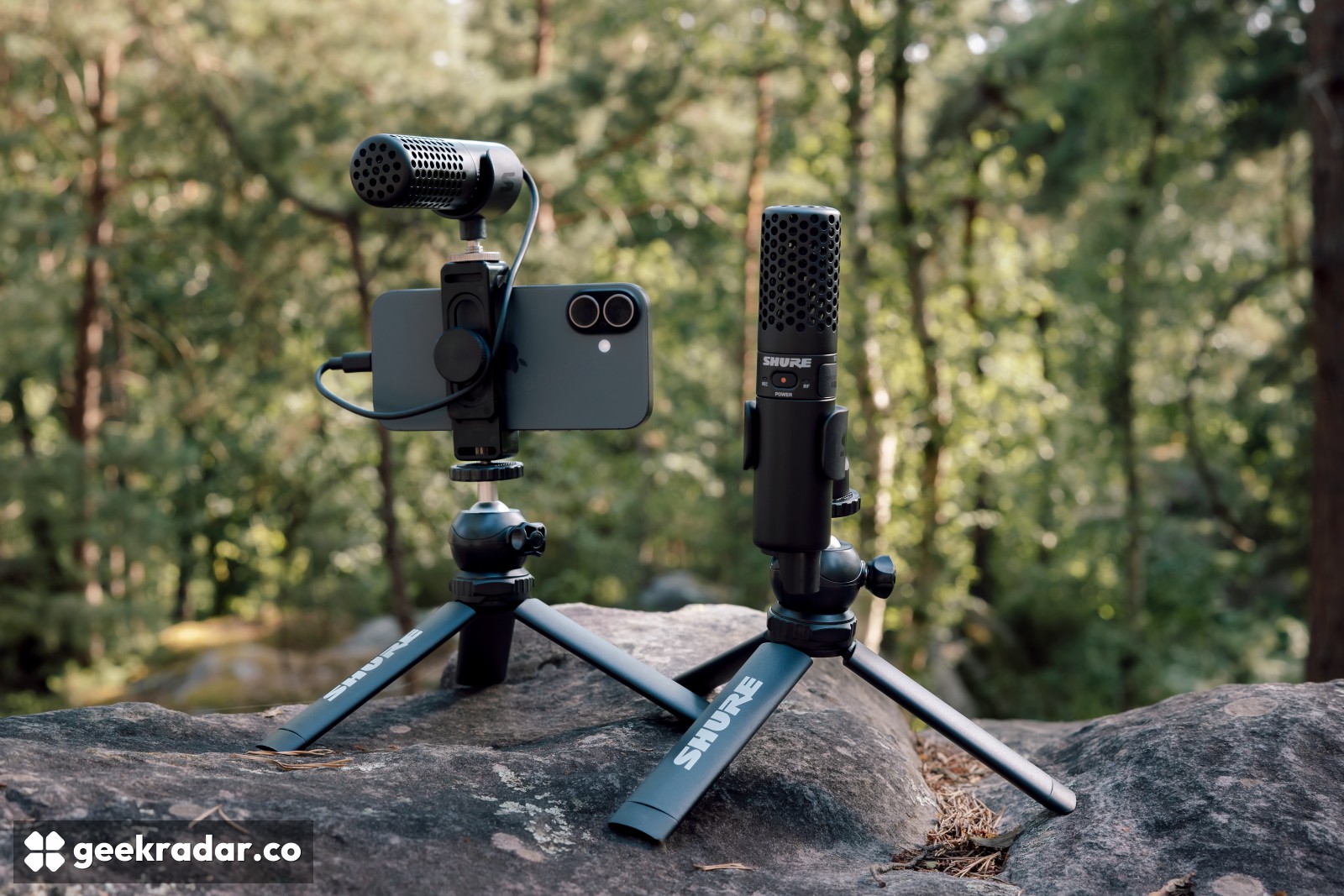
Shure’s new MV360 gives a recording session two possible endings: a conventional audio file ready to use, and a spatial recording whose direction can still be adjusted during editing. The USB-C microphone launched on November 17 at $349 in the US, with a €389 recommended price on Shure’s European page. Its most interesting feature is that those workflows can run together, reducing the need to decide before recording how ambitious the final mix should be.
The MV360 product documentation describes simultaneous two-channel and four-channel ambisonic recording through MOTIV Audio on mobile or MOTIV Mix on desktop. That is a more useful distinction than simply calling it a “360-degree microphone”: one file is intended for immediate use, while the other preserves directional information for further work.
What you can change after the recording
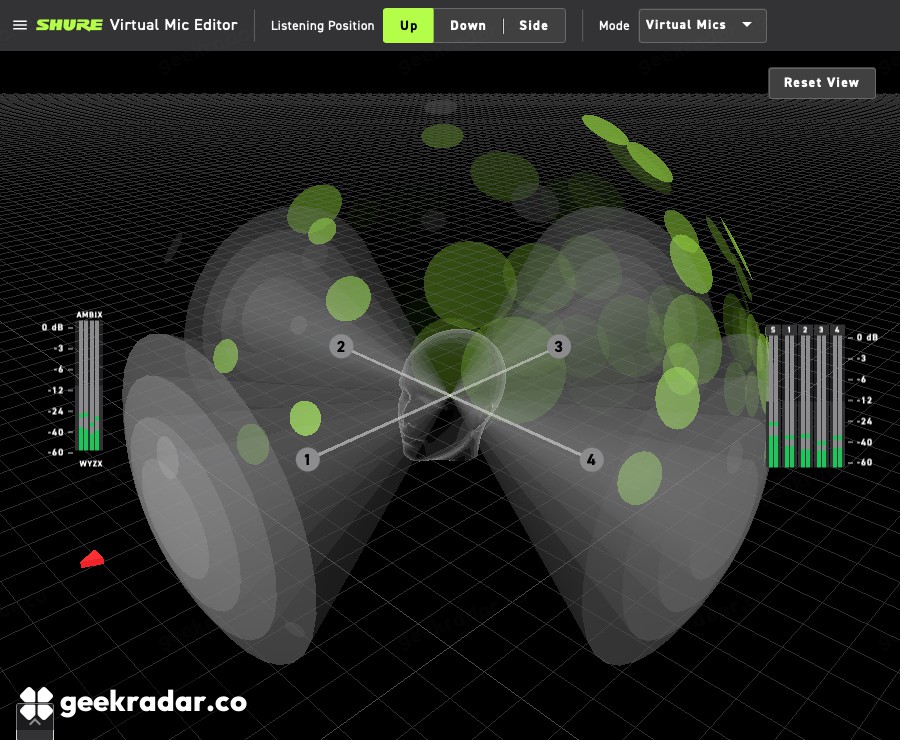
Imagine recording a small acoustic performance with conversation and activity around it. A ready stereo version can go straight into a video. Keeping the ambisonic recording offers another route: during editing, you can change the direction and pickup configuration of virtual microphones instead of being limited to the initial stereo presentation.
Shure’s launch announcement identifies the spatial format as Ambisonic B-format, using the AmbiX convention. Its Virtual Mic Editor lets an editor position and steer virtual microphones and prepare different output layouts. The product page specifies up to four virtual microphones and surround options extending to 7.1.4.
That flexibility is valuable when an interesting sound comes from an unexpected direction, or when the same session needs different outputs. It is not evidence that a distant voice will become as clean as a close microphone, or that unwanted room sound will disappear. Those are separate acoustic problems. The useful promise is a later decision about the mix, rather than a second chance to choose the physical recording position.
A simple capture mode is still a deliberate choice
Shure also provides mono, stereo, binaural and Auto Tracking modes. Its capture-mode explanation describes binaural as a headphone-oriented listening format, while Auto Tracking steers a virtual microphone toward the loudest source.
That last word matters. Loudest is a measurable property; most important is an editorial decision. In a conversation, the two may coincide. In a busy location, a passing sound may matter less than the person speaking. Automatic steering therefore deserves a listening check in the actual environment, rather than being treated as a guarantee that the intended speaker will always dominate.
There is also an application boundary. Third-party apps must support external USB audio, and the product documentation directs full ambisonic capture to MOTIV software or a suitable digital audio workstation. A USB-C connector alone does not establish that a camera app will retain all four spatial channels. The recording format and the destination application belong in the setup decision together.
This differs from the approach in Audio-Technica’s wireless StreamSet, which keeps its microphone with the speaker. One prioritizes a consistent relationship to a voice; the other provides more choices about a surrounding sound field. They address different recording needs.
The Plus model changes where recording happens
The MV360 depends on a connected recording device. Shure has also announced the MV360+ for early 2027 at $449 in the US, adding a rechargeable battery and recording to microSD. Its phone connection can remotely control recording, but Shure explicitly distinguishes that control link from wireless audio transmission: the audio is stored at the microphone.
The distinction is practical for anyone placing a recorder near a sound source while operating elsewhere. It also means the forthcoming Plus model should not be confused with a currently shipping wireless microphone kit. Mix’s launch coverage likewise separates the released MV360 from the later model.
For the MV360 available now, the strongest reason to consider spatial capture is a session worth keeping flexible. A quick stereo edit need not be the only version that recording can ever become. The decision that still has to happen on location is the oldest one in sound recording: where to put the microphone.