Flipper One opens at $399, with RAM undecided and July shipping targeted
The pocket Linux computer combines networking and physical controls, but its crowdfunding terms leave important hardware and delivery details unfinished.
Flipper One’s Kickstarter campaign is open, turning the company’s pocket Linux computer from a development project into something people can back. The advertised entry price is $399, with shipping targeted for July 2027. The more consequential detail is in the campaign’s fine print: the hardware is still changing, and the final RAM configuration is not settled.
That makes this a different decision from buying a finished handheld off a shelf. The appeal is a compact, expandable network computer with physical controls and an open development process. The commitment is to a project whose eventual configuration and delivery still need to be completed.
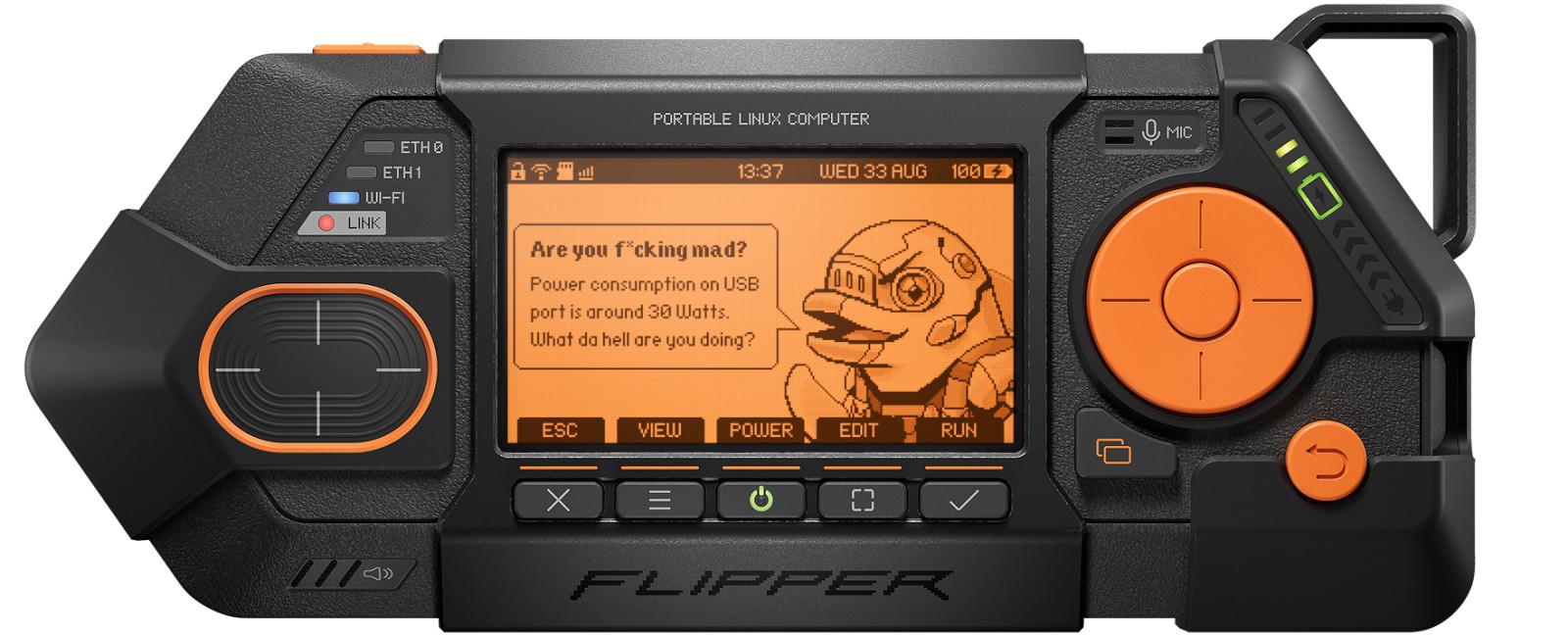
A Linux computer with a small control panel
The manufacturer’s product page describes built-in Wi-Fi 6E, Gigabit Ethernet and M.2 expansion. A Rockchip RK3576 runs Linux, while a separate Raspberry Pi RP2350 microcontroller handles functions such as the display, buttons and power management. The division lets basic device controls remain available even when the Linux side is off or has not finished booting.
This is a practical distinction from treating a tiny screen as a shrunken laptop desktop. A portable network tool needs to expose the task at hand without making its owner navigate a full desktop interface just to check a connection. Physical buttons and a dedicated control layer can be useful precisely when the more complex operating system needs attention.
The company’s development explanation describes profiles for different Linux configurations and a small-screen interface framework. These are design goals with a visible development history, rather than grounds to assume every proposed workflow is finished. Openness helps a technically minded buyer inspect progress; it does not remove the work still required to ship.
A SIM slot is not a built-in cellular modem
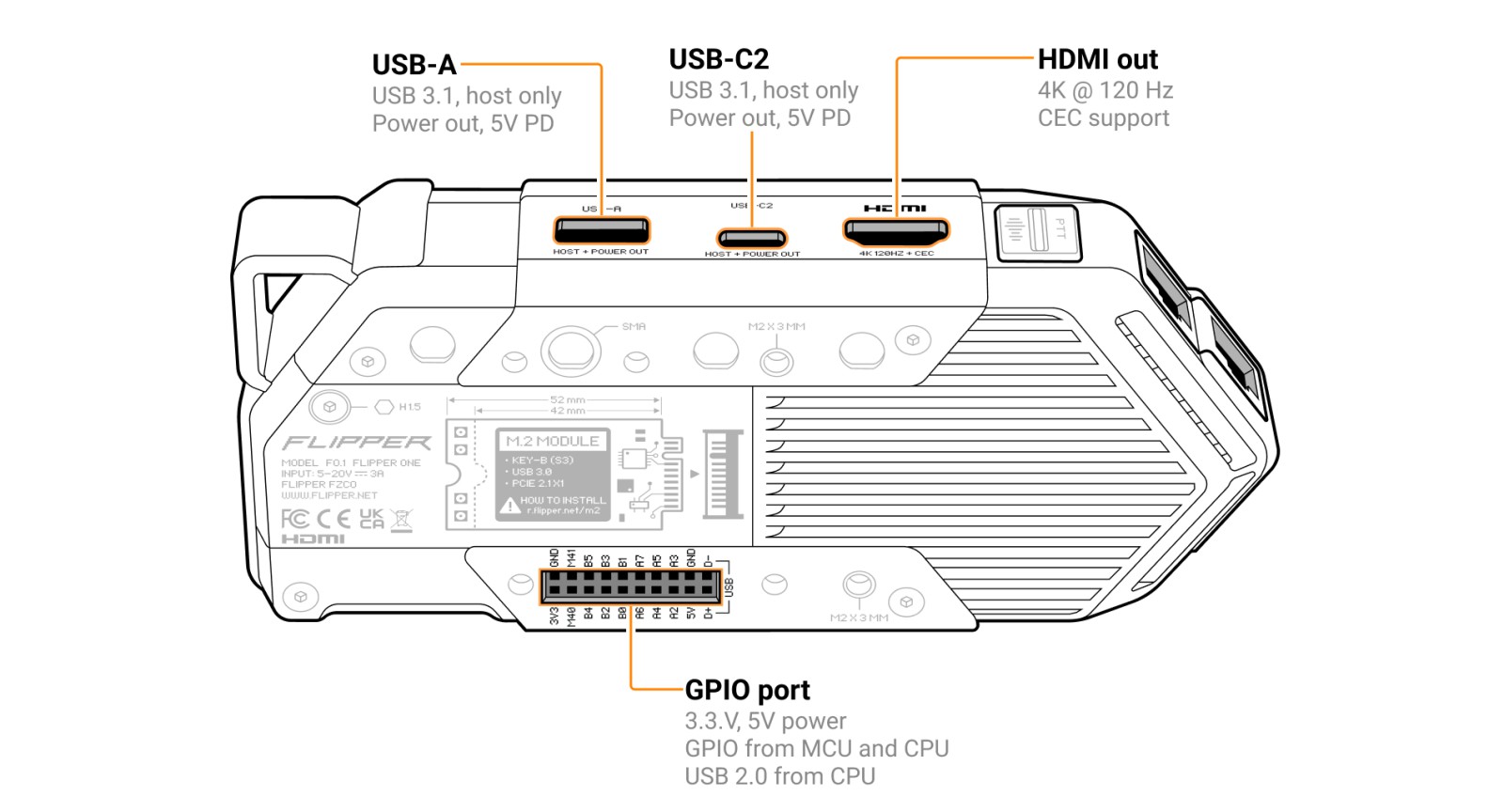
The current technical specification lists two Gigabit Ethernet ports, 64GB of UFS storage and a 256 × 144 monochrome display. It explicitly leaves RAM capacity and type undecided. Earlier development material mentioning a particular memory amount should not be used as a guaranteed specification for the crowdfunding unit.
The campaign FAQ also says cellular connectivity requires an installed modem module. The SIM slot and eSIM do not provide a cellular connection on their own. That distinction matters when choosing a bundle: a base device and a device equipped for mobile networking are different purchases.
For someone who already owns a small Linux board, the proposition is integration: enclosure, controls, power and networking in one portable package. Whether that saves enough setup effort depends on the intended job. A tool used regularly away from a desk has a stronger case than a device purchased chiefly because its list of possible expansions is long.
The pledge is only part of the final bill
The FAQ names supported shipping destinations, including the United States, Canada, the UK, all 27 EU countries, Australia, Switzerland, Norway, Singapore and Hong Kong. Shipping and applicable taxes are additional, with shipping estimated at $15–30 and the final amount to be confirmed in the pledge manager. The campaign closes December 17; July delivery remains a target.
Those terms put the current hardware announcement in perspective. A crowdfunding price can be attractive without being a complete landed cost, and a shipping estimate can be useful without becoming a guarantee.
The most convincing reason to back Flipper One is a specific task that benefits from its integrated design, combined with a willingness to follow unfinished hardware through production. Its openness makes the uncertainty easier to inspect. It does not make that uncertainty disappear.