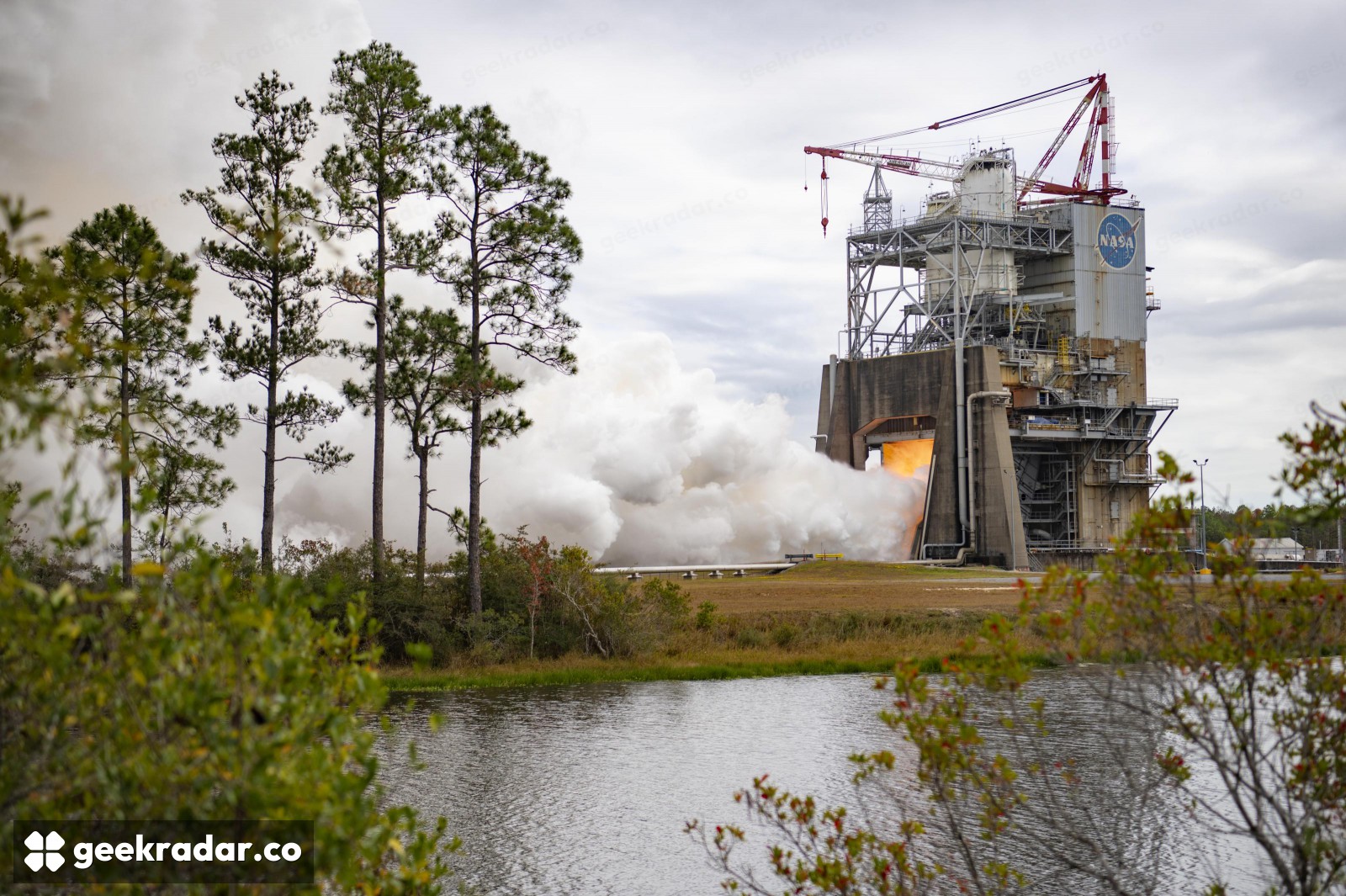
NASA’s RS-25 ran for five fewer minutes this time. It reached its target
The same Artemis development engine completed a launch-length firing in October. Its latest 200-second test shows why the clock alone tells you little about the hardware being cleared to fly.
NASA shut down RS-25 engine No. 10001 after three minutes and 20 seconds on November 18. A month earlier, the same engine had fired for eight minutes and 20 seconds on the same stand in Mississippi. The missing five minutes are easy to misread. In its account of the November firing, NASA says 200 seconds was the planned duration. The engine reached it.
No. 10001 has a particular job in the Artemis program. Four RS-25s power the core stage of the Space Launch System, the rocket that launches the Orion spacecraft. This particular engine will spend its working life on the ground. Keeping it at the Fred Haise Test Stand lets NASA and engine contractor L3Harris put hardware through a firing, examine it afterward and run the engine again. October provides a concrete example of what that arrangement buys.
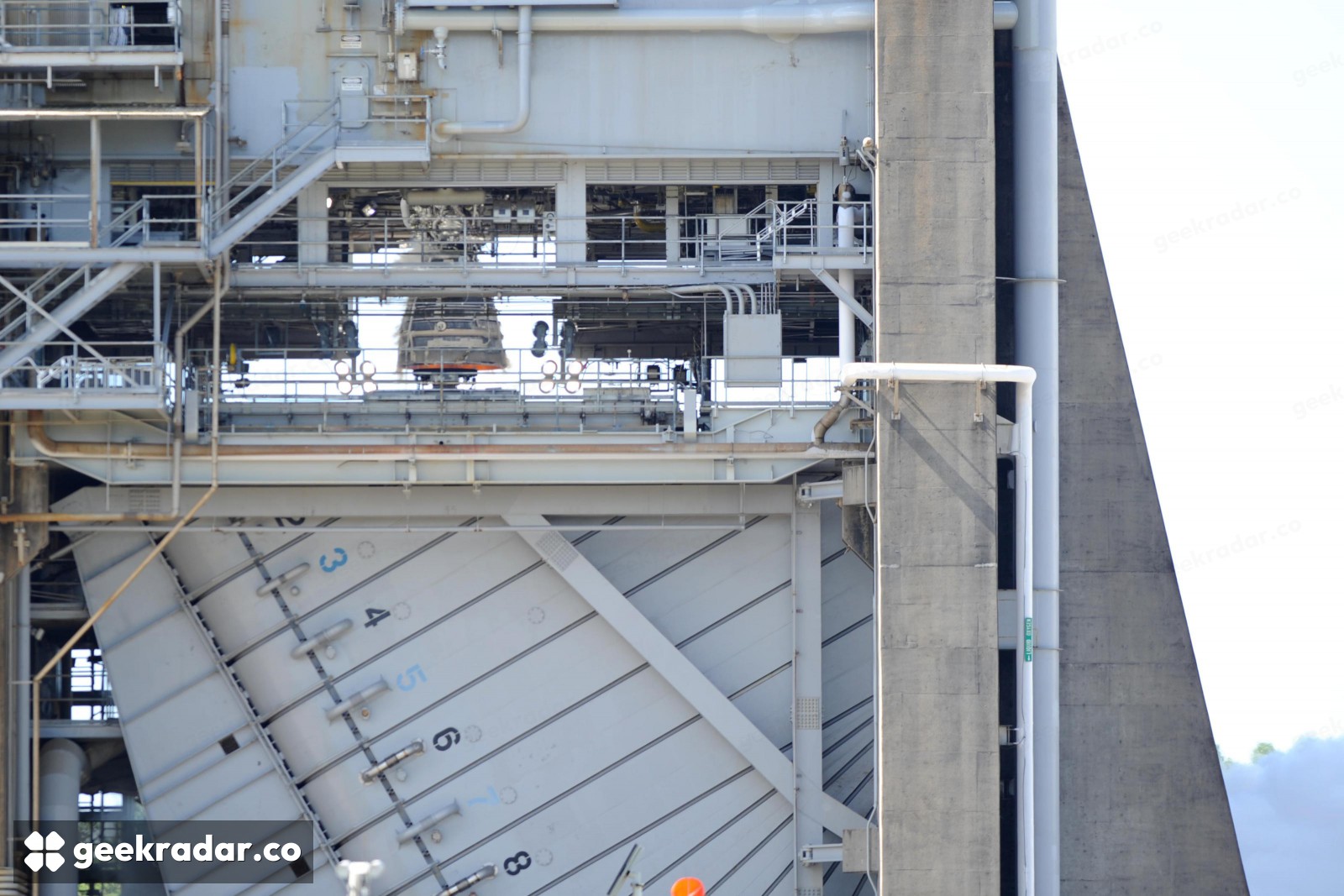
An engine can stay behind while its components earn a flight
On October 21, one objective was to test components intended for future missions. Another was to validate new protection for the engine nozzle, the bell through which the exhaust leaves. The nozzle has heat coming at it from outside, too. On the rocket, the engines sit close to a pair of solid boosters. NASA’s RS-25 reference identifies that hotter launch environment as a reason for adding insulation.
The October firing lasted about as long as the engines run during an SLS launch. It also reached 111% on the engine’s power scale. That percentage refers to the original rated thrust, a reference retained from the space shuttle program. Even shuttle engines routinely flew above 100% on that scale. Our report on the October run explains why holding an engine under load for a full ascent matters.
That gap in the November report sets a useful limit on what the photographs can tell us. The stand is recognizable, and the exhaust plume is unmistakable. Neither reveals which component was being evaluated, or whether any particular flight engine is ready. Each engine that will actually fly still goes through its own testing at Stennis. No. 10001 can give those engines something valuable without leaving Mississippi: a chance for their parts to encounter launch conditions while engineers can still take them back apart.