M87’s black hole ring survives a reconstruction that never learned its shape
A second team worked backward from the radio signals that produced the famous 2019 image. The two pictures agree more closely on the ring’s diameter than on the distribution of light around it.
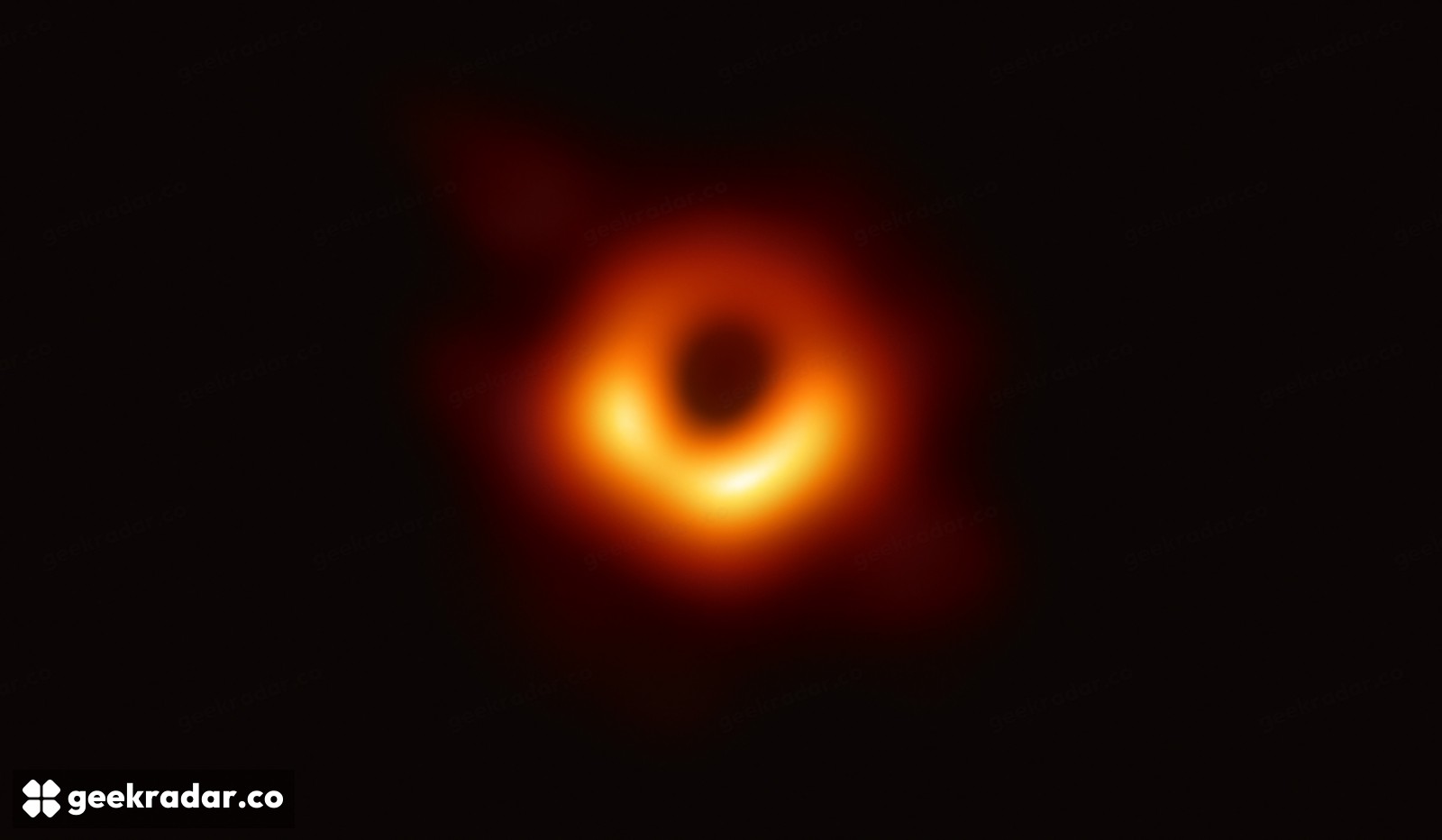
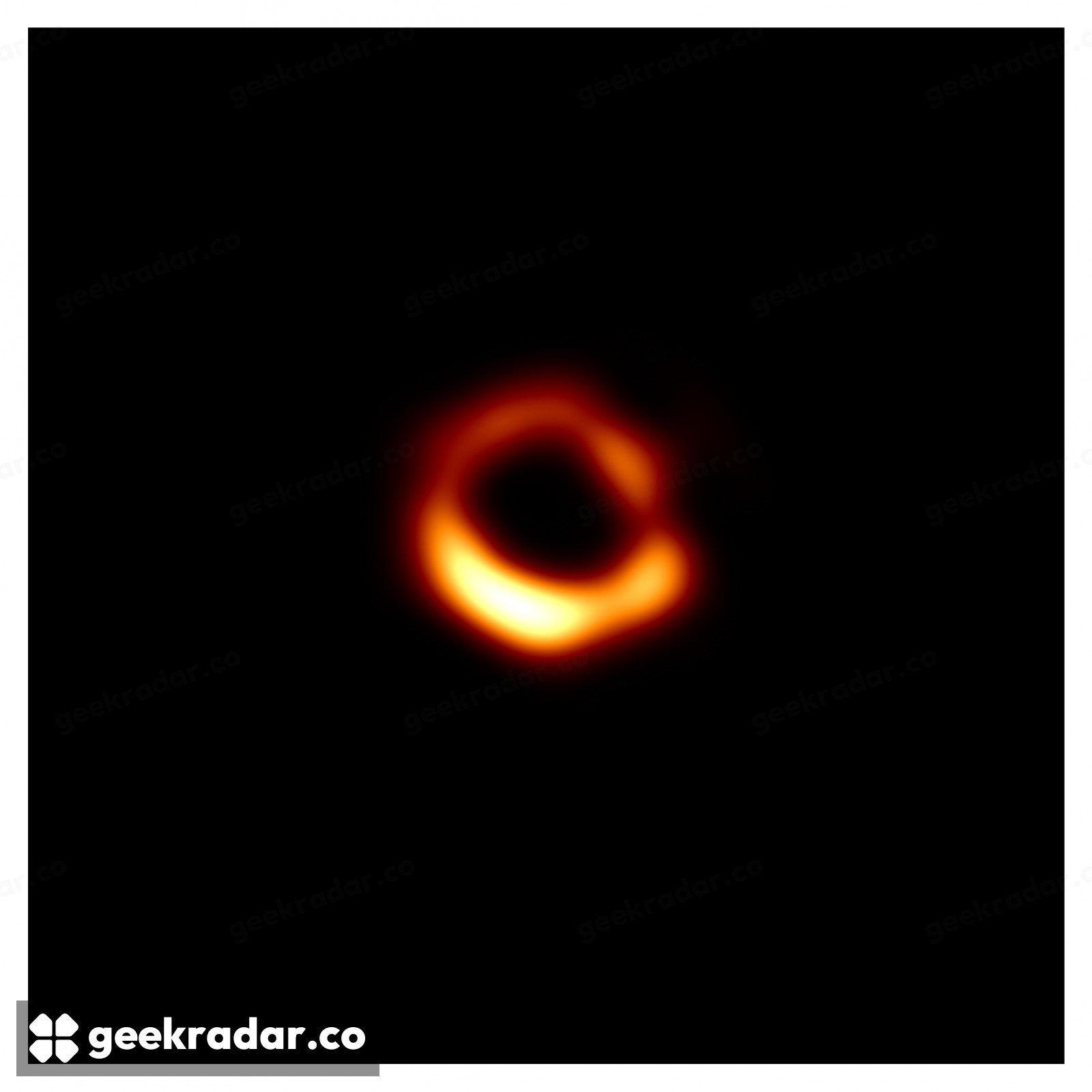
Put the two portraits of M87’s black hole side by side. In the image released in 2019, a broad crescent glows beneath a dark centre. In the Australian reconstruction, the lower rim breaks into brighter patches. Trace the rim with a finger, though, and it describes much the same circle. That agreement answers a question left open by the first image: how much of the ring could have come from the software used to make it?
Samuel Lai and colleagues at CSIRO went back to the radio observations with a model trained on ordinary pictures, including animals. It had never been taught the shape of a black hole. In their study published in Nature on November 11, the ring reappeared, with a diameter of 42.2 ± 1.5 microarcseconds. The independence here lies in how the team turned telescope signals into a picture. Using the same observations was the point: it let the researchers change the method while holding the sky still.
The test was in the missing measurements
The original Event Horizon Telescope image drew on radio waves recorded in 2017 at a wavelength of 1.3 millimetres. Two stations thousands of kilometres apart can compare their recordings of the same wave. Their separation and orientation determine which scale and direction of structure that pair can distinguish. As Earth turns, the pair samples a different angle. Add more pairs and more of the image comes into focus.
An array spanning Earth can therefore distinguish extraordinarily fine detail while leaving gaps in what it knows. Several different brightness patterns can fit those measurements. Even the air above one telescope can shift the timing of the signal enough to complicate a comparison.
Consider three stations in a triangle. An error in the phase measured at one station enters the comparison with its first neighbour and enters with the opposite sign in the comparison with the other. Add the phase differences around the triangle and that station’s contribution cancels. A lopsided source can still leave a signal. The researchers’ paper uses related combinations of measurements that resist station calibration errors. The ordinary photographs supplied examples of image structure without prescribing a ring. The telescope measurements still had to select among the possible pictures.
What the orange rim measures
The orange in these images represents radio brightness. Hot material around M87* emits the radiation, and strong gravity bends its path to Earth. The dark depression is the black hole’s shadow against that emission. Its edge and the event horizon are different physical quantities. At a very different scale, light bending around foreground galaxies also produces the arcs seen in Euclid’s search for double gravitational lenses.
Zoom in on the two images and the bright patches invite a closer look. Assigning a physical feature to each one would ask more of the data than this test delivers. Zoom out until only the rim and its dark interior remain. Those are the features a different team could recover, at the same scale, without first showing its model what to look for.