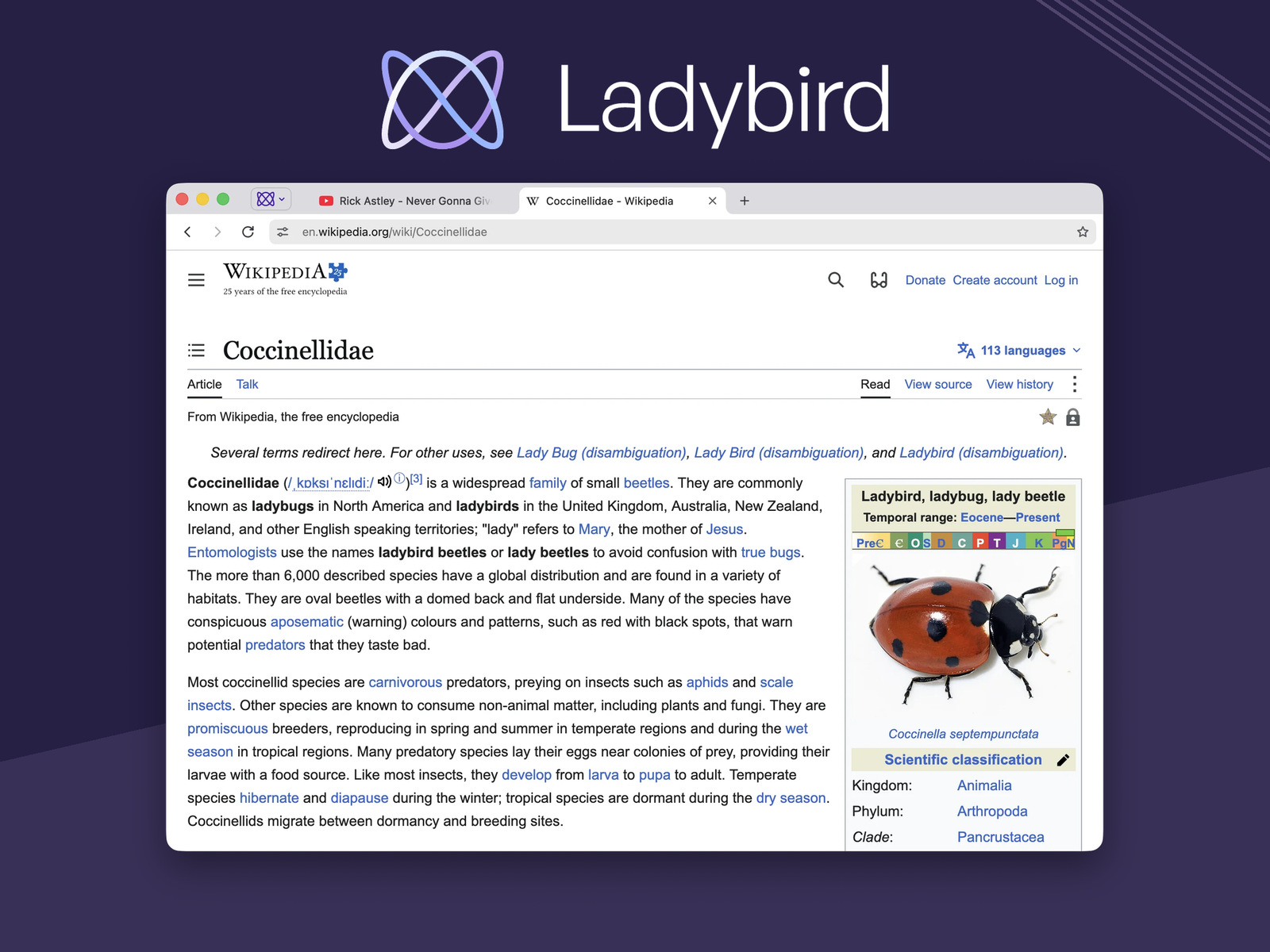
Ladybird’s browser is ready to try. Some sites work better when it hides its name
The new engine is in public alpha on macOS and Linux. A pair of news sites reveals how a server can break a page before the browser has drawn a single pixel.
Ladybird’s first public alpha gives Mac and Linux users a downloadable browser with an engine written from scratch. Until the November 23 release, trying the latest work meant building it from source. One reason to make room for it on a developer’s machine is a pair of newspaper homepages. On CNN and The New York Times, the team got pages to display properly by changing what the browser called itself.
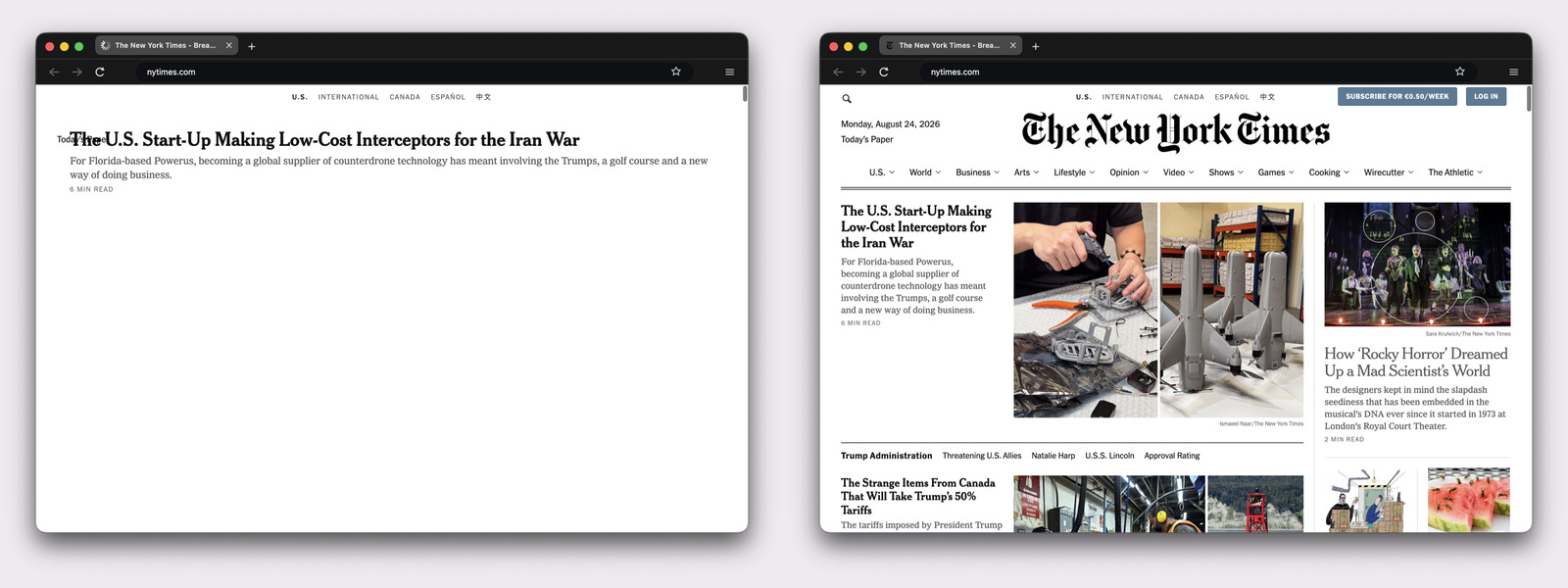
Look at the Times example below. In the first capture, a headline and a few lines of text occupy the corner of a largely white window. In the second, the masthead, photographs and columns are back. The significant change happened before the page reached the screen.
What the server sends back
When a browser asks for a page, it sends a short identifier called a user agent along with the request. A server can read that string and choose which version of a site to deliver. If the site has special handling for browsers it recognises, a new engine can end up with a different response even when it knows how to display the usual one.
That distinction gave Ladybird’s developers a particularly revealing test. As they documented in August, hiding the Ladybird name from the identifier on those two sites fixed their rendering. The team moved these exceptions into readable, site-specific rules. The CNN rule, for example, applies to CNN’s own domain and its subdomains. Ladybird can identify itself normally elsewhere. The example predates the alpha and explains a problem its testers can now encounter elsewhere on the web.
A new engine also makes ordinary mistakes. The same August report describes a fix for long strings that ran beyond their allotted space in Google Translate. That was a line-breaking problem inside Ladybird. More mature browsers still have their own rendering regressions, as Firefox’s recent fix for blank documents illustrates. A familiar symptom alone tells you very little about which component failed.
What to try in the alpha
Ladybird supports WebDriver, so a team that already automates checkout, search or sign-in tests can try a familiar journey in another engine. The project describes this as early software that may crash and offers no security assurance for the alpha. The download page lists macOS and Linux options and singles out one practical exception to rolling updates: the standalone Linux archive does not update itself.
There’s also a decision to make before sending a broken-site report. Under Ladybird’s reporting policy, the form includes the page address and a screenshot unless you remove the image. Accepted reports appear as public GitHub issues. A public example that demonstrates the failure is more useful to the next developer than an account page they can’t open, and it keeps the reporter’s inbox or order history out of the picture.