Kagi Mail opens its beta. Can your email address leave with you?
Kagi lets you export your mail and calendar. Keeping the address on your business card comes down to who controls the domain you choose when you sign up.
You can try Kagi Mail for 60 days. If you leave on day 59, Kagi gives you a way to take your messages and calendar along. Whether people can still reach you at the address you gave them during the trial depends on the part after the @ sign.
Kagi opened its mail and calendar service to the public on November 23. The beta includes 50 GB of storage, unlimited aliases and support for domains you own. Mail comes with Kagi Ultimate. For everyone else the published price after the trial is US$9 a month or US$99 a year, plus applicable tax. Trying Kagi’s search engine takes little commitment. Giving out a new email address starts to build one with every person who saves it.
What travels with a mailbox
An address ending in @kagimail.com is the simple option. Kagi runs that domain, so another host cannot take over delivery for your individual address. An export gives you the conversation you had with a client last week. When the client hits Reply next month, the reply still heads for Kagi.
Now imagine a club that has registered its own domain and uses tickets@example.org for bookings. It can set up that address at a new host and change the domain’s mail exchange records. These MX records tell sending servers where to deliver mail. A ticket buyer replying to an old confirmation can keep using the same address. The club has to keep its domain registration current and recreate its addresses and delivery rules with the new provider.
You can also change the app you use while leaving delivery in Kagi’s hands. Its service works with compatible mail apps over IMAP or JMAP and calendars over CalDAV. Opening your inbox in Thunderbird changes what you see on your screen. It leaves the hosting bill and the domain exactly where they were.
What the privacy settings change
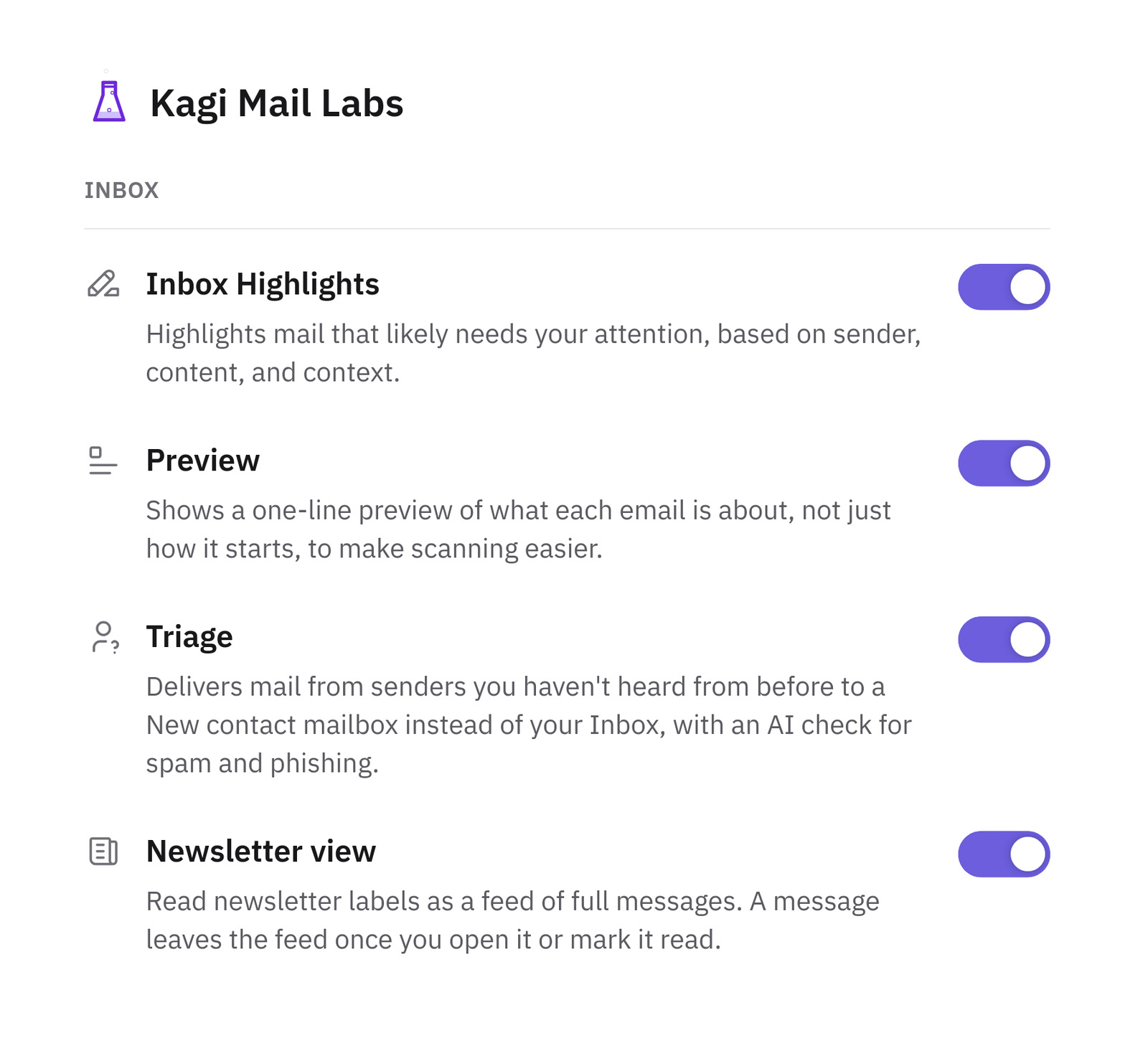
Kagi’s product page describes encryption in transit and at rest. It also says the service has no built-in end-to-end encryption or PGP. That distinction matters if you want a system in which even the mail host cannot read message contents. A separate switch disables AI functions including summaries, natural-language search and proofreading. You can turn those off and keep ordinary mail flowing under the same encryption model.
A spare Kagi address is an easy way to see how its inbox feels. For the address you are about to put on a hundred membership cards, the more consequential decision comes before the first email. Choose a domain the club controls, and those cards can outlast the subscription.