Kagi’s unfinished Windows browser could switch engines. Now its code is public
The Orion archive puts WebKit and Chromium behind the same Windows interface. Printing is one place where choosing an engine still changes what the browser can do.
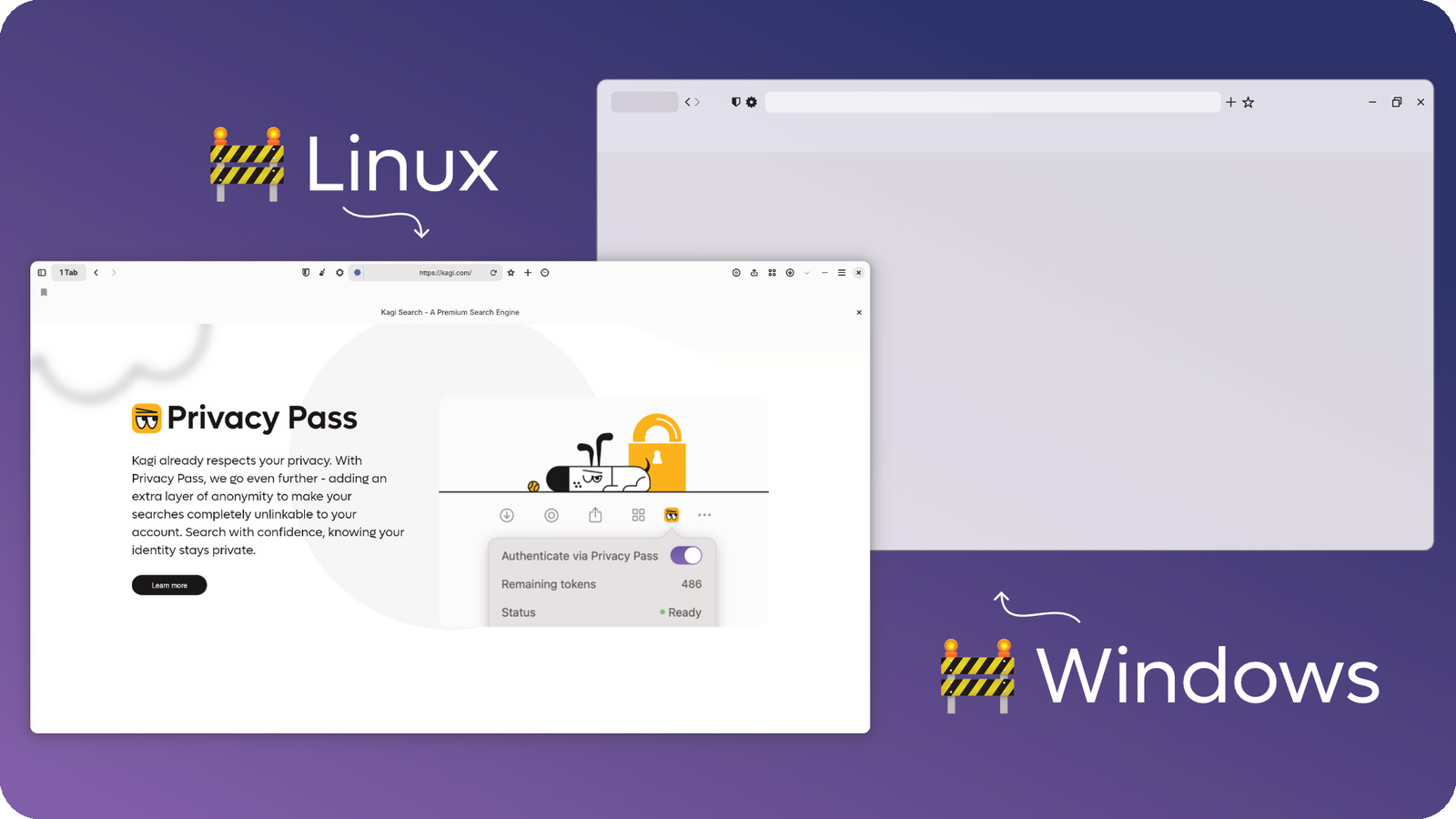
Kagi’s Windows browser got far enough to reveal a curious fault line. It can open a web page with either of two engines, but only one of them can print it. On November 26, Kagi published the source for Orion on Windows and Linux, fulfilling a promise it made when it stopped work on the two projects in October. Windows users who signed up for a launch are getting a look inside an unfinished browser. Kagi says it won’t ship that edition.
The distinction is easier to see in the Windows project documentation than in a screenshot. A build produces one Orion application with a native Windows interface. On startup it loads WebKit by default, or Blink through the Chromium Embedded Framework. The engine takes the page’s code and turns it into something a person can read and interact with. Orion supplies much of what surrounds it, including the address bar, tabs and bookmark manager. Changing engines takes effect when the application relaunches. You can’t flip just one tab over to the other engine in a running process.
Why the Print command depends on the engine
Suppose you’ve opened a train ticket and want a paper copy. Kagi’s feature list says the main menu’s Print command is disabled. With Blink, printing still works through the page’s context menu. With WebKit, that route is unavailable too. Someone looking at the same address bar and the same ticket could reasonably expect the same result. The difference lies in which engine Orion has connected to the printer.
Other features reverse the advantage. The prototype documents partial extension support on WebKit, along with desktop notifications. Camera and microphone permission prompts are listed on the Blink side. These are concrete examples of the work left behind. Getting a page to appear in two engines was one milestone. Making the browser’s promises hold across both would take another round of work for each feature.
Where that leaves the Linux beta
Linux users did receive an Orion build. The Linux repository identifies 0.4.3 beta as Kagi’s last release. It uses WebKitGTK with a native GTK interface, and shares core code with the Windows project. Kagi says the beta can keep running, but its updates stopped on October 2 and the company advises against using it as a main browser. Development on Apple devices continues.
Both codebases are available under Apache 2.0, with third-party components retaining their own licences. A developer can now pick up the work without having to recreate Orion’s tabs, profiles or bookmarks first. For someone choosing a browser today, the more telling sign of a revival would be a maintainer putting out the next update. That’s a different milestone from the public alpha that Ladybird users can already try, and it’s the one Orion’s desktop ports still need.