What a year of UK prices says about buying a TV or tablet on Black Friday
In a Which? study, 51% of the TVs tracked were cheaper outside the sale window, against 14% of tablets. A Christmas Eve price match shows how quickly a TV deal could change.
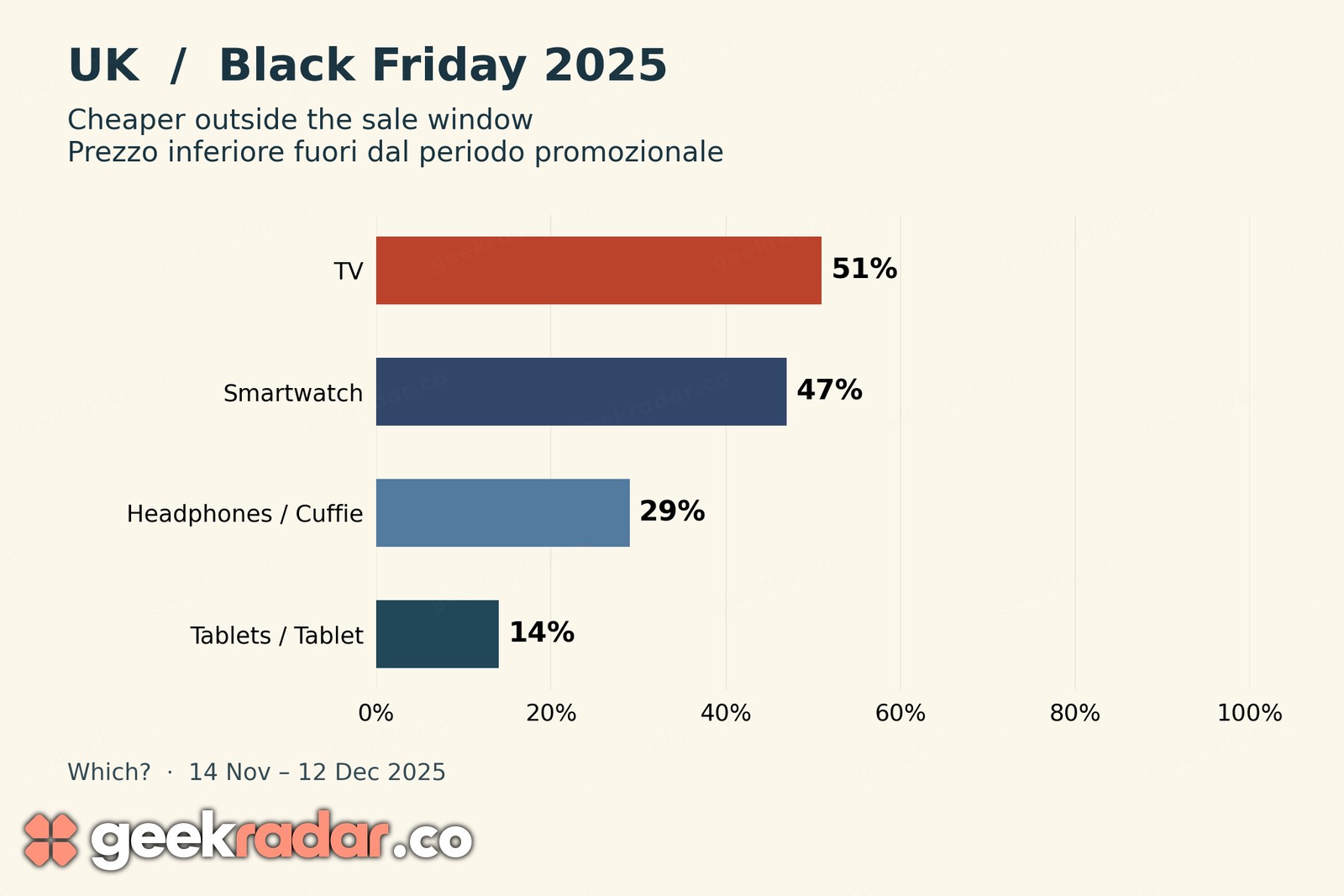
A shopper buying a 48-inch OLED television at John Lewis on Black Friday last year would have paid £999. On Christmas Eve the retailer matched a rival and sold the set for £749. Waiting less than a month was worth £250 on that particular screen. For someone buying a tablet, the case for holding out looked much weaker. In Which?’s UK price study, 51% of the televisions it tracked were cheaper outside the Black Friday period. Among tablets, that happened to just 14%.
Those numbers give anyone looking at a sale sticker this Friday a better starting point than the percentage printed on it. They describe the frequency of finding a better price, rather than the size of the saving. A television marked down by £10 in the spring and one that fell by £250 at Christmas both count once.
Two screens, two buying calendars
Which? started with 756 home, technology and health listings offered by eight UK retailers for Black Friday 2025. It gathered more than 250,000 daily prices, giving the sale a generous window from November 14 through December 12. A deal that arrived several days after Black Friday could still count as a win for the sale. The comparison extended six months on either side of Black Friday itself. Study methods and the Christmas Eve example
There is a plausible reason televisions stood out. New sets typically arrive in spring, giving retailers an incentive to clear last year’s models. A separate Which? analysis of monthly averages across four retailers over two years put the lowest average TV prices in April through July. That second analysis follows a changing range of sets. It can tell you when to start looking if you’re flexible about the model. It can’t promise that the exact 48-inch set you measured for your living room will still be on a shelf in June.
The equivalent distinction matters for tablets. Some 86% of the sampled tablet listings matched or beat the best price available outside the sale window. That leaves room for the same offer to come round again. Across the full 756-listing sample, 44% merely tied the best price seen elsewhere in the year. A good day to buy can be a poor reason to hurry. Which?’s breakdown of matching prices
What to compare before the checkout
For a TV, copy the complete model code before looking up its price history. Two sets of the same size can belong to different model years. For a tablet, keep storage capacity and mobile connectivity fixed. Switching from a cellular model to a Wi-Fi version halfway through the comparison can produce an impressive-looking saving without any shop cutting its price.
Two numbers on the same shelf label can also answer different questions. A marked reduction compares today’s price with a reference price. The UK study asks whether that exact listing could be bought for less at another time. Our guide to the EU’s reference-price rule explains one way a shop arrives at the first number. A history that includes the last model change is more helpful for the second.
The UK figures describe last year’s sample at those retailers. They don’t tell you what will happen to a particular offer today. If you need a tablet now and its price history shows you’re back at a previous low, there’s a reason to buy even if the deal returns. For a television you can happily live without until spring, that £250 Christmas Eve price match is a good reason to close the checkout and set a price alert instead.