Samsung and Apple gained share in Europe while both shipped fewer phones
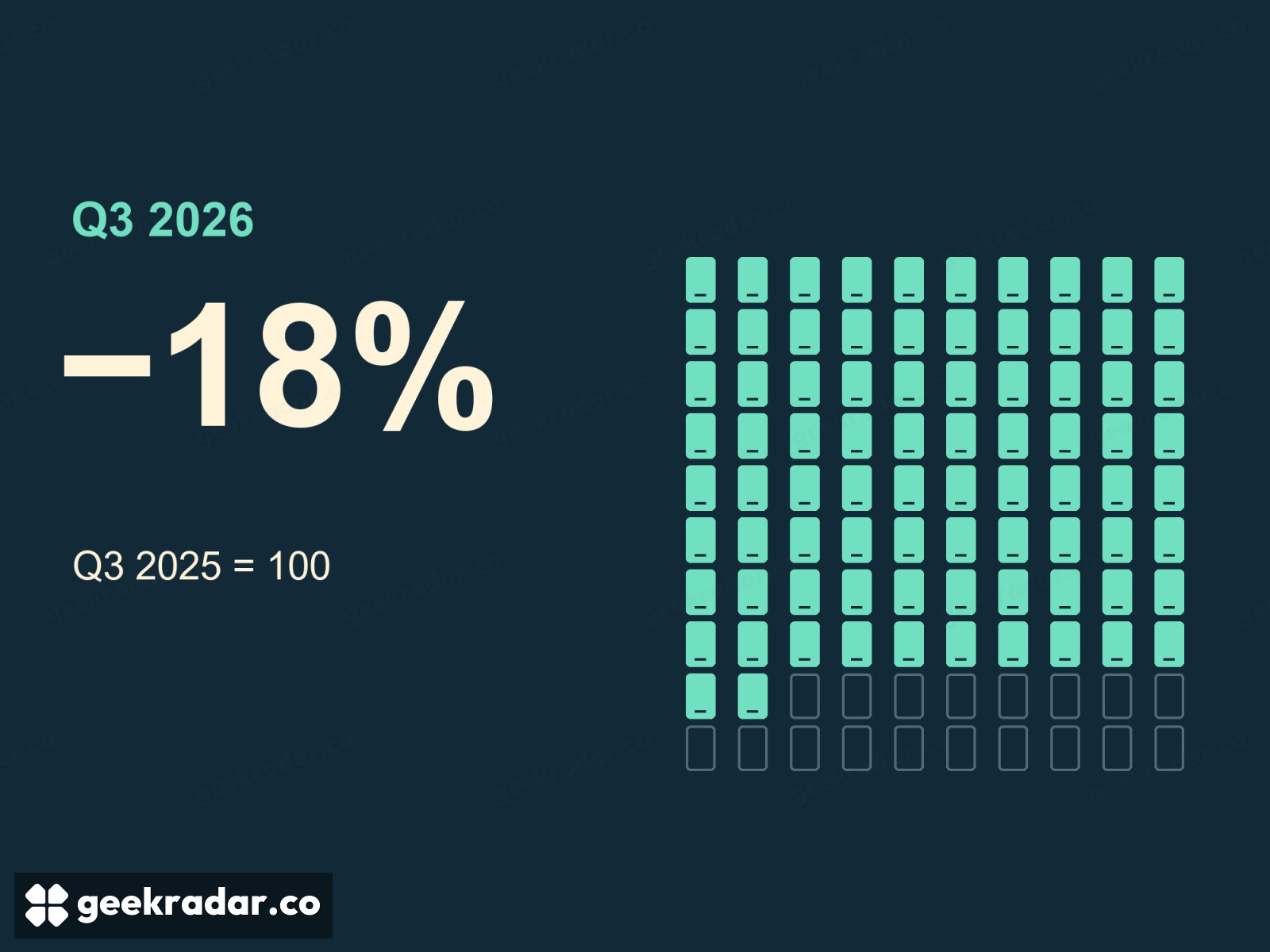
Europe received 18% fewer smartphones in the third quarter. Set last summer’s shipments to 100 and it becomes clear which part of the market lost the most ground.
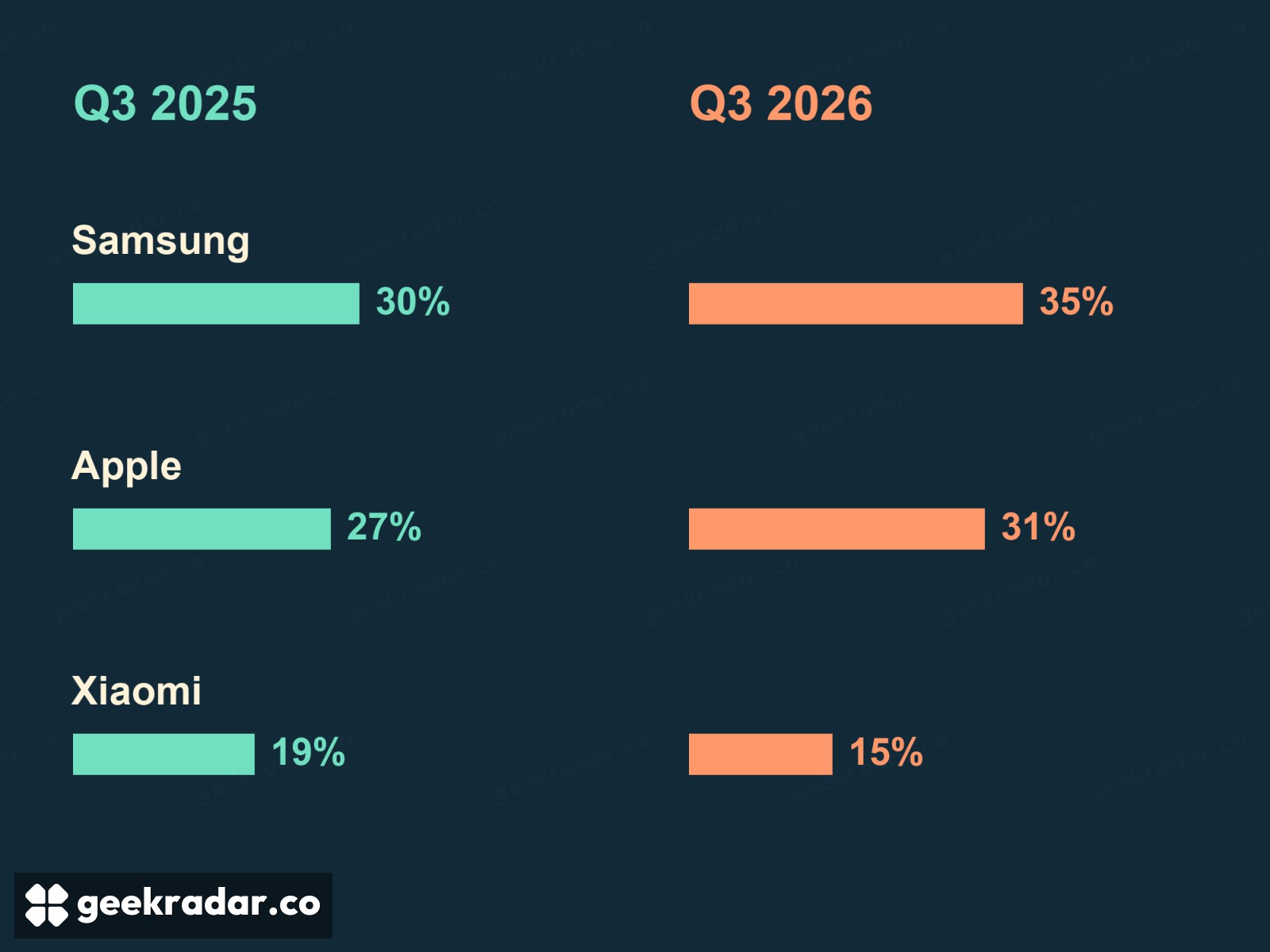
Samsung and Apple accounted for 66% of the smartphones shipped in Europe from July through September, up from 57% a year earlier. Both companies shipped fewer phones. The apparent contradiction is the most revealing detail in Counterpoint Research’s November 19 report. European shipments fell 18% year on year, taking the quarterly total to its lowest level in more than 13 years. The two leaders took a larger slice of a much smaller market.
Put last summer’s European market on a scale of 100 phones. Samsung and Apple supplied about 57 of them. This summer the entire market would fit into 82 spaces on that scale, and the two companies would fill roughly 54. The other brands went from about 43 spaces to 28. These are illustrations calculated from rounded shares, but they explain how the leaders came to account for nearly two phones in three. Most of the missing volume came from elsewhere.
Two foldables on different sides of the quarter
Samsung’s share went from 30% to 35%. Counterpoint calls its Galaxy Z Fold8 the company’s fastest-selling foldable yet in Western Europe. Yet a record for one premium model could only do so much for a manufacturer that also sells the Galaxy A series in far greater numbers. Counterpoint singles out weakness in that line as the reason the foldable’s reception failed to lift Samsung’s overall European shipments.
Apple gained four percentage points, reaching 31%. Its iPhone Duo illustrates a different timing problem. Apple unveiled the foldable in September, while it reached shops in October. People could talk about the phone throughout the launch without buying one on a European shop floor before the quarter ended. Meanwhile, Counterpoint recorded Apple’s first European year-on-year shipment decline since the first quarter of 2024.
What a shop can afford to stock
The squeeze was already apparent in Counterpoint’s second-quarter figures, when European shipments were down 10% from the same quarter a year earlier. Its analysts describe component costs feeding into higher handset prices and fewer promotions. Xiaomi’s European share subsequently fell from 19% to 15%. A maker that relies on affordable phones faces a particularly uncomfortable choice when its parts bill rises. Absorbing the increase leaves less margin on each handset. Passing it on takes away one reason a buyer chose that model in the first place.
There is a practical reason for that distinction. In its separate worldwide study, Omdia reports that higher handset costs made distributors and retailers more cautious about restocking. A shop working with the same cash budget can buy fewer phones at the new wholesale price, even before anyone walks through the door.
That puts the holiday sales in perspective. The quarter can tell a retailer why there may be fewer units to discount. For someone looking at a Black Friday phone, the more useful comparison is the price that particular model actually sold for before the promotion. A manufacturer can win five points of market share without making the phone in the window any cheaper.